


Introduction
Click-Through Rate sounds like a sterile marketing number at first glance, the sort of phrase that belongs in a boardroom slide deck nobody reads. But peel it back, and you’ll find a metric that tells a surprisingly human story: who noticed you, who cared enough to click, and where attention slipped through your fingers.
Unlike some complex analytics jargon, CTR sits at the doorway between curiosity and action. Let’s unpack what it really means, how it behaves, and why digital teams from one-person businesses to sprawling organisations keep circling back to it.
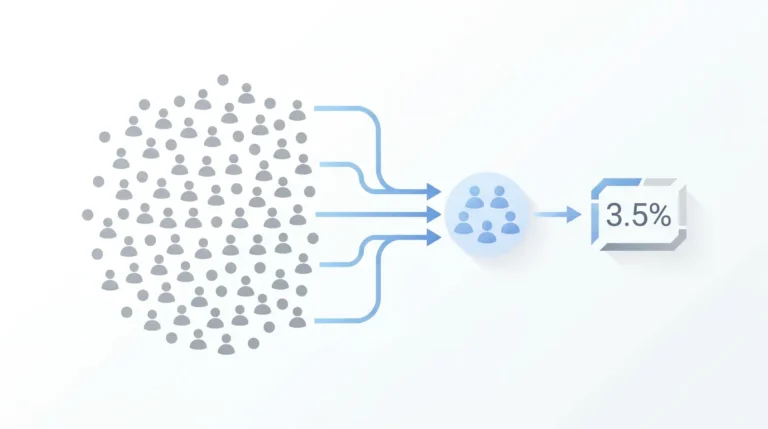
Table of Contents
What Is Click-Through Rate (CTR)?
CTR Definition
CTR or Click-Through Rate is the percentage of viewers who decide to click on something after seeing it. Nothing is more mysterious than that.
An impression is a view. A click is the moment someone thinks, “Yep, that looks useful.” CTR simply measures how often that moment happens.
The equation goes:
Clicks ÷ Impressions × 100
If 250 people saw a link and 12 clicked it, the CTR sits at 4.8%. The math is basic. The insight comes from understanding why people clicked or didn’t.
Where does CTR show up?
- Search listings
- Paid search ads
- Email newsletters
- Social media posts
Anything online that asks someone to engage lives and dies by its click-through story.
CTR Formula Explained With an Example
For illustration, assume the campaign delivers 1,000 impressions, from which fifty users click through.
50 ÷ 1,000 × 100 = 5% CTR
Five percent might sound small on paper, but digital behaviour rarely scales evenly.
Getting fifty clicks from 1,000 views can be stronger than 900 from a million. It’s the percentage that counts. CTR levels the playing field.
Why Click-Through Rate Matters in Digital Marketing
What CTR Tells You About User Intent
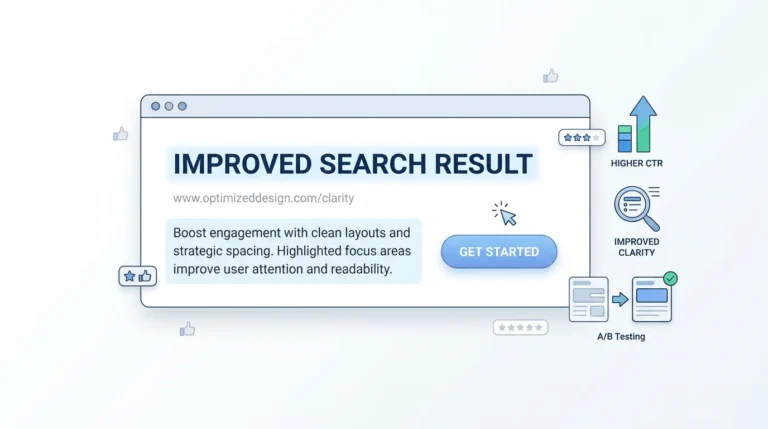
CTR is an intent signal, a pulse check showing whether your message aligns with what people hoped to find.
When CTR rises, it’s usually hinting that:
- The language resonated
- The page matched the search
- The promise in the headline felt worth pursuing
When CTR slumps, someone somewhere missed the mark. Maybe your headline talks circles around the topic, maybe the wrong audience saw the listing, or maybe the searcher thought the answer lay elsewhere.
Worth noting: CTR alone won’t tell you what happens after the click. It measures interest, not outcome.
How CTR Impacts SEO and Paid Advertising
In organic search, CTR connects loosely to performance. A well-performing link brings more users to your site and keeps them involved. Search engine optimisation (SEO) often rewards that behaviour, even if only indirectly. But it’s not a magic ranking switch. Google hasn’t said CTR is a ranking factor, and good practice means steering clear of overclaiming.
Paid search is a different world. A healthy CTR can:
- Lift your Quality Score
- Drop your CPC
- Push your ad into stronger positions
Paid CTR holds financial consequences. The system rewards relevance and punishes wasted impressions.
Average Click-Through Rate Benchmarks
Average CTR for Organic Search Results
There’s a reason everybody wants the top three spots on Google. People trust what’s placed near the top. They click more and scroll less. However, the modern search page isn’t clean or predictable. CTR shifts depending on what else crowds the results:
- Ad blocks
- Map listings
- Featured snippets
- Shopping tiles
- Image or video packs
One query might deliver a classic ten blue links. Another might smother organic results beneath layers of competing elements. In those cases, averages stop being useful tools and become loose approximations.
Intent also steers CTR. Someone searching “how to fix a squeaky hinge” behaves differently from someone typing “nearby locksmith”.
Average CTR for Paid Ads
Paid performance varies even more. Search placements beat display banners by a mile because users searching actively want a solution.
Brand search terms tend to produce inflated CTR numbers; familiarity works in your favour. Non-branded competitive terms sit lower, often demanding many tests before the budget lands in the sweet spot.
Benchmarks can guide, but they shouldn’t dictate strategy. A 3% CTR in a niche market may bring more revenue than a 12% CTR in a broad, noisy category.
Factors That Influence Click-Through Rate
Search Intent and Relevance
Even a first-place ranking can deliver disappointing CTR if the user’s purpose and your offer don’t match. Intent drives behaviour. A page answering “what is X?” won’t win clicks if its title screams “Buy X Today”.
Headlines, Titles, and Messaging
Headlines perform like miniature sales pitches. In search, they get a heartbeat or two to convey purpose. Titles that work often:
- Promise something useful
- Speak plainly, not academically
- Spark curiosity without bluffing
- Avoid stuffing words for a search engine at the expense of meaning
A single unusual phrase can transform a flat title into something people want to explore.
SERP Features and Competition
Sometimes it’s not about your wording at all. If four ads, a map, and a snippet hijack the page, an organic result buried below the fold fights uphill for every click. CTR is therefore shaped by competition long before content enters the equation.

How to Improve Click-Through Rate (CTR)
Improve Title Tags and Meta Descriptions
Titles should answer the searcher’s unspoken question: “Is this page for me?” Useful tactics:
- Include a clear benefit
- Add numbers only when they clarify
- Keep wording natural and approachable
- Write for humans first, algorithms second
Descriptions shouldn’t recap the page verbatim; they should entice, clarify, and lower uncertainty.
Match Content More Closely to Search Intent
Content that satisfies the search query earns more clicks over time because users teach the system what works.
Informational queries want explanation and guidance. Commercial queries want choices, clarity, and sometimes a gentle shove toward a decision.
Misaligned pages show impressions, but no clicks, a classic sign of good ranking paired with flawed positioning.
Use Structured Data and Rich Results
Schema doesn’t manufacture rankings, but it does increase opportunities for visibility. Ratings, FAQ accordions, and breadcrumbs enrich listings in ways that expand perceived real estate.
A more visible listing often earns more clicks (even when the title itself stays untouched).
Optimise CTR for Paid Campaigns
Paid ads thrive on iteration. Swap verbs. Try stronger value propositions. Align landing pages with the tone promised in the copy. CTR typically rises when the offer lands cleanly rather than loudly.
A/B testing stops guesswork from turning into waste.
Common CTR Mistakes to Avoid
Chasing Clicks Without Quality
A high CTR means nothing if visitors leave instantly. Better to earn fewer, more qualified eyes than more clicks that cost money and convert no one.
Ignoring Device and Location Differences
Mobile search patterns differ from desktop. Local queries add urgency and proximity. A page that flops on mobile might shine on larger screens. CTR isn’t monolithic; it shifts based on where and how someone searches.
When CTR Matters Most (And When It Doesn’t)
High-Visibility, High-Intent Pages
Product pages, service introductions, and paid campaigns need attention. Every missed click on high-intent pages is a missed shot at revenue.
Low-Intent or Brand Queries
Lower CTR doesn’t always equal poor performance. Educational blogs, Q&A pieces, and branded search pages often serve awareness roles rather than conversion roles. They set the stage for future trust not instant clicks.
CTR vs Conversion Rate: Understanding the Difference
CTR answers the question “Did they care enough to look?” Conversion rate asks, “Did the visit accomplish something useful?”
Both offer truths. Neither can tell the whole story alone. CTR feeds the top of the funnel. Conversion rate proves whether that funnel is worth filling.
Final Thoughts on Click-Through Rate
CTR is a signal, not a prize. It helps teams diagnose alignment between users and messages. You don’t need hacks to improve CTR. Strong headlines, honest wording, and testing what works will get you further.
Clicks begin the journey; they don’t finish it. Treat CTR as a guide pointing toward decisions that move people from interest to engagement and eventually, outcomes that matter.
Speak with our team today.
Frequently Asked Questions
- What is Click-Through Rate (CTR)?
CTR is the percentage of people who click a link after seeing it. Formula: Clicks ÷ Impressions × 100.
- Why is CTR important?
It shows whether your message matches what people want. A good CTR signals relevance and interest.
- Does CTR affect SEO?
Indirectly. High CTR often correlates with good engagement, but Google doesn’t treat CTR as a guaranteed ranking factor.
- Can CTR be too high?
Yes, if users click but bounce fast. That means the wrong people are clicking the right message.
- Does a high CTR mean lots of sales?
Not necessarily. CTR measures interest; however, sales depend on what happens after the click.