


Introduction
Opening new locations feels like progress. New areas, new customers, and more space to grow. Online, though, it is rarely that smooth.
Search behaves differently for each branch. What works in one place may fail in another. People search in their own way. Competitors vary, and expectations shift.
That is why local SEO for multiple locations matters. Strong signals bring the right visitors. Weak signals cause mix-ups, rankings slip, and clicks fade.
This stage trips up many businesses. Pages overlap, listings drift, and details stop matching. Small gaps turn into bigger problems.
This guide provides clear advice and practical steps. You will see how to structure pages, align listings, and steady your visibility as you grow. The aim is simple: help customers reach the right branch without friction.
Table of Contents
Why Local SEO Matters for Multi-Location Businesses
How Local Search Intent Drives Foot Traffic
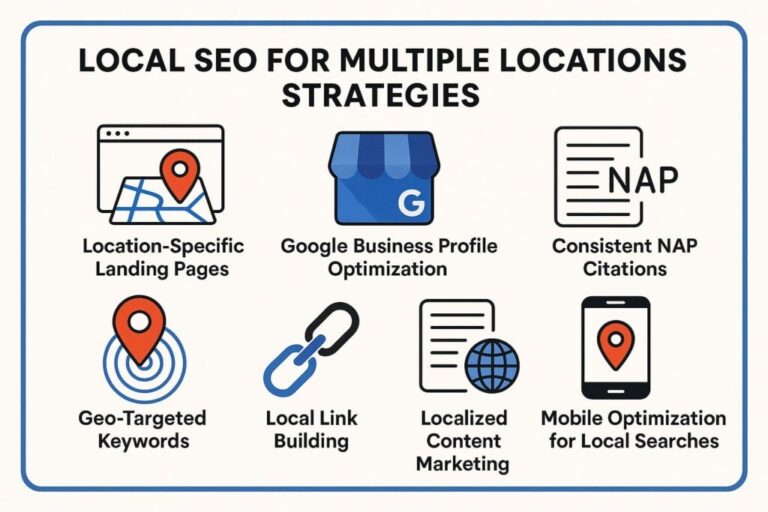
Most local searches carry urgency. People want something close, and they want it now. They type with:
- “Near me” queries.
- City names.
- Street-level intent.
These are not casual searches. They signal action. Google reads this intent carefully. Distance plays a role, but it is not the only factor. Relevance matters. A business that matches the search and shows strong credibility often wins the click.
Well-optimised locations benefit first. Users tap to call, request directions, and visit the store. Local SEO connects online discovery with offline behaviour.
The Competitive Advantage of Location-Level Visibility
Visibility at the branch level changes the game. Instead of relying on one ranking, each location earns its own presence.
This expands your footprint in search results. Multiple map pack appearances. Wider reach across cities. Greater brand exposure. Competitors may show once. Multi-location businesses can keep appearing. Repeated visibility builds familiarity. Familiarity builds trust.
Common Local SEO Challenges for Multi-Location Brands
Scaling brings friction. Location pages start to mirror each other. Content loses uniqueness. Search signals weaken.
Business details drift across listings. Reviews multiply, yet responses slow. Structure breaks down. Small inconsistencies create larger ranking problems.
Control becomes critical. Clear pages, accurate data, and steady management matter. Without these, growth can dilute visibility instead of strengthening it.
Building the Right Website Structure for Multiple Locations
Creating SEO-Optimised Location Landing Pages
Each branch needs its own space. One page per location with a clear purpose.
Use a unique URL. Add details that truly reflect the business, such as services offered, real customer feedback, staff introductions, and photos of the site. An embedded map helps users and search engines alike.
Avoid copying content between pages. Similar text weakens ranking signals. Search engines look for distinction, not repetition. Even small local details can create strong differentiation. Well-built local landing pages SEO improves relevance and trust.
URL Structure Best Practices
Clean structure matters more than many realise. It shapes how users navigate. It guides how search engines crawl.
Simple formats work best:
- domain.com/locations/city-name domain.com/city/service
It creates clarity and signals hierarchies. Search engines understand relationships between pages faster. Users scan URLs and know where they are. Messy structures create friction. Confusion slows crawling. Poor organisation weakens visibility.
Internal Linking for Location Authority
Links are not just navigation tools. They pass value. Service pages should connect to location pages. Location pages should reference key services. This spreads authority across the site. It also strengthens topical relevance.
Breadcrumbs help structure the journey. Navigation menus guide discovery. Clear pathways improve indexing and usability. Strong structure is not decoration. It is a ranking asset.
Google Business Profile Optimisation at Scale
Creating and Verifying Individual Listings
Each branch needs its own profile. Google ranks locations, not brands. Create a listing for every physical address. Verify it and choose the closest business category. Add services when relevant.
Define service areas with care. Write a short, clear description. Keep it specific to that branch. Missing details limit visibility. Complete profiles perform better.
Maintaining NAP Consistency Across All Platforms
Accuracy is critical. Small gaps create big issues. Your business name, address, and phone number must match everywhere. including on websites, directories, and listings.
Search engines compare this data constantly. Conflicts weaken trust. Weak trust hurts rankings. These problems often grow quietly. Old listings remain live. Information drifts. Performance slips. Consistency keeps signals strong.
Leveraging Google Posts and Updates for Each Location
Silence slows engagement. Activity builds momentum. Share updates. Offers, events, and even small announcements help. Keep posts relevant to the local audience.
Active profiles attract more clicks, more views, and more interaction. Search engines notice that behaviour. Optimisation is ongoing. Not a one-time setup. Profiles need attention, just like any other marketing asset.
Local Content Strategy for Each Location
Writing Unique, Location-Specific Content
No two locations are truly the same. Your content should show that. Describe services with local detail. Mention nearby areas. Refer to community spaces. Highlight local work or customer stories. These elements create separation between pages.
Avoid reused text. Duplicate content weakens search signals. It also reduces credibility. Strong pages support local search ranking for multiple locations and improve user confidence.
Using Local Keywords Strategically
Keywords shape visibility, but balance is key. Use city and service phrases where they fit. Add them to headings when natural. Include them in titles and descriptions. Blend them into the page without forcing repetition.
Heavy use harms readability. It feels unnatural. Search engines detect this behaviour easily. Clear writing performs better. Natural language builds trust.
Adding Location-Based Schema Markup
Structured data adds clarity behind the scenes. LocalBusiness schema defines core details like:
- Business name.
- Address.
- Contact data.
- Opening hours.
- Location signals.
Search engines read this information directly. It reduces confusion and strengthens geographic relevance. Schema supports, not replaces, optimisation. When combined with strong content and smart keyword use, it strengthens your location-based SEO strategy.
Citation Building & Directory Management
Core Directories: Every Location Must Be Listed On
Each branch should appear on the main platforms people use. It includes Google Business Profile, Bing Places, Apple Maps, and Yelp. These listings help search engines confirm your business details.
When information matches across directories, trust grows. When listings are missing, visibility can drop. Strong local citations management keeps your presence stable and reliable.
Avoiding Duplicate Listings
Duplicate listings create problems. Search engines may see conflicting details. Rankings can weaken. Users may get confused.
These issues often build slowly. Old profiles stay active. Slight name changes appear. Small errors add up. Regular checks help keep listings clean and accurate.
Managing Citations at Scale
Handling many locations requires a system. Manual updates take time and invite mistakes. Centralised tools make this easier. Bulk edits speed up changes. Monitoring tools catch errors early.
Good NAP consistency for multi-location businesses depends on steady control. Without it, data drifts. Listings lose accuracy. Citation work is simple, but it needs attention. Clear records, routine audits, and consistent updates protect local visibility.
Review Management Across Multiple Locations
Encouraging Location-Specific Reviews
Reviews shape first impressions. They also affect visibility. Search engines look at review activity. Locations with steady feedback often gain stronger placement in local results. Good reviews build trust quickly. Trust influences clicks and visits.
Ask customers to review the correct branch. Clear guidance prevents mix-ups. This supports local search ranking for multiple locations and improves decision-making.
Responding Professionally to All Reviews
Responses matter. Thank customers for positive comments and keep replies brief. Reference the experience when possible. Handle negative feedback with care. Stay calm, address the concern, and offer help where needed.
Regular replies signal active management. They also strengthen Google Business Profile optimisation for multiple locations.
Using Reviews as Local SEO Content
Reviews offer more than feedback. They add proof. Real customer voices build credibility. They help future visitors feel confident. They also add unique content to location pages.
Choose meaningful testimonials. Place them naturally. Keep wording authentic. Heavy edits reduce impact. When used well, reviews strengthen trust, relevance, and local visibility.
Technical SEO Considerations for Multi-Location Websites
Mobile Optimisation for Local Searches
Most people search on their phones. They expect pages to work smoothly. Your site must look clean on small screens. Text should be easy to read. Buttons must be easy to tap. Contact details should be simple to find.
If a page feels hard to use, visitors leave quickly. Good mobile design supports geo-targeted SEO campaigns and improves user experience.
Page Speed & Core Web Vitals
Speed matters. Slow pages frustrate users. Many people leave if a page takes too long to load. Search engines track this behaviour. Delays can damage rankings, especially for location pages.
Simple fixes help, like optimised images, clean code, and reliable hosting. Faster pages keep visitors engaged.
Avoiding Duplicate Content Issues
Multi-location websites often struggle here. Pages start to look the same. Search engines prefer unique content. Similar pages weaken relevance. Rankings may drop.
Each page should feel different. Add local details, mention real services, and use specific examples. Clear variation strengthens local landing pages’ SEO and prevents conflicts. Technical SEO is about stability. Mobile usability, speed, and unique content shape visibility.
Link Building for Local Authority
Acquiring Local Backlinks
Local links help build trust. They also improve visibility. Work with nearby businesses, join local groups, and partner with community organisations. Sponsor local projects when it makes sense. These actions often lead to mentions and links.
Good backlinks show search engines that your business is relevant and reliable. They support your location-based SEO strategy.
Community Engagement & PR
Offline activity can create online value. Take part in local events. Support community programs. Sponsor small initiatives. Local media and websites often cover these efforts.
That coverage brings attention. Attention brings links. These natural backlinks help strengthen authority and improve local search ranking for multiple locations.
Local link building is not about getting many links. Quality matters more. Relevant, trusted sources create stronger results.
Tracking & Measuring Multi-Location SEO Performance
According to Content Marketing Institute (2025), businesses that track performance metrics like engagement, conversions, and user behaviour see stronger long-term results compared to those that rely only on rankings.
Monitoring Rankings by Location
Search rankings change from city to city. A page may rank well in one area and struggle in another. Track keywords for each location. Review results separately. This shows what is working and what needs attention. Clear tracking supports your multi-location local SEO strategy.
Google Business Profile Insights
Your listings provide helpful data. Profile views show how often people see your business. Calls reflect interest. Direction requests often signal planned visits.
These actions connect online searches with real customer behaviour. Strong activity can support local search ranking for multiple locations. Check insights often. Trends become easier to spot.
Conversion Tracking Per Location
Rankings alone do not tell the full story. Measure leads for each branch. Track forms, monitor calls, and keep location data separate whenever possible. This removes guesswork. It highlights strong locations and reveals weaker ones. Good measurement makes SEO practical. You see visibility, engagement, and real results together.
Conclusion
Managing SEO across many locations is not about shortcuts. It is about clarity, structure, and steady control. Small gaps grow fast. Strong foundations scale better.
When each branch sends clear signals, visibility improves. Traffic becomes more relevant. Conversions follow naturally.
Midland Marketing helps businesses build, refine, and scale local search presence without confusion. The focus stays practical, measurable, and sustainable. Growth works best when your digital presence grows with it.
Frequently Asked Questions
1. How long does multi-location SEO take to show results?
There is no exact timeline. Some businesses see small shifts within a few months. Bigger gains often take longer. Results depend on competition, site quality, and data accuracy.
2. Do all locations need separate pages?
Yes. Each branch needs its own page. Unique details help search engines clearly assess relevance. This also prevents pages from clashing in rankings.
3. What is the biggest mistake in local SEO?
Mismatched business details. Even tiny differences can create confusion. Over time, this weakens trust and harms visibility.
4. How important are reviews for local rankings?
Reviews matter a lot. They shape trust and influence clicks. Fresh, genuine feedback often supports a stronger local presence.
5. Can small businesses benefit from multi-location SEO?
Absolutely. Even two or three locations can benefit. Clear structure and accurate listings help smaller brands compete locally.