


Introduction
Most businesses do not fail from a lack of effort. They fail because they move in the wrong direction. You can sell more, post more, and hire more people, yet still feel stuck. That is where SWOT helps.
It gives you a clear view of your business. You see what works and what does not. You spot new chances and also catch risks before they grow. This simple method helps turn noise into focus.
A SWOT analysis does not need big reports or costly tools. It needs honest thinking. It helps startups find their place. It also helps growing brands choose the right path and big firms stay ahead.
In this guide, you will learn how it works and how to use it in real business situations to plan better and grow faster.
Table of Contents
What Is a SWOT Analysis?
A SWOT (Strengths, Weaknesses, Opportunities, Threats) analysis helps you see your business as it is right now. It brings facts into one clear view. You look at what you control and what you do not. This makes choices feel less risky and more calm.
Many teams hold bits of data in different places. Sales sit in one file, trends sit in another, and staff issues come up in talks. SWOT pulls these parts together. You get one clean picture. That alone can change how you plan.
This tool does not try to guess the future. It helps you decide what to do next. It shows where you stand firm, where you slip, and where the market is moving.
When plans feel unclear, SWOT brings order. It turns loose ideas into a path.
What SWOT Stands For
- Strengths are the parts that help you win. This may be skilled people, a strong name, or good systems.
- Weaknesses are the cracks. These might include slow work, weak cash flow, or skill gaps.
- Opportunities come from outside. A new trend or open market can give you room to grow.
Threats also come from outside. New rivals or rising costs can press on your business.
One thing matters most. Strengths and weaknesses sit within your control. You can fix or build them. Opportunities and threats live outside. You can only plan for them.
Why SWOT Analysis Still Matters in Modern Business Planning
Modern planning is not just about ideas. It is about evidence. Businesses that rely on structured analysis are more likely to survive change.
Recent data from the Office for National Statistics shows that over 20% of UK businesses fail within their first year, often due to poor planning and lack of market awareness. This highlights the need for simple tools like SWOT that bring clarity early.
At the same time, a 2025 report by the Federation of Small Businesses found that over 60% of small firms that actively review risks and opportunities quarterly report stronger revenue stability. This shows that structured thinking is not optional. It directly affects outcomes.
SWOT helps turn these numbers into action. It connects daily decisions with real-world risk.
How SWOT Supports Strategic Decision-Making
Every bold idea needs a reality check. SWOT gives that check. It shows if a goal can be reached with what you have now.
A firm may want to expand. The plan may look great on paper. SWOT tests it. It guides where to invest. It helps set fair prices. It warns when the risk is too high. In this way, SWOT supports trade-offs, not just wins.
Common Situations Where SWOT Is Most Useful
Some moments call for a pause. This is when the need for clear evaluation becomes obvious.
It works well when you enter a new market. It also helps when you launch a new offer. If sales start to fall, SWOT can show why. When rivals grow or rules change, it helps you see what to do next.
In all these cases, the goal is not more data. It is a better choice. SWOT works best when a real decision sits on the table.
How to Do a SWOT Analysis Properly
A strong SWOT is built on facts. It uses real data and clear insight. Sales, ops, and support all see different risks. When these views meet, weak ideas fall away. The best value comes when teams test what they think and sort what matters most.
Step 1 – Identifying Real Strengths and Weaknesses
Start with proof. Look at sales trends, client feedback, and how fast work moves. These show where you stand. Avoid loose words like “great team” or “big name.” They say little. Focus on what makes you stand out or slows you down. This may be fast service, high costs, or slow tech. When strengths are too big and flaws are ignored, plans drift off track.
Step 2 – Assessing External Opportunities and Threats
Look beyond the walls of your firm. A true chance must be real and ready to use. A new market that fits your offer is one. A vague idea is not. Threats also need proof. Rising rivals, rule changes, or cost hikes all count. Split near risks from long-term shifts. This keeps panic out and focus in.
Step 3 – Avoiding Common SWOT Mistakes
Do not list every thought. Pick what counts. Use facts, not views, and tie each point to a choice. That is where it earns its worth.A banner might be technically “visible”, meaning it loads on-screen, but that doesn’t mean anyone has actually looked at it. Many brands mistake viewability for views. They are not the same thing. If your ad appears but the user’s eyes never glance in that direction, your budget is being burned on empty impressions
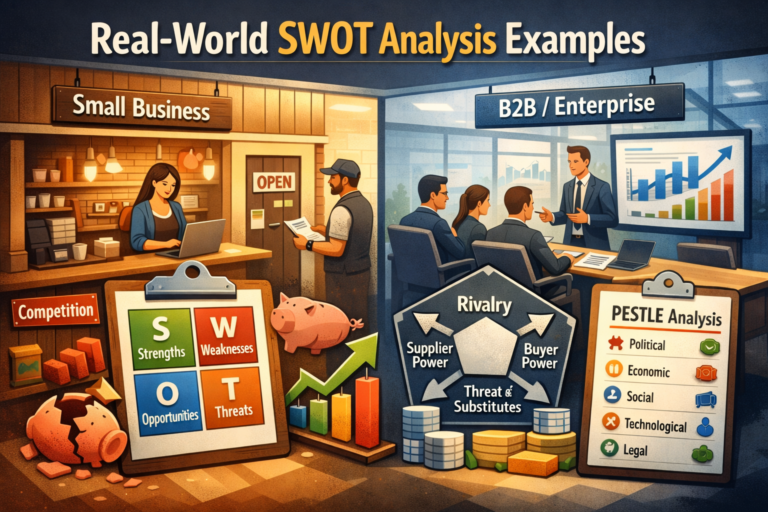
Real-World SWOT Analysis Examples
Real value comes from using SWOT analysis on real business problems. The goal is to see how limits, risk, and chance all mix in daily work.
Example 1 – Small Business Scenario
Think of a small local firm with a few staff and a tight budget. It may have loyal customers and fast service. These are strong points. Yet it may also lack new tools or spare time. These limits affect every choice it makes.
Local rivals bring pressure. A new shop nearby can pull away sales. Online brands can cut into demand. These are real threats, not ideas.
Growth chances may be small but clear. A rise in local need or a new partner can help. A simple business SWOT analysis helps decide where to act and where to wait. It keeps risk in check while still moving forward.
Example 2 – B2B or Enterprise Strategy
Big firms have reach, money, and skill. These are clear strengths. They can win large deals and serve wide markets. Yet size can slow change. New rules, rising costs, or tech shifts become major threats.
Market position also matters. A strong name helps. Heavy rivals push back. SWOT helps leaders weigh each move. It shows where growth fits and where risk may be too high.
Turning SWOT Insights into Action
A SWOT analysis has no value if it ends as a list. The real work starts when those points turn into moves. Each insight should link to a clear goal. If it does not guide cost, risk, or growth, it adds less value.
This is why many teams use the framework as a filter. It helps sort what matters from what does not. A long list can feel safe, but it often hides what needs action. Focus brings progress.
Prioritising SWOT Findings
Not every item carries the same weight. A small flaw may not hurt you. A large gap can stall your plans. Look for points that touch money, time, or market reach. These shape results.
This step also cuts noise. When you rank items, you avoid slow debate. This keeps strategic planning tools sharp instead of dull. You move from talk to choice.
Linking SWOT to Business Strategy
Once key points are clear, they should feed into plans. A strong area may earn more money. A weak one may need to be fixed or paused. A threat may change a launch date. A chance may bring new spending.
This is how to turn SWOT into action. It guides timelines, pricing, and focus. In a strong business review, nothing sits in a file. Each insight drives a real step forward.
SWOT Analysis vs Other Strategic Planning Tools
Not all tools serve the same job. SWOT works best when you need a full view of your business and the world around it. It mixes what you control with what you face. This makes it easy to spot risk and chance in one place.
SWOT vs PESTLE Analysis
PESTLE looks only at the outside. It tracks political, economic, sociological, technological, legal, and environmental factors. This helps you see what may shape the market. Yet it does not look at your own skills or limits.
SWOT does both. It joins your strengths and gaps with outside shifts. This makes the SWOT analysis framework more useful for daily choices.
SWOT vs Porter’s Five Forces
Porter’s model digs deep into rivals, buyers, and suppliers. It is strong for market power and pricing. Yet it can feel heavy and slow. SWOT is wider and faster. It shows how your firm fits in the market, not just who pushes whom.
For most teams, SWOT acts as a clear starting point; other strategic planning tools can add detail where needed.
When SWOT Analysis Is Not Enough
This approach gives a clear view, but it does not answer every question. It cannot replace deep market study or detailed cost checks. When big money or fast change is in play, you need more than one lens.
SWOT works best as part of a wider set of strategic planning tools. It shows where to look; other methods show how far and how fast to move.
Situations Where SWOT Needs Supporting Frameworks
In high-growth markets, things shift too fast for one grid. Trends, prices, and rivals change by the week. Extra tools help track this pace.
During rapid disruption, such as new tech or sudden shifts in demand, SWOT can miss key signals. More live data fills the gap.
In complex rule systems, law and policy shape cost and risk. SWOT can flag this, but deeper checks are needed to guide action.
Final Thoughts: Using SWOT as a Decision Tool, Not a Worksheet
SWOT works best when people use it to think, not just to write. It helps teams test ideas, spot risk, and set clear moves. The value comes from honest views and real action, not neat boxes.
When used this way, a SWOT analysis keeps plans grounded and sharp. At Midland Marketing, we use it to turn insight into clear business steps.
Frequently Asked Questions
- What is the main goal of a SWOT analysis?
It helps you make better choices by showing where your business stands. You see what works, what does not, and what outside forces may affect you.
- How often should SWOT be reviewed?
You should review it when goals, costs, or markets change. This keeps your plans based on what is real now.
- Is SWOT useful for small firms?
Yes. It helps small teams use their time and money in the right places and avoid costly mistakes.
- Can SWOT guide marketing plans?
It shows which ideas fit your strengths and which risks could waste the budget. This helps you plan smarter.
- Should SWOT be done by one person?
No. Teams bring different views. This makes the results more honest and more useful.