


Introduction
Most organisations assume their website already “says enough.” A few landing pages are up, a handful of blogs exist, and the odd case study has been written when sales pushed for it. On the surface, that looks like momentum. A closer look usually shows the content isn’t only limited, it’s out of step with current audience needs.
That’s the uncomfortable truth content gap analysis forces us to confront. It reveals, very plainly, where we show up and where we don’t. It also exposes the topics we cover deeply, the ones we skim, and the gaps we’ve ignored. It doesn’t tell us to publish more. It directs us to publish better, using data, intent, and what audiences genuinely need.
The guide covers what content gap analysis is and where it creates the biggest wins. It goes on to detail how teams can convert insights into planned actions that improve visibility and sales.
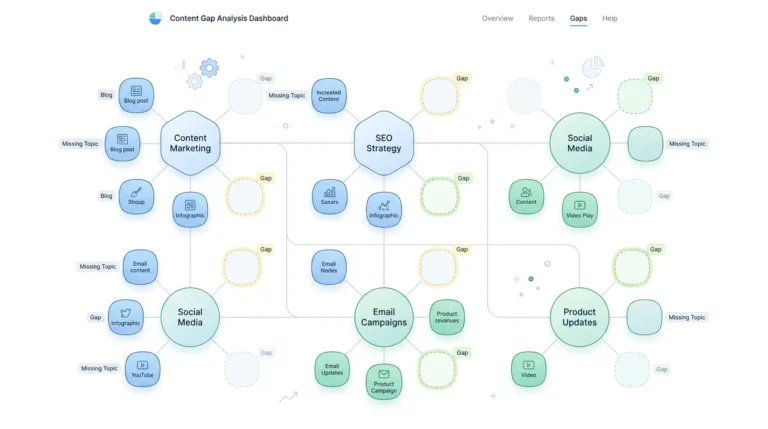
Table of Contents
What Content Gap Analysis Really Means
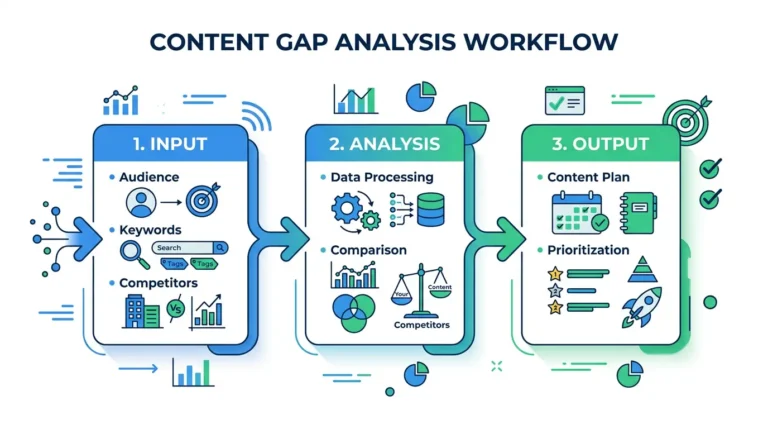
At its simplest, content gap analysis is the structured practice of discovering what your content should include but currently doesn’t. That sounds straightforward until you actually start the work. In reality, you are mapping three different things at once:
- Who your audience is and what they are actively trying to solve
- What questions and keywords capture that intent
- Where your current site shows up or falls silent
Instead of focusing only on keywords, gap analysis asks whether your content answers the real questions behind those searches. If someone arrives expecting clarity on a topic, does your page deliver the full answer, or does it trail off halfway through? Do users bounce because the article stops just short of the problem they actually need solved? Good gap analysis doesn’t assume it confirms.
Content Gaps vs Content Weaknesses
A useful way to orient yourself is to distinguish gaps from weaknesses. A gap is almost literal; there is nothing in place. Think of a crucial topic, customer problem, or how-to query that your competitors have covered in detail, and you haven’t addressed at all. These are often the big opportunities, especially for high-intent audiences.
A weakness, by contrast, signals that content exists but fails to deliver. Pages might be thin. They might rank, but not convert. They might have been written before you truly understood your audience. Weak spots are tricky because they look like they’re covered. You only discover the gap when the numbers show people aren’t getting what they need.
One problem asks for new pages, the other asks for updating and strengthening what’s there.
Why Content Gaps Matter for SEO and Growth
Search today rewards not only relevance but completeness. Engines look beyond keywords toward topical authority: the idea that a site understands a subject deeply and has explored it from multiple angles. When content gaps persist, they fracture that authority.
Competitors can seize ownership of topics you should naturally rank for. Nothing seems wrong in the early days. You lose a few spots here and there and drop a handful of keyword placements. Later, those drops show up as fewer enquiries and a shrinking perception of expertise.
Gap analysis doesn’t just protect rankings. It protects reputation.
When Content Gap Analysis Is Most Valuable
Gap analysis is not a tool for every week, but there are moments when it becomes essential rather than optional.
Declining Organic Performance
Perhaps the clearest trigger is a slow or sudden downturn in organic metrics. People often assume an algorithm update is to blame. It can happen that way. But usually the shift is driven by rivals who’ve already taken the steps you’re now weighing. They built deeper pages. They refreshed older articles. They closed the gaps you left behind.
A gap analysis helps you diagnose why the decline happened, rather than reacting blindly.
New Products, Services, or Markets
When a business shifts direction or expands its offering, the content library often lags behind the reality of what the company now does. Customers entering through search may not understand new value propositions. They may not even recognise that a product applies to them, because the story hasn’t been written yet.
Gap analysis reveals:
- Which questions do emerging audiences ask
- What knowledge paths do they follow before making a decision
- Where your present content unintentionally excludes them
Shifts in Search Behaviour or AI-Driven Results
AI-powered search experiences (SGE, summaries, short-form answers) have reshaped what it means to “be visible.” Engines look for holistic coverage rather than fragmented keyword chasing. A site with partial answers risks invisibility even on subjects it previously owned.
Gap analysis now helps future-proof content rather than merely fix the past.
How to Conduct a Content Gap Analysis Step by Step
Let’s turn methodical without turning robotic.
Define Goals and Scope
You start not with keywords, but with intention. Is the mission to grow organic awareness? Do you need more leads, better education for decision-makers, or supporting content for sales enablement? Defining this early prevents teams from over-collecting data they can’t or won’t use.
Identify Competitors and Benchmarks
Competitors in content are not always your sales rivals. The most dangerous competitor may be an advice blog with no commercial motive that answers questions more clearly than any brand page. Treat competitors as:
- Direct (selling what you sell)
- SERP-visible (ranking where you want to rank)
- Authority publishers (educating users earlier in the funnel)
Benchmarking across all three gives you a realistic view of your missed opportunities.
Map Keywords and Topics
Here is where SEO meets intent analysis. The process begins with gathering search trends and keyword patterns. The next step is matching them against your content to spot gaps. The output goes beyond a set of terms. It becomes a picture of connected questions and the areas where your library fades.
A good gap map reveals not only what is missing, but what you thought you answered but didn’t.
Types of Content Gaps to Look For
Understanding the kind of gap defines the action.
Informational Gaps
These are awareness-stage questions and are often the most neglected. Many brands overlook these queries because they don’t generate instant sales. That means giving up the early trust that leads to a future conversion.
Commercial and Transactional Gaps
Users closer to commitment want side-by-side comparisons, pricing clarity, benefit breakdowns, and justification. If your content skips that phase, buyers drift to competitors who take the time to explain.
Format and Depth Gaps
Sometimes the missing piece isn’t a topic but the depth, material, or medium:
- Case studies without narrative
- Guides without instructions
- Concepts without real-world examples
- Long articles without summaries, visuals, FAQs, or user prompts
When depth is missing, users mentally “fill the gap” by seeking another source.
Turning Content Gaps Into a Priority Plan
Gap analysis means nothing unless it informs decisions.
Assess Business Impact and Effort
A sophisticated team looks beyond volume. A topic with modest search volume but strong buying intent may outrank a high-volume term that brings unqualified visitors. Pair opportunity score with effort required, whether that means SME interviews, new research, or refreshed design.
Decide Between New Content and Optimisation
Net-new content feels glamorous, but optimisation often drives faster gains. A lightly ranking page can gain traction with better structure, proof points, or updated data. On the other hand, a completely missing topic deserves its own home and internal link pathway.
Align Gaps With Internal Resources
Execution determines success. Ambitious roadmaps collapse if you lack writers, experts, design support, or distribution channels. Aligning focus with available resources keeps content from piling up unfinished. Regular output earns trust and rankings faster than short sprints.
Content Gap Analysis in an AI-Driven Search Landscape
Search has always changed, but the speed of change has accelerated. Engines now reward pages that demonstrate subject-matter fluency rather than single-instance relevance.
Coverage and Context Matter More Than Keywords
You cannot treat keywords like bingo squares to fill. AI surfaces sources that appear knowledgeable, interconnected, and helpful across entire domains. A scattered collection of unrelated blog posts may not count, even if individually strong.
Entity and Topical Authority Gaps
The smartest brands work in clusters. They define a main topic, surround it with related themes, and support it with evidence and examples. Gaps weaken these clusters and erode the site’s perceived expertise, even when the content that does exist is strong.
Conclusion
Content gap analysis isn’t glamorous, but it is transformative. It forces brands to confront what their audiences truly need and how far their current content falls short. When brands separate gaps from weaknesses and focus effort where it matters most, they start to align with AI-driven search patterns. The result is a content library that draws users in and keeps them there.
When it’s executed properly, gap analysis removes the guesswork. It brings scattered content together into a structured system that drives traffic, conversion, and authority.
Reach out to us for more information.
Frequently Asked Questions
- What is content gap analysis?
It’s the process of finding topics, keywords, and questions your audience searches for, but your website hasn’t covered or hasn’t covered well enough.
- How do I know if my business has content gaps?
Warning signs include falling rankings, blog traffic stalling, lack of page-one visibility, or customer service teams answering the same questions repeatedly.
- Does gap analysis help with AI search results?
Yes. AI summaries prefer complete, well-covered topics. Filling content gaps increases the odds of your pages being selected and cited.
- Is content gap analysis only for big companies?
Not at all. Smaller Midlands firms often see faster gains because filling even a few targeted gaps can create standout authority in niche local markets.
- What tools are useful for finding content gaps?
Common options include SEMrush, Ahrefs, Search Console, and customer FAQs. Pair data tools with real user feedback for the best picture.