


Introduction
Markets move fast. Brands rise, stall, or disappear often for one simple reason. They fail to see what competitors are doing right in front of them. Guesswork no longer works, and decisions based on instinct alone cost time, budget, and market share.
This is where competitive intelligence in marketing changes the game. It gives clarity in crowded spaces. It helps brands understand rival moves, pricing shifts, content gaps, and customer pull before damage is done. Instead of reacting late, businesses plan early. They spot patterns, test smarter campaigns, and position offers with purpose.
Winning today is not about copying competitors. It is about reading the market better than they do. When insights replace assumptions, strategy becomes sharper, faster, and far more effective.
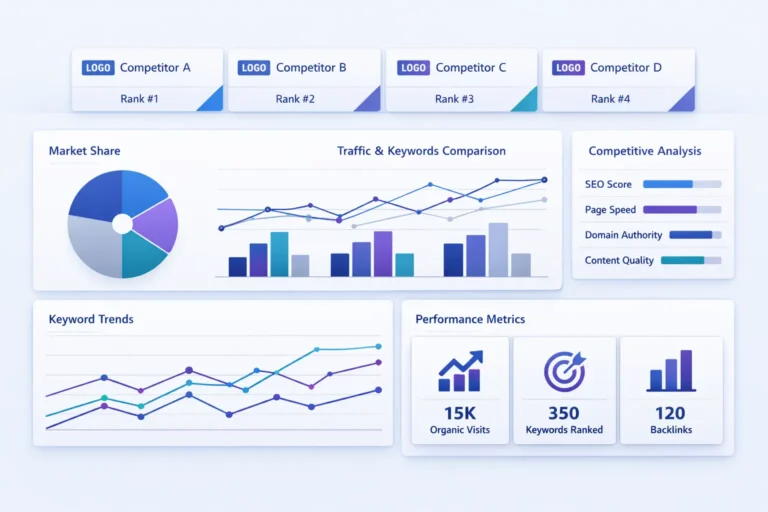
Table of Contents
What Is Competitive Intelligence in Marketing?
Competitive intelligence helps teams read intent, not just activity. It turns market signals into direction.
It focuses on:
- How competitors change pricing and offers
- Where they invest time and budget
- Which channels they return to
- What actions they quietly drop
These details matter. Small moves often show bigger plans. When read early, teams plan ahead instead of reacting late.
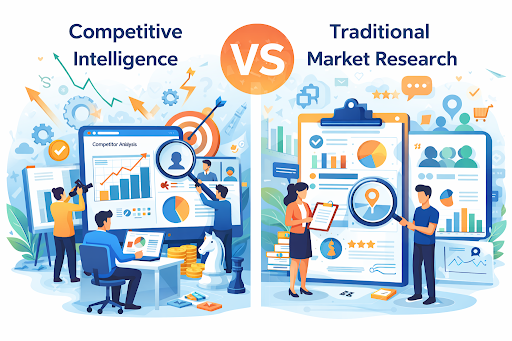
Competitive Intelligence vs Traditional Market Research
Traditional market research focuses on customers and demand. Competitive intelligence focuses on competitors and market dynamics. Both matter, but they answer different questions.
Key differences include:
- Market research explains demand
- Competitive intelligence explains pressure
- One tracks needs; the other tracks motion
- One looks at buyers; the other watches rivals
A clear competitive intelligence strategy tracks daily behaviour. Marketing competitor analysis reveals focus areas and blind spots. Competitive market intelligence links actions to wider change. With competitor benchmarking and smart marketing intelligence tools, teams gain clarity without noise.
Why Competitive Intelligence Matters in Marketing
Improves Strategic Decision-Making
Good choices need facts, not guesses. Competitive intelligence in marketing shows what works and what fails in real time. Teams see patterns early and act with control.
According to the Office for National Statistics, over 58% of UK businesses reported using data analytics to guide strategic decisions in 2025, showing a clear move away from instinct-led planning.
This approach helps by:
- Showing where rivals gain attention
- Revealing weak campaigns that miss the mark
- Guiding spend toward safer bets
- Cutting noise from planning
A clear competitive intelligence strategy supports calm thinking. With steady marketing competitor analysis, decisions feel grounded, not rushed.
Helps Identify Market Gaps and Opportunities
Growth rarely sits in crowded lanes. It lives in gaps. Competitive intelligence helps teams find them.
Marketers can:
- Spot unmet needs fast
- Notice ignored audiences
- See weak value claims
- Compare depth using competitor benchmarking
Strong competitive market intelligence, backed by simple marketing intelligence tools, turns small clues into smart moves.
How to Use Competitive Intelligence in Marketing
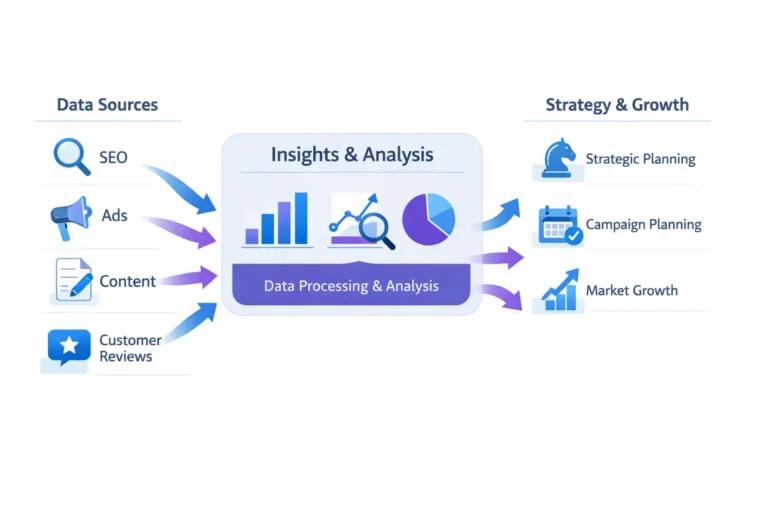
Analyse Competitor Positioning and Messaging
Every brand tells a story. Competitive intelligence in marketing helps you hear it clearly. By studying how rivals speak, you see who they chase and why.
Focus on:
- Who they target and who they ignore
- What promise do they lead with
- Where their message feels strong
- Where it feels thin or forced
These details matter. They show how others win trust or lose it. This insight helps your brand stand apart instead of sounding the same.
Monitor Competitor Content and SEO Performance
Content leaves a trail. Smart teams follow it. Tracking what competitors publish shows what topics pull traffic and which ones fall flat.
Look at:
- Pages that rank well
- Content formats they repeat
- Topics they update often
- Links that boost reach
This view saves time. It guides effort toward work that earns attention, not noise.
Evaluate Paid Advertising and Channel Strategy
Ads reveal intent. By watching where competitors spend, you learn what they value most.
Pay attention to:
- Channels they return to
- Ad styles they test often
- Messages tied to sales
- Platforms they drop
This reduces time. It also highlights channels worth testing before budgets burn.
Tools and Data Sources for Competitive Intelligence
Digital Marketing Intelligence Tools
Data leaves footprints everywhere. Digital platforms help teams read them without guesswork. These tools pull signals from search, ads, and social spaces at scale.
They help track:
- Keyword movement over time
- Ad formats and copy in use
- Engagement across posts and pages
This view shows what competitors test, repeat, or drop. Patterns appear fast. Teams can compare effort to outcome and adjust plans before time or budget slips away.
Publicly Available and First-Party Sources
Not all insight comes from software. Some of the most useful clues are open and human.
Look at:
- Annual updates and press news
- Reviews that show real sentiment
- Social replies and complaints
- Public launches and statements
These sources add context. When combined with marketing competitive intelligence, they sharpen judgment and reduce blind spots.
Turning Competitive Intelligence into Action
Benchmark Performance Against Competitors
Insight only matters when it has a reference point. Benchmarking sets that point. It shows how your visibility compares to others, where engagement slips, and which areas convert better elsewhere.
This is not about chasing numbers. It is about context. Small gaps signal quick wins. Large gaps warn of deeper issues. When teams track progress against rivals over time, priorities become clearer and effort stays focused on impact, not vanity metrics.
Inform Campaign Planning and Messaging
Competitive intelligence should shape real work, not sit in reports. It guides campaign themes by showing what audiences already hear too often. It sharpens messaging by revealing which claims feel tired and which still land.
Content formats become deliberate, not habitual. When insight flows into planning early, campaigns feel relevant, distinct, and timed with intent rather than reaction.
Common Mistakes in Competitive Intelligence
Focusing Only on Direct Competitors
Markets do not stand still. New threats often come from the edges, not the centre. When teams watch only familiar rivals, they miss quiet shifts in behaviour and offer design.
Indirect players can change price expectations, content style, or customer loyalty without warning. A wider lens shows how pressure builds before it feels urgent. This broader view keeps competitive intelligence in marketing grounded in reality rather than habit.
Collecting Data Without Clear Objectives
Data needs direction. Without it, insight turns into noise.
This mistake often leads to:
- Overloaded dashboards
- Conflicting conclusions
- Slow decisions
- Little action
Clear goals act as a filter. They turn raw signals into choices that move campaigns forward.
Best Practices for Competitive Intelligence in Marketing
Make Intelligence an Ongoing Process
Markets change fast. What worked last quarter may already be weak. Competitive intelligence must run in the background, not as a one-off task.
Strong habits include:
- Regular checks on rival moves
- Tracking changes
- Watching trends build over time
- Reviewing insight before planning cycles
This rhythm keeps teams alert. It helps them move early, test sooner, and stay relevant without panic.
Share Insights Across Teams
Insight loses power when it stays locked in one place. Competitive intelligence works best when shared widely and shared early.
It should support:
- Product teams shaping offers
- Sales teams handling objections
- Leaders setting direction
- Marketing aligning tone and timing
When teams see the same picture, decisions connect, strategy feels joined up, and effort pulls in one clear direction instead of drifting apart.
Final Thoughts: Why Competitive Intelligence Is a Marketing Advantage
Markets reward clarity. Brands that act early win space that others miss. Competitive intelligence in marketing helps teams move with intent. It replaces late reactions with informed steps. When marketers understand rivals and market shifts, they position offers with care, respond faster, and protect momentum.
This is not about watching competitors out of fear. It is about reading the field before making a move. With the right insight, strategy stays steady even when conditions change. At Midland Marketing, this approach turns insight into action, helping brands grow with focus, confidence, and long-term edge.
Frequently Asked Questions
- What does competitive intelligence in marketing actually show?
It shows how rivals act in the market. You see patterns in offers, content, and timing. This helps teams plan early instead of reacting late.
- Is competitive intelligence only useful for large brands?
No. Smaller teams often rely on it more. With a limited budget, every move matters. Competitive insight helps avoid wasted tests and shows where effort has a higher chance of return.
- Can competitive intelligence improve campaign performance?
Yes. It shapes how campaigns sound and where they appear. When marketers understand what audiences already see, they avoid echoing the same message and create sharper angles that stand out.
- What types of data feed competitive intelligence?
Most insight comes from open sources. Ads, content updates, reviews, search results, and social replies all leave clues. Together, they explain how competitors earn or lose attention.
- How quickly can competitive intelligence guide decisions?
Often faster than expected. Even small signals can influence planning within weeks when teams review insight before committing time or budget.