


Introduction
AI in B2B marketing has become part of everyday work. Teams use it to run campaigns, review results, and help with content. It takes care of routine tasks and saves time. What once felt advanced now feels like a normal part of the job.
As AI-driven marketing tools spread, many teams stop and think about how far they should go. The question is no longer if AI belongs in B2B marketing, but how much say it should have. There is often a gap between what AI can do and what people expect it to replace. This gap matters because a B2B marketing strategy is built on trust, long sales cycles, group decisions, and real financial risk.
Lasting results come from knowing the limits. AI limitations in marketing show up when judgement is required. This is where human expertise in B2B marketing still matters most. Strong growth does not come from human vs AI marketing. It comes from using both together, with care and clear intent.
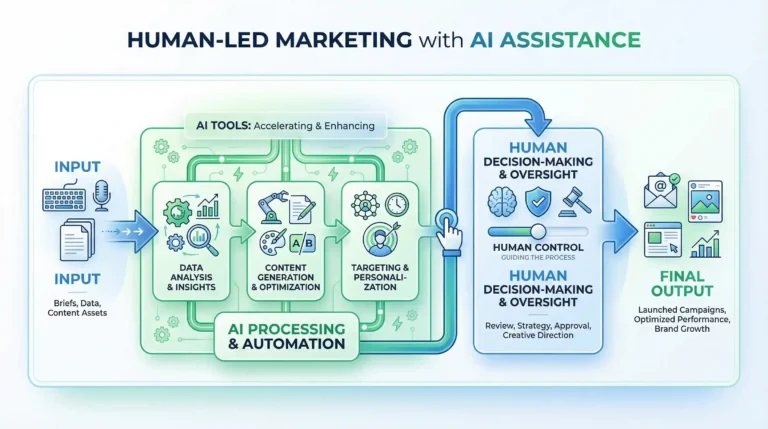
Table of Contents
What AI Does Well in B2B Marketing
AI works best when the job is clear and repeatable. Give it structure and data, and it moves fast. It does not get tired, and it does not miss steps. In these areas, AI in B2B marketing brings speed and order without changing the direction of the strategy.
Data processing and pattern recognition
AI is very good at reading large amounts of data. It can scan campaign results, website activity, and account behaviour in a short time. In B2B marketing, this helps teams spot trends that might otherwise stay hidden. Patterns in engagement, slow points in the funnel, or shifts in buyer interest become easier to see.
What AI provides is a picture of what already happened. It shows movement, not meaning. It cannot judge why one pattern matters more than another, or how much risk a team should take based on that data. Those calls still sit with people.
Marketing automation and efficiency
AI-driven marketing tools have changed how daily work gets done. Emails can be sent at the right time. Leads can be scored without manual checks. Ads can be adjusted while campaigns are still running. Reports arrive without hours of preparation.
This kind of automation removes friction. It gives B2B teams room to think instead of react. The gain here is time, not control. Strategy and decisions remain human-led marketing decisions, while AI handles the background work.
Content support and ideation
In content tasks, AI acts like a fast helper. It can suggest topics, group keywords, and shape early drafts. For teams producing steady content, this support eases pressure and keeps work moving.
Problems appear when AI output goes live without review. Without human expertise in B2B marketing, content can lose depth or sound the same as everything else. In fields where trust and clarity matter, human judgement is what keeps content useful and believable.
The Limits of AI in B2B Marketing
AI limitations in marketing become most visible when context, judgement, and nuance are required. These are not edge cases in B2B marketing; they are the norm.
Lack of Strategic Context
AI does not understand business strategy. It cannot assess long-term positioning, internal constraints, competitive dynamics, or revenue trade-offs. It works from historical patterns rather than future intent.
A B2B marketing strategy often involves deciding where not to invest, which audiences to deprioritise, or when to accept short-term loss for long-term credibility. These decisions require commercial judgement that AI cannot replicate.
No Real Understanding of Buyers
B2B buying is rarely rational in a purely data-driven sense. Decisions involve trust, internal alignment, perceived risk, and timing pressures that sit outside behavioural datasets. AI can model buyer behaviour, but it cannot interpret motivation, anxiety, or organisational politics.
Human marketers recognise when messaging needs reassurance rather than persuasion, or when silence is more effective than another automated follow-up. These judgements shape outcomes but resist automation.
Generic Outputs Without Human Direction
Without strong prompts and editorial review, AI outputs tend to converge. Language becomes predictable, positioning blurs, and differentiation fades. In B2B marketing, where credibility and authority matter more than volume, this sameness weakens trust. This is one reason the human vs AI marketing debate is misleading. The issue is not capability, but control.
Why Human Expertise Still Matters in B2B Marketing
Human expertise in B2B marketing is not an optional layer added after automation. It is the framework within which AI becomes useful.
Strategy and Commercial Judgement
Marketing decisions still come from people. Humans know how money is made, how sales teams work, and what the market can support. They decide when to push for demand and when to build trust. They change the message when buyers change or when a competitor moves.
AI can show numbers and trends. It can point to what worked before. It cannot choose a direction or carry the risk. That responsibility stays with humans.
Creativity, Narrative, and Persuasion
B2B marketing works when the story feels real. Buyers care about risk, pressure, and outcomes, not just features. Humans understand this. They link ideas from different places, question old thinking, and explain complex solutions in a way that makes sense.
AI can help shape words or organise ideas. It cannot feel doubt or urgency. Real persuasion comes from experience, not from patterns.
Ethical, Legal, and Brand Responsibility
Human-led marketing decisions carry accountability. Claims, tone, compliance, and reputational risk all require judgement grounded in real-world consequences. AI does not understand liability, regulation, or long-term brand damage. In high-trust B2B environments, this responsibility cannot be automated.
Human vs AI Marketing Is the Wrong Comparison
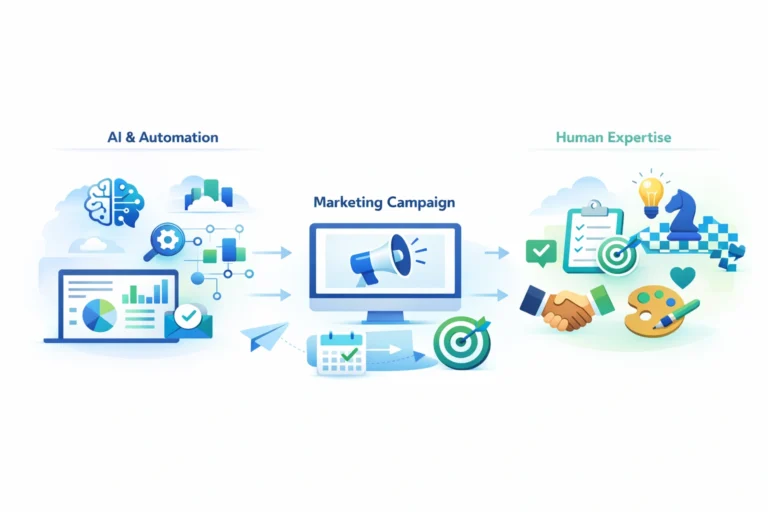
The most effective B2B teams do not choose between humans and machines. As explored in this B2B marketing insight, they design systems where each does what it does best.
AI as a Force Multiplier, Not a Decision-Maker
AI fits best when it works quietly in the background. It handles the repetitive work that slows teams down, like sorting data or keeping systems updated. This clears space in the day and gives marketers room to think instead of reacting to screens and alerts.
What shapes the outcome is how the tool is used. AI can move things faster and wider, but it does not set direction or take responsibility for choices. People do that. When human judgement leads, and AI supports the process, the work stays grounded, clear, and useful.
Strong Inputs Create Better Outputs
AI works best when people give it clear direction. Experienced marketers know the audience, the brand, and the goal behind the work. They shape the brief, guide the tone, and decide what success looks like before any tool is used.
When this guidance is missing, AI output often sounds flat or repeats what already exists. With human oversight, the results change. Messages stay distinct, meaning stays clear, and the work supports real business needs. In this way, AI remains a support tool, guided by expertise rather than replacing it.
How B2B Teams Should Use AI Responsibly
Responsible use of AI in B2B marketing requires clarity and discipline.
Define Clear Boundaries for AI Use
AI should support research, execution, and optimisation. Strategy, positioning, and final messaging decisions should remain human-led. These boundaries prevent over-reliance and protect brand integrity.
Keep Humans in Review and Control
AI can produce work quickly, but speed does not equal accuracy. Every output still needs a human eye. Someone has to check the facts, read the tone, and decide whether the message fits the brand and the moment. These checks are not optional.
This matters even more in industries where mistakes carry weight. A small error, a loose claim, or the wrong wording can damage trust. Humans notice these risks. They slow things down when needed and take responsibility for what is published. That level of care cannot be automated.
Conclusion
AI in B2B marketing can do a lot of work, and it can do it fast. It helps teams move quickly, spot trends, and keep campaigns running. But it does not think. It does not weigh risk, read intent, or take responsibility for results. When businesses lean on AI alone, their marketing often starts to sound the same and say very little that builds trust.
Strong B2B marketing comes from people using AI with care. Human expertise guides the tools, sets direction, and decides what matters most. This keeps messaging clear and honest as work scales. For teams looking for that balance, Midland Marketing focuses on strategy first, not automation for its own sake. To see how a human-led approach can support your goals, contact the team and start a conversation grounded in real business needs.
Frequently Asked Questions
What does AI do in B2B marketing today?
AI helps with everyday work. It sorts data, tracks results, and runs routine tasks like emails and reports. This saves time and effort. People still decide what matters and what to do next.
What can AI not do well in B2B marketing?
AI does not understand people. It cannot sense trust, doubt, or pressure inside a business. It also cannot see long-term goals or office politics. It follows past data, even when the future needs a new approach.
Why is human expertise important when using AI tools?
Human expertise gives direction. Marketers set goals, review output, and correct mistakes. They shape the message so it fits the brand and the buyer. Without this care, AI-driven marketing tools often sound dull or miss the point.
Is B2B marketing about choosing humans or AI?
B2B marketing is not a choice between the two. AI handles speed and volume. Humans handle thinking and responsibility. When both work together, marketing stays useful and makes more sense.
How should B2B teams use AI in a safe way?
B2B teams should use AI as support, not control. Strategy and messaging should stay human-led. Every output needs a review before it is shared. This helps keep the brand clear, honest, and trusted.