


Introduction
Online shoppers expect e-commerce websites to make purchasing quick, simple and secure. Yet even when a customer has added products to their basket, they may still leave without completing the purchase. For UK businesses, reducing this lost revenue starts with understanding where customers experience friction during checkout.
Checkout funnel optimisation focuses on improving every stage between adding a product to the basket and completing payment. From simplifying forms and offering familiar payment methods to improving mobile usability and being transparent about delivery costs, small changes can have a significant impact on conversions.
In this guide, we explore practical ways UK e-commerce businesses can optimise their checkout funnels and reduce cart abandonment.
Table of Contents
Why Are Customers Abandoning Their Carts?
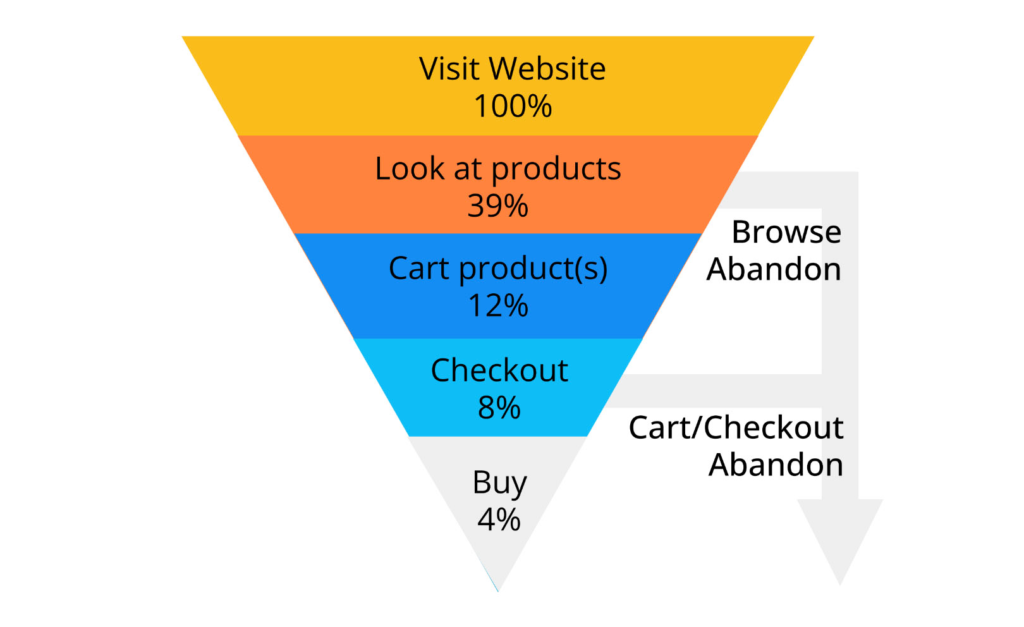
Cart abandonment can happen for many reasons, and not every abandoned basket indicates that a customer has lost interest in the product. Some shoppers may be comparing prices, while others may encounter an unexpected cost or frustrating checkout experience.
Understanding these barriers is the first step towards effective checkout funnel optimisation.
Unexpected Costs and Delivery Charges
One of the biggest sources of checkout friction is the appearance of unexpected costs. A shopper may see a product priced at £40, only to discover during checkout that delivery, taxes or additional charges increase the final amount.
Businesses should make costs as transparent as possible from the beginning. Displaying delivery options and charges before the final payment stage can help customers make informed decisions and reduce unpleasant surprises.
Where possible, consider offering free delivery thresholds or clearly explaining delivery charges on product and basket pages.
Complicated Checkout Processes
A lengthy checkout process can quickly turn a straightforward purchase into a frustrating experience.
Requiring customers to complete unnecessary fields, create an account or navigate multiple pages can increase the likelihood of abandonment. The checkout should only request information that is genuinely required to process the order.
Guest checkout is particularly useful for first-time customers who may not want to create an account before making a purchase.
Poor Mobile Experiences
A significant proportion of online shopping now takes place on smartphones. If a checkout page is difficult to navigate on a small screen, customers may simply leave.
Buttons should be easy to tap, forms should be simple to complete and payment options should work smoothly across mobile devices. A mobile-friendly checkout is therefore an essential part of modern e-commerce conversion rate optimisation.
How to Optimise Your Checkout Funnel
Effective checkout funnel optimisation is about removing unnecessary obstacles while giving customers the information and reassurance they need to complete their purchase.
Simplify the Checkout Process
Review every step of your checkout journey and ask whether it is necessary.
Remove redundant form fields, reduce the number of checkout pages and make the progression between stages obvious. Customers should always understand what information they need to provide and what happens next.
Consider using:
- Guest checkout
- Autofill functionality
- Address lookup
- Clear progress indicators
- Inline form validation
- Simple navigation
- Prominent checkout buttons
The objective is to make completing a purchase feel effortless rather than like an administrative task.
Offer Familiar Payment Methods
Customers have different payment preferences. Some may prefer debit or credit cards, while others may use digital wallets or alternative payment services.
Offering a range of trusted payment methods can reduce friction at the final stage of the checkout funnel. UK businesses should consider which options are most relevant to their target customers rather than providing every possible payment method.
Payment information should also be presented clearly, with customers able to understand exactly how and when they will be charged.
Be Transparent About Costs
Transparency should begin before the customer reaches the payment page. Clearly communicate product prices, delivery costs, delivery times, applicable taxes, discounts and the final order total. UK businesses should also make sure their checkout and purchasing information complies with relevant consumer protection requirements.
Clearly communicate:
- Product price
- Delivery costs
- Delivery times
- Applicable taxes
- Discounts
- Final order total
If customers discover an unexpected charge immediately before payment, they may question the credibility of the business or decide that the purchase is no longer worthwhile. Clear pricing can therefore support both trust and conversion rates.
Build Trust at Checkout
Customers need to feel confident before entering personal and payment information.
Trust signals can reassure shoppers that their information and transactions are being handled securely. Depending on the business, these may include secure payment indicators, recognised payment providers, customer reviews, clear contact details and an easy-to-find returns policy.
Avoid overwhelming customers with excessive badges or security messages. Instead, use relevant trust signals where customers are making important decisions.
Optimise the Checkout Experience for Mobile
Mobile checkout deserves particular attention because smaller screens can make forms and navigation more difficult.
Make Forms Easy to Complete
Long forms can be particularly frustrating on mobile devices. Use appropriate input types, autofill functionality and address lookup tools where possible.
For example, a postcode field should not require customers to manually enter unnecessary information if the address can be selected automatically.
Error messages should also be clear and displayed close to the relevant field. Customers should immediately understand what needs to be corrected.
Improve Checkout Page Speed
Slow pages can interrupt the buying journey and create uncertainty, particularly when customers are waiting for payment information or order confirmation to load.
Businesses should monitor checkout performance and remove unnecessary scripts, large files and other elements that may slow down critical pages.
Speed should not only be measured on the homepage. The checkout journey itself needs to be tested across different devices and network conditions.
Use Clear Calls to Action
The final action should be obvious.
Use clear buttons such as “Continue to Payment”, “Place Order” or “Complete Purchase” rather than vague calls to action.
Make sure important buttons are visually prominent and remain easy to access on smaller screens.
Use Data to Identify Checkout Drop-Off Points
You cannot improve what you do not measure. Analytics can show exactly where customers are leaving the checkout funnel.
Track Each Checkout Stage
Break the customer journey into measurable stages, such as:
- Product page
- Basket
- Delivery details
- Payment
- Order confirmation
This helps businesses identify whether customers are leaving immediately after seeing delivery costs, struggling with payment or abandoning the process at another stage.
Analyse Customer Behaviour
Look for patterns in your data. Are mobile users abandoning checkout more frequently than desktop users? Are new customers more likely to leave? Is abandonment higher for particular traffic sources or products?
These insights can help businesses prioritise the areas that require attention.
Test Checkout Improvements
Avoid assuming that a change will automatically improve conversions. Instead, use A/B testing where appropriate.
Businesses can test different checkout layouts, button copy, payment options, form structures and delivery messages to understand what works best for their audience.
Continuous testing is an important part of long-term checkout funnel optimisation.
Recover Customers Who Abandon Their Carts
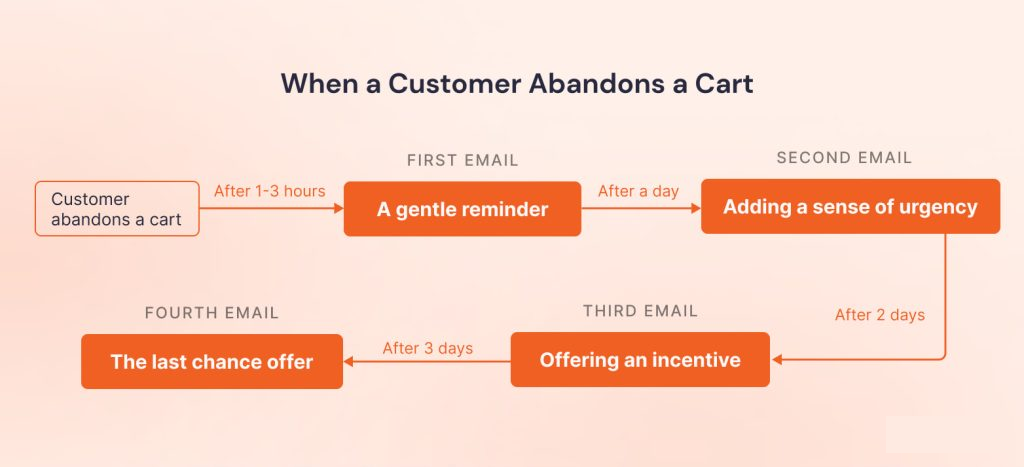
Even with a well-designed checkout, some customers will still abandon their baskets. Recovery strategies can help bring some of these shoppers back.
Send Abandoned Cart Emails
A timely abandoned cart email can remind customers about products they were considering. Keep the message useful and straightforward, with a clear route back to the checkout.
Personalised reminders can be particularly effective when they provide relevant product information or answer potential purchasing concerns.
Use Retargeting Campaigns
Retargeting can help reconnect with customers who visited your website without completing their purchase.
Ads should remain relevant and should not follow customers excessively. The objective is to remind interested shoppers about the product rather than create an intrusive experience.
Consider Appropriate Incentives
For some businesses, an incentive such as free delivery or a limited-time discount may encourage customers to complete their purchase.
However, discounts should not be the default solution to cart abandonment. If customers consistently abandon checkout because of poor usability or unexpected costs, improving the underlying experience is more sustainable than repeatedly offering discounts.
Use Retargeting Campaigns
Retargeting can help reconnect with customers who visited your website without completing their purchase.
Ads should remain relevant and should not follow customers excessively. The objective is to remind interested shoppers about the product rather than create an intrusive experience.
Create a Frictionless Checkout Funnel
Reducing cart abandonment requires more than changing a single button or payment option. Businesses need to look at the entire customer journey and identify anything that creates unnecessary friction.
Effective checkout funnel optimisation should focus on simplicity, transparency, speed, mobile usability, payment flexibility and trust. A digital marketing agency can help businesses analyse these areas, identify conversion barriers and develop strategies to improve the overall customer journey.
Start by analysing your existing checkout data. Identify the stage with the highest drop-off rate, investigate why customers are leaving and test practical improvements. Continue monitoring performance after making changes.
For UK e-commerce businesses, a smoother checkout can turn more high-intent shoppers into paying customers. The goal is simple: give customers the information, confidence and convenience they need to complete their purchase without unnecessary obstacles.

Written by - Lauren Davison
Introducing Lauren – one of our content writers who has a flair for SEO and creative strategy!
With a Master’s Degree in Creative Writing, Lauren has niched down into SEO and content writing.
Outside of work, she loves watching the darts, reading and the pub on the weekend.
Want some more?
Latest Insights & News
Logo Design Trends in 2026: Why Minimalist Logos Are Losing Their Edge
Introduction Minimalist logos are not disappearing in 2026, but they are losing their edge. For years, brands used clean fonts, simple shapes and muted colours
Rebranding Strategy: Lessons From Specsavers’ Genius Campaign
Introduction A rebrand is more than a new logo or fresh colours. It starts with a clear plan. A business must know what to keep,
UK Video Ad Campaigns: What Makes Viral Creative Drive Real Conversions
Introduction A video advert can attract millions of views and still leave a business asking what happened next. High viewing figures may create plenty of