


Introduction
A strong technical base is what lets everything else work. Content, links, and brand signals all rely on it. When that foundation is weak, even the best campaigns struggle to show results.
This 2026 technical SEO checklist for high-performing websites covers every layer of website technical SEO. It covers everything from the first SEO technical setup to deeper performance and control systems. Also, this ensures search engines can move through your pages with ease, understand what they find, and index the right content without friction.
By following this framework, you reduce indexation issues. Along with it, you can improve site crawlability, and build a structure that supports ranking growth instead of limiting it. A modern technical SEO audit is no longer just about fixing errors. It is about creating a platform where speed, stability, and clarity allow every page to perform at its best.
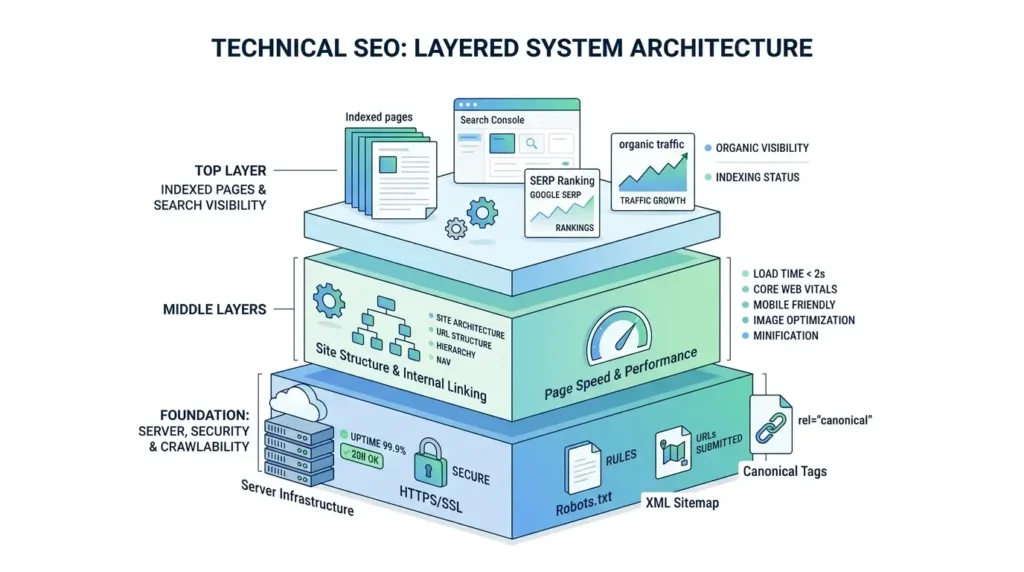
Table of Contents
2026 Technical SEO Checklist for Website
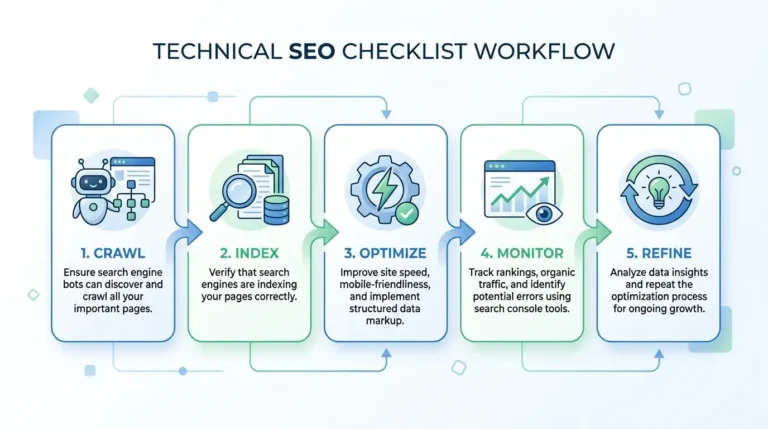
These elements sit under every page, post, and product you publish. When they are right, your website technical SEO works without friction. When they fail, even strong content gets held back. This part of the 2026 technical SEO checklist for high-performing websites focuses on keeping search engines and users on the same clear path.
Secure Protocol (HTTPS)
A site must load over HTTPS at all times. A valid SSL certificate protects data and keeps browsers quiet. If a page pulls images or scripts from an unsafe source, warnings appear. That breaks trust and hurts rankings. During any technical SEO audit, mixed content and expired certificates are quick wins that should never be ignored.
Domain Canonicalisation
Search engines need one true version of your site. Pick either www or non-www and lock it in. Use 301 redirects and canonical tags to guide every other version back to it. This avoids duplicate pages, reduces indexation issues, and improves site crawlability. One clean domain keeps link value focused and supports long-term growth.
Crawlability and Indexation Control
Search engines cannot rank what they cannot reach. This part of your website technical SEO decides which pages get seen, which get skipped, and which quietly vanish. A solid 2026 technical SEO checklist for high-performing websites always starts by clearing the crawl paths and fixing hidden indexation issues.
Robots.txt Configuration
The robots.txt file is a gatekeeper. It tells crawlers where they may go and where they must stop. If it blocks a folder with scripts, images, or key pages, your layout can break in Google’s eyes. That harms site crawlability. Low-value areas like admin pages or test folders should stay closed, but public content must stay open. A smart technical SEO audit checks this file first.
XML Sitemap Optimisation
Your sitemap is a map for search engines. It should list only clean, live, indexable URLs. Broken links, redirects, or noindex pages do not belong there. When kept tidy and sent through Search Console, it helps bots find what matters fast.
Index Coverage Review
Search Console shows how Google treats your pages. Errors like “Crawled currently not indexed” point to weak signals. Fix thin content, duplicates, and soft errors so the right pages get indexed and ranked.
Site Architecture and Internal Linking
A site with no clear shape is hard to explore. Both people and crawlers get lost. Strong website technical SEO gives every page a place and a clear path. That is why structure sits high inside any 2026 technical SEO checklist for high-performing websites.
Logical URL Structure
A good URL reads like a map. It shows where a page lives and what it is about.
Clean URLs:
- Use real words
- Match folder depth to content depth
- Avoid random numbers and long strings
- Skip tracking codes and extra parameters
When URLs follow the site hierarchy, search engines understand relationships faster. This improves site crawlability and reduces hidden indexation issues.
Click Depth Management
Pages buried too deep get ignored. If a crawler has to jump through five or six links, that page loses priority.
Aim to keep key pages within three clicks of the homepage. This includes:
- Core services
- Main categories
- High-value content
Shallow paths make crawling faster and ranking signals stronger.
Internal Linking Strategy
Links inside your content guide both users and bots. Contextual links pass relevance and authority. They also tell search engines which pages matter most.
A good technical SEO audit checks if priority pages receive enough internal links. If they do not, they will struggle, even with strong external links.
Page Speed and Performance Optimisation
Speed shapes how people feel about your site. It also shapes how search engines rank it. Slow pages push users away before they read a word. That is why page speed optimisation sits at the core of every 2026 technical SEO checklist for high-performing websites.
Core Web Vitals Assessment
Google tracks how real users experience your pages. In the core web vital assessment, these three signals matter most:
- Largest Contentful Paint (LCP): how fast the main content shows
- Interaction to Next Paint (INP): how quickly the page reacts
- Cumulative Layout Shift (CLS): how stable the layout stays
Poor scores here mean frustration. Good scores build trust. A regular technical SEO audit should review these numbers and flag pages that fall behind.
Image and Media Optimisation
Images often cause slow loads. Large files, wrong formats, and fixed sizes waste bandwidth.
Use:
- Compressed files
- Modern formats like WebP
- Responsive sizes for each screen
This keeps pages light without losing quality.
Server and Hosting Performance
Even perfect pages fail on weak servers. Check response times, caching rules, and CDN reach. Fast hosting supports better website technical SEO and keeps users from bouncing.
Mobile and Device Optimisation
Most searches now happen on phones. That is why Google looks at the mobile version first when judging your site. If it fails there, rankings drop everywhere. A clean mobile setup is a must in any 2026 technical SEO checklist for high-performing websites.
Mobile-First Readiness
Your mobile pages must show the same content as the desktop. That includes text, links, and structured data. If key elements vanish on small screens, search engines will miss them. This leads to quiet indexation issues that are hard to spot in a normal technical SEO audit. Always check that nothing important gets stripped away.
Responsive Design Testing
Responsive design should feel natural, not forced.
Test across:
- Phones
- Tablets
- Small laptops
Look for broken layouts, hidden buttons, or text that spills off the screen. When pages adjust well, users stay longer, and site crawlability improves. It’s because bots see a stable layout that they can render without errors.
On-Page Technical Elements
These are the signals search engines read before they ever judge your content. They shape how pages are understood, grouped, and ranked. Strong control here supports every part of your website’s technical SEO.
Title Tag and Meta Description Control
Every page needs its own title and description. When these are missing or copied, search engines struggle to know what makes a page different.
Good metadata:
- Matches what the page offers
- Fits within length limits
- Avoids repeats across the site
During a technical SEO audit, duplicates here often point to deeper structure problems.
Header Tag Hierarchy
Headings give your page a clear shape. One H1 should set the topic, H2s break it down, and H3s add detail.
When this order makes sense, users read faster, and crawlers understand better. A messy header flow weakens relevance signals and creates soft indexation issues.
Canonical Tags Implementation
Filters, tracking codes, and similar pages can create many URLs with the same content. Canonical tags tell search engines which one is the real version.
This keeps link value focused, protects rankings, and supports a clean SEO technical setup across the whole site.
Structured Data and Schema Markup
Search engines do not just read pages. They try to understand them. Schema markup gives extra context that plain text cannot. It helps your site stand out in crowded results, which is why it belongs inside every 2026 technical SEO checklist for high-performing websites.
Essential Schema Types
Not every site needs every schema, but some types matter more than others. The common ones include:
- Organisation
- Article or blog post
- Product
- FAQ
- Breadcrumb
These help Google show rich results like star ratings, sitelinks, and expanded listings. When used right, schema supports better website technical SEO without changing how a page looks.
Validation and Error Monitoring
Schema only works if it is clean. Errors or missing fields can block rich results. Use testing tools to:
- Check for broken markup
- Find warnings
- Confirm eligibility
A good technical SEO audit should review schema health often. Small mistakes here can quietly limit how much space your site gets in search results.
Duplicate Content and URL Management
When the same page appears under many URLs, search engines get confused. Link value splits. Rankings drop. This is one of the most common causes of hidden indexation issues in modern website technical SEO.
Parameter Handling
Tracking codes, filters, and session IDs often create long, messy URLs. Most of them do not need to be indexed.
Control them by:
- Using canonical tags to point to the main page
- Setting rules inside Search Console
- Avoiding crawl paths that lead to endless variations
This keeps site crawlability clean and focused.
Pagination and Faceted Navigation
Category pages often break into many parts or filters. Some are useful but many are not. Only allow indexing when a page adds real value. For the rest, use:
- No index
- Canonicals
- Or crawl blocks
A strong SEO technical setup here prevents wasted crawl budget and keeps important pages in the spotlight.
International and Multilingual SEO
When a site serves more than one country or language, small errors can cause big problems. Pages may rank in the wrong place or fight each other. A clear setup is part of any serious 2026 technical SEO checklist for high-performing websites.
Hreflang Implementation
Hreflang tags tell search engines which version of a page belongs to which audience. They prevent a UK page from showing in Spain or a French page from appearing in Canada.
They must point to every language version, match URLs exactly and include a return link. Broken hreflang creates deep indexation issues that a normal technical SEO audit often misses.
Regional URL Structure
Global sites need a clear layout. And to have it, you can use Subfolders, Subdomains and Country domains.
The best choice depends on scale and budget. What matters is keeping it simple and easy to crawl. Clean structure improves site crawlability and keeps authority where it should be.
Error Handling and Status Codes
Search engines follow signals, not guesses. Status codes tell them what to trust and what to ignore. When they are wrong, crawling slows, and indexation issues grow.
404 and Soft 404 Management
A real 404 tells crawlers a page is gone. A soft 404 looks like a page but has no value. Both waste crawl time when left unchecked.
You should:
- Remove dead URLs from sitemaps
- Redirect pages with links
- Let true errors return a clean 404
This keeps site crawlability tight and protects your website’s technical SEO.
Redirect Best Practices
Redirects move users and bots to the right place. Use 301s when a page is gone for good. It is good to avoid methods like Long chains, Loops and Temporary redirects for permanent moves.
A clean redirect path supports a stable SEO technical setup and stops ranking signals from leaking away.
Log File and Crawl Budget Analysis
Most SEO tools guess. Server logs show what really happens. They reveal how search bots move, what they ignore, and where time is being wasted. That makes them a powerful part of any 2026 technical SEO checklist for high-performing websites.
Search Engine Crawl Behaviour
Logs record every visit. You can see which pages bots request, how often they return and where they get stuck.
This helps spot loops, dead ends, and slow pages that block site crawlability. A deep technical SEO audit often starts here because no other data is this honest.
Crawl Budget Optimisation
Search engines do not crawl everything. They pick what matters most.
To guide them:
- Remove low-value URLs
- Fix redirect chains
- Block useless filters
When only strong pages remain, website technical SEO improves, and the right content gets crawled more often.
Monitoring, Auditing, and Maintenance
Websites change. Pages get added. Plugins update. Small fixes can break big things. That is why technical SEO never stays finished. A strong 2026 technical SEO checklist for high-performing websites includes ongoing control, not just setup.
Ongoing Technical Audits
Regular audits catch problems before rankings slip. They help you find:
- New crawl blocks
- Broken links
- Fresh indexation issues
- Slow pages
Even clean sites drift over time. A steady technical SEO audit keeps the SEO technical setup in shape.
Search Console and Analytics Monitoring
Search Console shows how Google sees your site. Analytics shows how users react. Watch and analyse the Coverage reports, Core Web Vitals and Enhancements and errors. Early warnings let you act fast and protect your website’s technical SEO before damage spreads

Conclusion
A solid technical base decides how far a site can go. When crawl paths are clean, pages load fast, and systems stay stable, search engines can do their job without friction. That is the real goal of a 2026 technical SEO checklist for websites.
Strong website technical SEO gives your content room to work. It lets links pass value. It keeps errors from stacking up in the background. Most of all, it creates a platform that can grow without breaking.
Regular checks turn this from a one-off task into a lasting edge. With steady audits, clear signals, and smart upkeep, technical SEO becomes the quiet force that keeps rankings strong while others fall behind.
Frequently Asked Questions
- Why is technical SEO more important in 2026 than before?
Search engines now judge how a site works, not just what it says. If pages load slowly or crawl paths break, even great content struggles to rank.
- How often should I run a technical SEO audit?
Most sites should check at least every three months. Large or fast-moving sites need it more often, especially after updates.
- Can technical SEO fix low rankings on its own?
It will not replace content or links, but it removes the blocks that stop them from working. Without it, growth stays limited.
- What is the first thing to fix on a weak site?
Start with crawl and index problems. If search engines cannot reach or trust your pages, nothing else matters.
- Do small sites need the same technical setup as big ones?
Yes. Even a simple site can lose traffic if speed, security, or structure fails. A clean base helps every site compete.