


Introduction
SEO reporting has become one of those things agencies rarely talk about, but constantly feel. Clients want proof that work is happening. Real proof. Not raw exports pulled straight from a tool they’ve never used and don’t plan to learn.
At the same time, expectations have crept up. As SEO reporting for agencies gets more detailed, clients expect reports to feel considered and professional, not stitched together or overly technical.
When a report looks outsourced or confusing, trust can wobble, even if performance is moving in the right direction. But when reporting is clear, branded, and easy to follow, it does something important. It makes progress feel real.
That’s why white-label SEO reporting now sits at the centre of how agencies explain value, scale their services, and keep clients confident over the long term.
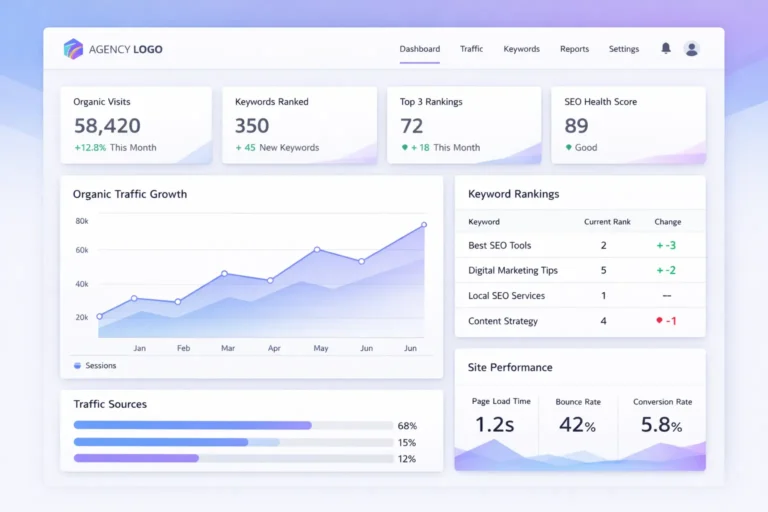
Table of Contents
What Is White-Label SEO Reporting?
Definition of White-Label SEO Reporting
White-label SEO reporting is, at its simplest, about presentation and control. Agencies still use external platforms to gather data, but clients never see those tools. Instead, they receive SEO performance reports that carry the agency’s name, branding, and tone throughout.
The content of these reports usually covers familiar ground. Rankings, organic traffic, conversions, technical health, and visibility change over time. What sets them apart is not the information itself, but how it is framed.
The agency decides what appears first, what gets explained in detail, and what stays in the background. Language is chosen carefully, avoiding tool jargon in favour of terms clients actually understand.
This setup allows agencies to use advanced white-label SEO tools while keeping ownership of the work. It removes the sense that SEO is being passed through another platform and reinforces the idea that strategy, insight, and results all come from the agency.
How White-Label SEO Reporting Works
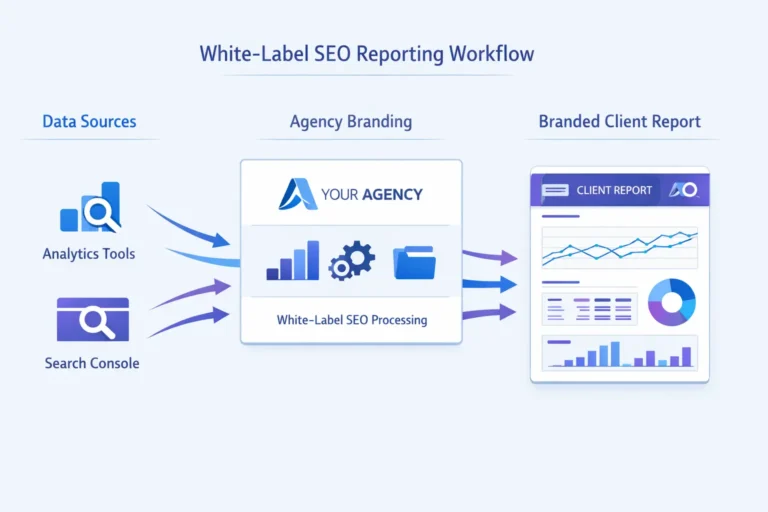
Behind the scenes, white-label SEO reporting tools connect to data sources such as Google Search Console, Google Analytics, and rank tracking software. They pull in performance data automatically and bring it together in one place.
What happens next is where agencies add value. Branding is applied so the report matches the agency’s wider identity. Metrics are selected with intent, based on what the client is actually trying to achieve, not on what a tool happens to measure by default. Commentary is layered in to explain shifts in performance, highlight progress, and flag areas that need attention.
Many teams choose automated SEO reporting to handle delivery. Reports go out on a set schedule, without manual exporting or formatting. From the client’s point of view, everything feels internal. The report arrives on time, looks deliberate, and makes sense without needing extra explanation.
Why White-Label SEO Reporting Is Important
Strengthens Agency Brand Authority
Every report says something about the agency behind it, even when no one mentions branding out loud. When reports arrive with third-party logos or unfamiliar dashboards, that message gets muddled. Clients may not say it, but the question forms anyway. Who is really doing the work here?
White-label SEO reporting clears that fog. The report looks owned, intentional, and consistent with everything else the agency puts in front of the client. Over time, that consistency matters. Clients stop thinking about tools altogether. They start paying attention to insight, direction, and outcomes. That shift is where authority quietly builds.
Improves Client Trust and Transparency
Trust does not come from more data. It comes from understanding. Client SEO reports packed with unexplained numbers tend to create the opposite effect. Instead of clarity, they raise doubt. What should I be looking at? Is this good or bad? Why did this change?
White-label SEO reporting gives agencies control over how performance is explained. The focus moves away from endless metrics and towards signals that actually matter. Traffic quality, leads, and visibility where it counts.
Sometimes revenue, when tracking allows. When reports speak in business terms rather than technical language, clients feel informed rather than overwhelmed. That’s where transparency starts to feel real.
Supports Scalable SEO Service Delivery
Manual reporting works fine at the beginning. Then, clients add up quickly. What once took an hour suddenly eats a day: copying data, fixing formatting, double-checking numbers. All of it pulls attention away from optimisation and strategy, where value is actually created.
Automated white-label SEO reporting changes that balance. Data pulls itself. Reports go out on time. The process becomes predictable instead of reactive. Teams get their time back without cutting corners. For agencies that want to grow without burning out, this kind of efficiency isn’t a bonus. It’s a requirement.
Key Benefits of White-Label SEO Reporting
Consistent Branding Across Client Touchpoints
Clients don’t sit down and analyse branding. It still affects how they feel. They move from a proposal to a call, then to a dashboard link, then to a report, often without noticing the shift. When each of those pieces looks slightly different, confidence slips quietly.
White-label SEO reporting helps steady that experience. The report doesn’t feel separate or bolted on. It matches everything else the agency puts in front of the client. Same look, same tone, same sense of ownership. Over time, that consistency signals professionalism without needing to spell it out.
Customised Metrics for Different Client Goals
There’s no single definition of success that works for every client. A local business might care most about being found and getting calls. A service company usually watches leads. E-commerce teams often jump straight to revenue and product movement.
White-label SEO reporting makes space for those differences. Instead of forcing every client into the same framework, metrics can be shaped around what actually matters in that situation. When reports reflect real goals, conversations flow more easily. Review calls feel useful, not performative.
Time and Resource Efficiency
Reporting shouldn’t feel like a drain on the team. Yet without the right setup, it often does. Hours disappear into exporting data, fixing layouts, and checking numbers that should already be right.
Automated SEO reporting takes a lot of that weight off. Data updates quietly in the background. Formats stay consistent. Mistakes become less common.
That frees teams to spend their time where it counts, looking at patterns, spotting issues, and improving performance. At that point, the report stops feeling like a chore and starts doing its job properly.
White-Label SEO Reporting vs Standard Reporting
Control Over Client Communication
Standard reporting often exposes raw dashboards and third-party branding. Clients see data but lack guidance.
White-label SEO reporting gives agencies control over communication. Messaging, priorities, and explanations are intentional. This control helps manage expectations and steer conversations toward outcomes rather than metrics alone.
Better Narrative and Context
SEO performance shifts constantly. Rankings move. Traffic fluctuates. Algorithm updates happen without warning.
Branded SEO reporting allows agencies to explain these changes clearly. Context turns volatility into insight. The report becomes a narrative of progress, challenges, and next actions, rather than a confusing snapshot.
Common Mistakes in White-Label SEO Reporting
Overloading Reports with Data
Too much data creates friction. Clients stop reading. Questions increase. Effective white-label SEO reporting focuses on what matters most. Supporting data can exist in the background, but the main report stays lean and purposeful.
Lack of Interpretation and Insights
Numbers alone do not show value. Interpretation does. When client SEO reports lack explanation, they feel automated and impersonal. Insight is what transforms reporting into a strategic service.
Best Practices for Effective White-Label SEO Reporting
Align Reports With Client Objectives
Good reports don’t start with data. They start with the original agreement. The goals set at the beginning of the campaign should still be visible in every report that follows. If the focus was leads, that should be obvious. If priorities shift, the reporting needs to shift as well.
This kind of alignment keeps SEO reporting for agencies rooted in outcomes that matter to the business, not numbers that simply look impressive on paper.
Use Visuals to Improve Understanding
Most clients scan before they read. Visuals make that possible without losing the message. A simple chart can show progress faster than paragraphs of explanation. Trends stand out. Movement becomes easier to understand.
For non-technical stakeholders, this clarity is often more valuable than detail. When those visuals follow brand guidelines, they do more than explain performance. They help the report feel familiar and considered, not pulled straight from a tool.
Include Clear Next Steps
A report that ends with numbers feels unfinished. Clients naturally want to know what happens next. Clear next steps give the report direction. They explain where attention is going and why that choice matters.
This forward focus reminds clients that SEO is ongoing work, not a set-and-forget task, and it helps keep momentum between reporting periods.
Is White-Label SEO Reporting Worth It?
White-label SEO reporting is essential for agencies that want control, clarity, and scale. It protects brand authority, improves client communication, and reduces operational strain. When done properly, it turns SEO reporting for agencies into a retention tool rather than an obligation.
At Midland Marketing, we treat reporting as part of strategy, not admin. Our branded SEO reporting focuses on insight, relevance, and clarity. If you want reports that strengthen client trust and support growth, now is the time to rethink how reporting is handled.
Speak to us today and see how white-label SEO reporting can elevate your agency service.
Frequently Asked Questions
What is white-label SEO reporting?
It is the delivery of SEO reports under your own brand, hiding third-party tools from clients.
Why do agencies need branded SEO reporting?
Branded reports improve trust, reinforce authority, and prevent clients from seeing agencies as middlemen.
Can white-label SEO reporting be automated?
Yes. Automated SEO reporting allows consistent delivery while freeing time for strategy and optimisation.
Do white-label SEO tools affect data accuracy?
No. They use the same data sources, just presented under your brand.
Is white-label SEO reporting suitable for small agencies?
Absolutely. It helps small teams appear established and scale without added workload.