


Introduction
Your homepage is where most people meet your brand. It is also where Google forms its first opinion, links point to it, and searches lead to it. AI tools scan your site to determine what it’s about. That is why homepage SEO carries more weight than any other page.
Yet many sites get this wrong. Some try to push too many keywords, while others leave the page empty. Both choices hurt trust and confuse search engines. A homepage is not a blog post, and it is not a sales page either. It has a different job.
This guide shows what makes homepage SEO work. It explains how to place keywords, shape content, and send clear signals without making the page feel forced. When done right, your homepage becomes strong, simple, and easy to rank.
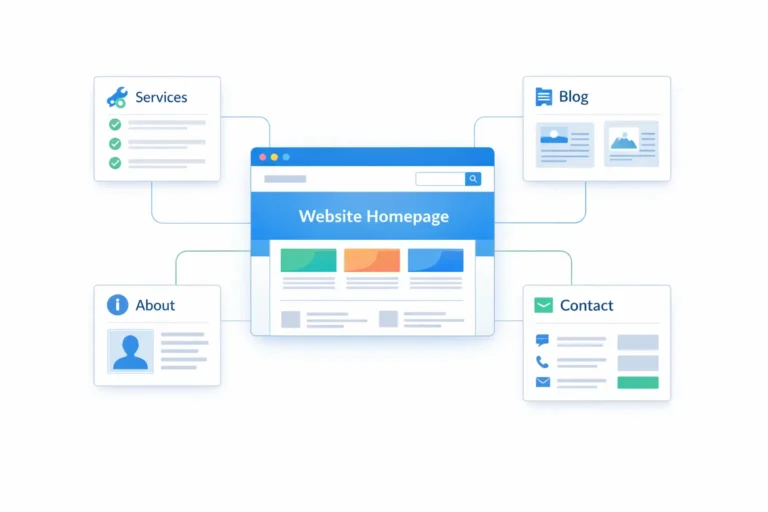
Table of Contents
Why Homepage SEO Is Different From Other Pages
Homepage SEO follows a different path because the homepage has to do many jobs at once. It is not meant to rank for a single topic. It must explain who you are, what you do, and why you matter. At the same time, it must help Google and users move to the right places. That is why the website homepage SEO needs more care than any other page.
A homepage also carries more weight. When Google scans a site, it looks at the homepage to understand the brand. Google Search Central often calls it the “main hub” of a website. This is why weak signals on the homepage can drag the whole site down, even if other pages look strong.
The Homepage Targets Broader Search Intent
Most pages aim at one clear need. A blog answers a question. A service page sells one thing. The homepage does not work that way. It targets brand searches and wide commercial intent. People who land there may be new, unsure, or ready to buy. Your SEO for homepage must guide all of them without pushing too hard.
This is where homepage content optimisation matters. You need short, clear lines that explain what you offer. You also need links that send people deeper into the site. A good homepage works like a map. It does not trap users. It shows them where to go next.
The Homepage Carries the Strongest Authority
Most links from other sites point to the homepage. News sites, blogs, and reviews rarely link to inner pages. They link to the main URL. This gives the homepage the most power. In homepage SEO optimisation, that power must be used well.
If your homepage sends mixed signals, Google gets confused. If it sends clear ones, it lifts the whole domain. That is why on-page SEO for homepage must stay clean. Titles, headings, and links should all point in one clear direction.
The Homepage Must Balance SEO and UX
This is where many sites fail. Some load the page with text and keywords, others hide everything behind images. Homepage SEO best practices focus on balance.
Search engines need words while users need ease. A good homepage uses simple text, smart links, and clean space. When both sides feel at home, rankings and sales rise together.
Common Homepage SEO Mistakes
Many sites do not fail because of bad links or weak content. They fail because the homepage sends the wrong signals. When homepage SEO is done poorly, even strong pages struggle to rank or convert.
Small errors here do not stay small. They spread across the whole site. Here are some common mistakes to avoid:
Targeting Too Many Keywords
The homepage is not meant to rank for every service you sell. When people try to push many topics onto one page, search engines stop trusting it. The page loses focus and rankings drop. Service pages start to fight the homepage for the same terms.
In homepage SEO optimisation, less is often more. The homepage should target the brand and the main offer. Deeper pages should handle details. This keeps the website homepage SEO clean and easy to read.
Key problems this creates:
- Google does not know what your site is about
- Your service pages lose space to rank
- Users feel lost when they land
Using Generic or Vague Messaging
Lines like “Welcome to our website” say nothing. They do not help users. They do not help search engines and waste space that could show value.
Strong SEO for homepage uses real words. It tells people who you help and what you do. Homepage content optimisation works when the message is clear, not when it sounds safe.
What weak copy causes:
- Low trust
- Fewer clicks
- Poor search signals
Ignoring Internal Linking Structure
The homepage holds the most link power. If that power is not sent to the right pages, it gets wasted. Many sites forget this part of on-page SEO for homepage.
A good homepage should:
- Point to main services
- Support key landing pages
- Build clear paths for users
These steps follow homepage SEO best practices. When links flow well, rankings also perform well.
How to Optimise a Homepage for SEO Properly
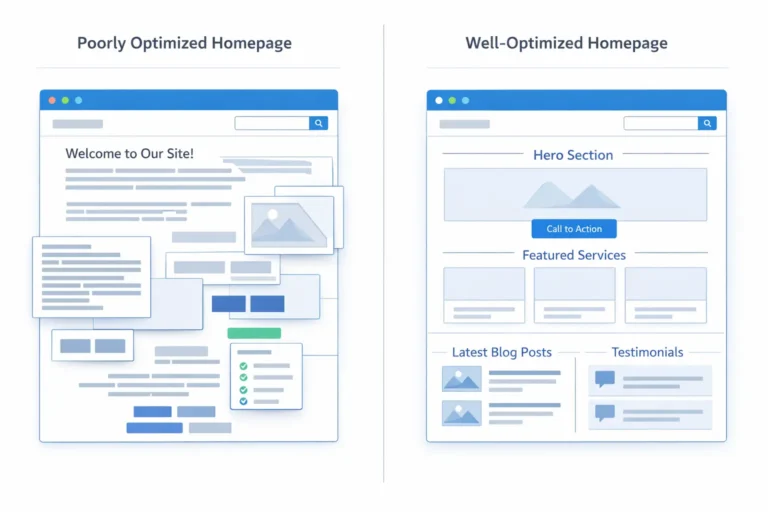
A strong homepage does not try to be loud. It tries to be clear. When the page knows its role, both people and search engines follow it with ease. The goal is to match what users expect with what your site offers, without noise. Follow the essential factors listed below to make your homepage SEO-friendly.
Choose One Primary Keyword Theme
Your homepage should stand for one main idea, not five or ten. This is what anchors the rest of the site.
When a homepage chases too many topics, it loses shape. Search engines stop seeing it as a leader. Visitors feel unsure about where they landed. A focused page builds trust fast.
What a clear theme gives you:
- A strong first signal
- A stable base for other pages
- Fewer ranking conflicts
Write a Clear, Purpose-Driven H1
The main heading must clearly state what you do. No riddles and taglines that sound clever but mean nothing. A good heading should feel like a handshake. People and search engines scan your site fast. If the first line fails to explain your role, both move on.
A good heading:
- State what you offer
- Shows who it is for
- Sets the tone for the page
Structure Content Using Logical Sections
A homepage should feel like a guide, not a wall. Each section should lead the reader forward. It should show where to go next, not try to hold them in one place. Smart layout helps both users and crawlers.
A strong structure includes:
- A short intro
- A clear list of services
- Proof, such as reviews or awards
- Easy paths to deeper pages
When these pieces work together, the homepage becomes simple, strong, and easy to trust.
Content Elements That Strengthen Homepage SEO
Words matter, but they are not the whole story. A homepage also sends signals through small details. These details shape how search engines and people judge your site. In homepage SEO, these elements can lift or drag down performance without you noticing.
Optimised Meta Title and Description
The meta title is often the first thing people see in search results. It should tell them who you are and what you do in one clear line. A strong title also helps the website homepage SEO stay focused on the right topic.
The description does a different job. It invites the click. It should sound real and useful, not stuffed with offers. In homepage SEO optimisation, this small block of text can change how often people choose your site.
A good pair does three things:
- Shows the brand
- States the main service
- Feels natural to read
Strategic Internal Links
The homepage holds the most link power. That power should not sit still. It should flow to the pages that matter most. This is where on-page SEO for the homepage plays a quiet but strong role.
Links should feel part of the page. They should guide users to services, key topics, or locations. When done well, they help SEO for homepage work with the rest of the site, not against it.
Smart linking:
- Builds clear paths
- Shares page strength
- Helps search engines map your site
Trust and Authority Signals
People do not trust empty pages. They trust proof. Logos, reviews, awards, and clear contact details all make a page feel real. These are part of the homepage content optimisation, even if they are not words.
When users stay longer and click more, search engines notice. That is why these signals support homepage SEO best practices without you forcing anything.
Homepage SEO for AI and Answer Engines
Search has changed. AI tools now read your homepage to learn who you are. They use it to decide what to show in answers, voice search, and chat results. If your page is unclear, they guess. That can push your brand out of view. This is why homepage SEO now shapes how AI sees your business.
Clear Entity and Brand Definition
Your homepage should say your name, your service, and your place in simple words. AI systems build a brand profile from this. When the page is vague, that profile stays weak.
Clear pages help:
- Your brand gets named right.
- Your service gets matched.
- Your location gets linked.
This is a key part of homepage SEO optimisation today.
Structured, Scannable Content
AI reads in blocks, not stories. It looks for short lines and clear sections. Pages that run long or mix ideas often get misread.
This is where website homepage SEO matters. When content is easy to scan, AI tools pull the right facts. That leads to better answers, more trust, and stronger reach.
Conclusion
A homepage should not try to be everything. It should be one strong voice. When it is clear, focused, and easy to read, the rest of the site grows with it. This is what makes homepage SEO work. It builds trust, sends power to deeper pages, and helps both search engines and AI tools understand your brand.
Most sites miss this. They add more words when they need better ones. They chase more topics when they need one clear message. A well-built homepage does the opposite. It stays simple, and it leads users where they need to go.
At Midland Marketing, this is how we shape homepages. Not with noise, but with purpose. When the foundation is right, every page above it stands stronger.
Frequently Asked Questions
- Should a homepage target more than one main keyword?
No. A homepage should focus on one main idea; other pages handle the rest. This keeps rankings stable and clear.
- How long should homepage content be for SEO?
There is no fixed length. It should be long enough to explain what you do and guide users, but short enough to stay easy to read.
- Does internal linking from the homepage affect SEO?
Yes. The homepage passes the most strength. Links from it help key pages rank faster and stay strong.
- Can too much text hurt a homepage?
Yes. Long blocks of text make users leave. When people leave fast, search engines notice.
- Does homepage SEO affect AI search results?
Yes. AI tools read the homepage to learn about your brand. Clear words lead to better answers and more visibility.