


Introduction
Think about the last time you bought something online. You may have checked the price, read a few reviews or looked at other shops first.
Your customers may do the same. They want to know what they are buying, how much it costs and whether they can trust the seller.
The buyer behaviour trends in online can help you see what people look for before they buy. This matters for online shops and firms that sell services. When you know what buyers need, you can make your website more useful.
Table of Contents
Buyer Behaviour Trends in Online: What Has Changed?
People have more ways to find things online. They may use Google, social media, online shops or AI tools. Some may use all of them before they make a choice.
Online buyer behaviour trends are not the same for every buyer. Someone buying a £10 item may decide fast. Someone buying a laptop may spend days checking prices and features. A person looking for a new supplier may ask for quotes from three firms.
Do not guess what your customers want. Look at the pages they visit, the questions they ask and the points where they leave your site. This can show you where they need more help.
Your own customers’ behaviour is the best guide to these changing trends. A trend may be worth a closer look, but it may not matter to your audience.
Online Shopping Behaviour: How People Choose
Most buyers need some facts before they spend money. They may go through these steps:
- Find: They see a product or learn about a need.
- Learn: They look for details and possible answers.
- Compare: They check prices, reviews and features.
- Choose: They buy, ask a question or leave.
Not everyone follows these steps in order. A buyer may visit your site on Monday, return on Friday and buy the next week.
Your pages should help people at each stage. A guide can explain a problem. A product page can list sizes and key facts. A service page can show what the price covers. A contact page can make it easy to ask for help.
Look at your online shopping behaviour data. If people keep visiting your price page but do not buy, check whether the costs are clear. If they leave a product page, see if key details are missing.
How Do Buyers Research and Compare Options?
Search Engines and AI Tools
Some people use Google to find a product. Others may ask an AI tool to explain a topic or compare choices. Social media can also help people find brands and see products in use.
No tool can replace clear facts. Keep your pages up to date. State what you sell, who it suits and what it costs. If a product has limits, explain them.
Google’s guide to helpful content explains why useful content matters. Its guide to AI features in Search also sets out the role of sound SEO basics. There is no set word count that will secure a place in AI answers.
Help People Compare
Customer buying decisions online may depend on how easy it is to compare two options. Show the key facts in simple terms.
For a product, list its size, main features, price and delivery cost. For a service, explain what the work covers, how long it may take and what the customer needs to do.
Avoid claims such as ‘best in the UK’ unless you can prove them. Clear facts help people decide if your offer meets their needs.
If you run an online shop, use e-commerce SEO services to help with product pages, category pages, and search visibility.
Factors Influencing Online Purchases: Trust and Price
Reviews People Can Trust
Before buying, people may want to know what other customers think. Reviews can help, but only when they give a fair view of real experiences.
The UK Government says that more than half of UK adults use online reviews. Its guide to online review sites explains why reviews should be fair and not misleading.
Ask customers for honest feedback. Do not write fake reviews or hide facts to make your business look better. If you share a case study, make sure the details and results are true.
Price Is Not the Only Concern
A low price may catch someone’s eye, but it may not be the main reason they buy. They may care more about quality, support, delivery or how long the item will last.
These are some factors influencing online purchases. The main ones will vary by product and buyer.
Show all costs before the buyer reaches the final step. If you offer a service with a price based on the job, explain why the cost may change. Tell people how to ask for a quote.
Make Your Site Easy To Use
Your website should work well on a phone. Use clear text, simple menus and buttons that are easy to find. Keep forms short and ask only for the details you need.
Check your site as if you were a new customer. Can you find the price? Is it clear what happens next? Can you get in touch without trouble?
What UK Data Tells Us About Online Buying
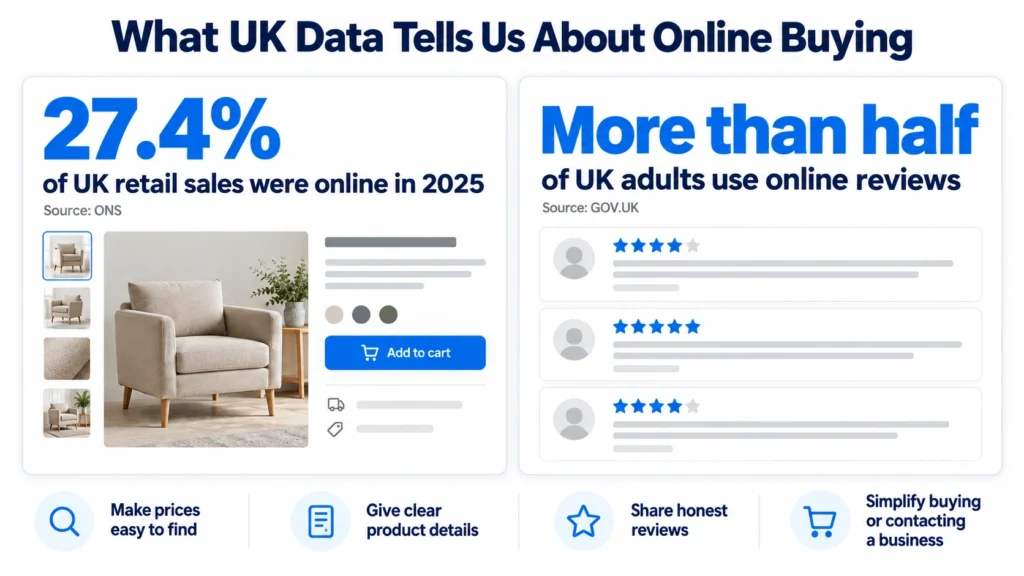
Many people in the UK shop online. ONS data shows that 27.4% of UK retail sales took place online. This means that a clear website can help people find and buy what they need. View the ONS data.
Reviews also play a part in how people choose a business. GOV.UK says that more than half of UK adults use online reviews. Honest reviews can help buyers learn from other people’s experiences.
More than half of UK adults use online reviews:
Reviews help people learn about a product or service. Businesses should share real feedback and avoid false claims.
What can your business do?
- Make prices easy to find.
- Give clear details about products and services.
- Share honest customer reviews.
- Make it easy for people to buy or get in touch.
How Can Businesses Respond?
Answer the Questions Buyers Ask
Your customers may ask the same questions again and again. They may want to know the price, what is included or how long the work takes.
Use emails, calls and website searches to find these questions. Add the answers to the pages where people need them. This saves time for both your team and your customers.
For help with planning useful website content, visit Midland Marketing’s content marketing service.
Show What Makes Your Offer Clear
Do not rely on claims such as ‘great service’ or ‘top quality’. Explain what you do and give proof where you can.
You might show real customer feedback, photos of past work, product details or a clear list of what a service includes. Make sure every claim is true.
These changing consumer behaviour trends are a reason to review your site, not to change everything at once.
Give People a Clear Next Step
A visitor who is still learning may want a guide. Someone who is comparing firms may want to see past work. A ready buyer may want to buy or ask for a quote.
Match the next step to the page. Keep forms short and explain what happens after a person sends one.
For a small online shop, the buyer behaviour trends in online can help you choose which page to review first. Start with a page that gets visits but few sales, then look for facts that may be missing.
How to Measure What Works
You do not need to track every number. Start with the ones that help you make a choice.
- Google Search Console: See which search terms bring people to your site.
- Google Analytics 4: Check visits, page use and key actions.
- Shop data: Track product views, basket actions and sales.
- Customer feedback: Keep a note of common questions and reasons people do not buy.
If many people visit a service page but few get in touch, check whether the price, service details and next step are clear. Make one change, then check the results.
You can also read the latest marketing ROI measurement framework for more on tracking results.
Customer buying decisions online cannot be explained by one number alone. Use site data with feedback from real people. Follow privacy rules when you collect or use customer details.
Compare online buyer behaviour trends over time before making large changes.
Conclusion: Help People Make a Choice
People want clear facts before they spend their money. They need to know what they will get, how much it will cost and whether they can trust the seller. The buyer behaviour trends in online shopping show why these details matter. A clear website, fair prices and real customer reviews can help people make a choice.
You may not win every sale, and that is normal. Focus on making things easy for your customers. Check your website for missing facts, hard-to-read text and forms that take too long to fill in.
Fix one issue at a time and watch what changes. Listen to your customers, learn from their actions and keep making small changes that help them find what they need.
Frequently Asked Questions
What are buyer behaviour trends in online shopping?
They are changes in how people find, compare and buy products online. This can include the sites they use and the facts they need before they choose.
Why do online reviews matter?
Reviews can show what other buyers think of a product or service. They should be real and fair. Fake reviews can harm trust and may break the law.
Can AI tools affect online shopping?
Yes. Some people use AI tools to find ideas or compare options. Others do not use them at all. Keep your website facts clear and up to date for every visitor.
Why do people leave without buying?
They may find the price too high, miss key facts or have trouble using the site. Check your data and ask customers when you can. Do not assume there is one cause.
How can a small business improve its website?
Answer common questions, show clear prices, use real reviews and make the site easy to use on a phone. Track sales and enquiries to see which changes help.