


Introduction
You opened your fifth location last year. Good for you. Now your phone isn’t ringing like it should. One branch ranks well. The others? Nowhere to be found. Sound familiar?
Most business owners hit this wall. Managing one location is easy. Scaling visibility across 5, 10, or 50 locations is where most businesses fail. Suddenly, you’re dealing with duplicate content problems. Your Google Business Profiles are a mess. Citations conflict across directories. And those local rankings you worked so hard for? They’re slipping.
But here’s the thing. You don’t need more hours in the day. You need a system. A way to scale without losing control.
This guide walks you through exactly that. We’ll cover how to build a foundation that grows with you. How to optimise Google Business Profiles across every branch. How to keep your data clean. And most importantly, how to measure what actually works.
Because mastery isn’t about managing chaos. It’s about building something that delivers measurable ROI. Let’s get into it.
Table of Contents
Building a Scalable Foundation for Local SEO for Multiple Locations
You can’t grow something strong on a weak base. Same goes for multi-location SEO. Most businesses start with good intentions. They create a few location pages. Set up some Google profiles.
Then they add more locations and things fall apart fast. The problem? No system. Just reactive fixes. A scalable foundation changes everything. It lets you add new locations without breaking existing ones.
It keeps your content unique. It ensures every page actually helps customers find what they need. Let’s break down how to build this right.
Structuring Location Pages for Search Intent and Conversion
Here’s where most people mess up. They copy the same page template for every city. Swap the name. Call it done. Google sees through that. So do your potential customers.
Each location page needs unique content. Not just different words, different value. Think about what someone in that specific area actually wants. Are they looking for emergency service? Price estimates? Specific expertise?
Here’s what works:
- Write service pages that mention actual neighbourhoods
- Include local landmarks or projects you’ve worked on
- Add photos of your team at that specific branch
- Mention local events or community involvement
One landscaping client had five branches. Their old pages all said the same thing. “We offer lawn care across the region.” Nothing special there.
We rewrote each page to highlight real projects. One branch specialised in drought-resistant gardens. Another handled large commercial contracts. Suddenly each page felt authentic. Conversions went up 34% in three months.
Your location pages should answer one question: “Why should I trust you in my neighbourhood?”
Also watch your internal linking. Connect location pages to relevant service pages. And link between nearby locations too. It helps Google understand your geographic footprint.
Creating a Centralised Yet Flexible SEO Framework
You need two things: consistency and flexibility. Consistency means your brand feels the same everywhere. Same phone number format. Same service descriptions. Same quality standards.
Flexibility means each location can adapt. Maybe your Brighton branch offers something Manchester doesn’t. Maybe pricing varies by region. The trick is building a content management system that handles both.
Start with a solid content template. Not a duplicate page, a framework. Each location page should have:
- Unique introduction (50-100 words)
- Location-specific services
- Local testimonials or case studies
- Branch contact details
- Embedded Google Map
- Nearby service areas
Your CMS should let you edit these elements separately. So when you update service descriptions across all locations, you don’t accidentally overwrite unique local content.
One restaurant franchise learned this the hard way. They updated their menu description across fifty location pages. Wiped out all the unique neighbourhood content. Rankings tanked for weeks. Don’t be them.
Aligning Multi-Location Business SEO with User Journey
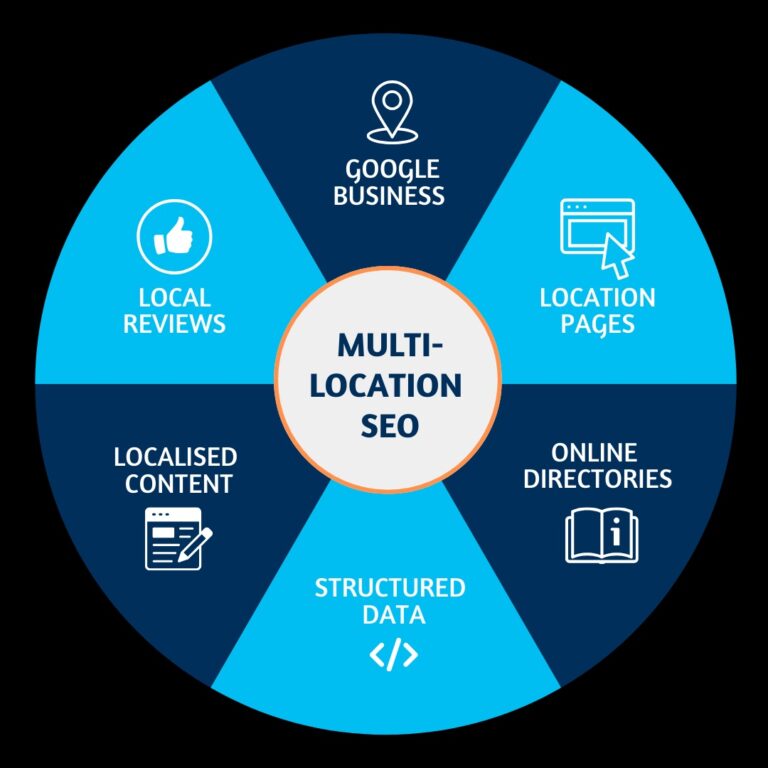
People search in different ways at each stage of their decision. Someone searching “roof repair near me” wants immediate help. That’s bottom-of-funnel intent.
Someone searching “how to choose roofing materials” is researching. They’re earlier in their journey. Your location pages should match these different intents.
Map your keywords to specific pages:
Search Intent | Keyword Example | Page Type |
Awareness | “roof maintenance tips London” | Blog or guide page |
Consideration | “best roofing contractors South London” | Service page with location |
Conversion | “emergency roof repair Croydon” | Location landing page with phone number |
Most businesses skip the awareness and consideration phases. They only target conversion keywords. That leaves money on the table.
Someone researching today might hire you next month. If your content answers their early questions, you’re already top-of-mind.
Make sure each location has content for all three stages. A blog post about winter roof prep. A service page showing your process. A location page with easy contact options. This layered approach builds trust. And trust leads to calls.
Advanced Google Business Profile Optimisation Across Multiple Locations
Your Google Business Profile isn’t just a listing. It’s a ranking machine. For multi-location businesses, GBP can make or break your local visibility. Get it right and you dominate the map pack. Get it wrong and competitors eat your lunch.
But managing dozens of profiles takes strategy. You can’t leave them untouched after setup.
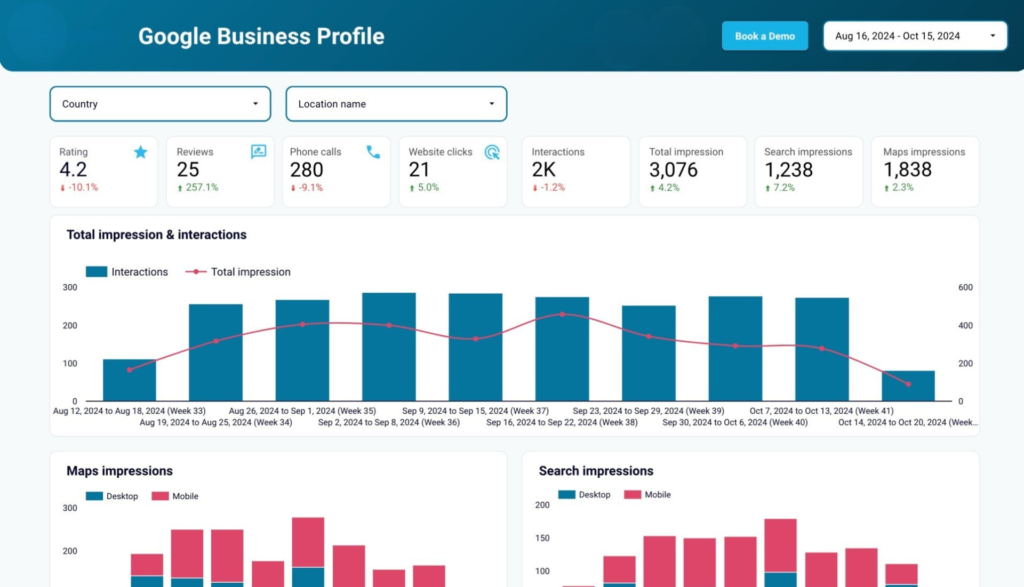
Google Business Profile Optimisation for Multiple Locations at Scale
Here’s a hard truth. Most agencies treat each GBP as a separate project. That’s inefficient. You need a system.
Start with categories. Choose primary categories that match your core services. But secondary categories can vary by location. A dentist in a tourist area might add “cosmetic dentistry” if that brings in more business. A suburban branch might add “family dentistry.”
Attributes matter too. Does a location have wheelchair access? Free parking? Late hours? Fill these out completely. Google uses them to match you with specific searches.
Pro tip: Use the same email account to manage all profiles. Google’s bulk management tools work best when everything is under one roof. You can update hours, add photos, and respond to reviews from a single dashboard.
Photos deserve special attention. Each location needs its own visual identity. Exterior shots so people recognise the building. Team photos so customers know who they’re meeting. Work examples to show your quality.
One home services company added before-and-after photos to every GBP. Calls increased 22% in two months. People want to see your work before they pick up the phone.
Leveraging Reviews as a Ranking and Conversion Asset
Reviews do two things. They influence rankings. And they influence decisions. For multi-location businesses, review strategy needs consistency with local flavour.
Set up a review response system:
- Respond to every review within 48 hours
- Keep brand voice consistent across locations
- Mention location-specific details when relevant
- Never argue with negative reviews
Review velocity matters. A branch that gets one review per month looks stagnant. A branch that gets five per week looks active and trusted. Encourage happy customers to leave reviews. Make it easy with direct links.
One coffee chain added review requests to their receipt footer. Reviews jumped 300% across all locations. Rankings followed.
But don’t just collect reviews. Use them for keyword relevance too. When customers mention specific services or neighbourhoods, those words reinforce your local relevance. Google notices.
Local Signals That Influence Map Pack Visibility
The map pack is prime real estate. Three businesses. Thousands of searches. Getting there requires understanding the three pillars: proximity, relevance, and prominence.
Proximity is where you are relative to the searcher. You can’t change geography. But you can optimise for specific neighbourhoods through content and GBP categories.
Relevance is how well your profile matches the search. Fill out every section completely. Use keywords naturally in your business description. Add relevant services.
Prominence is your overall reputation. Reviews matter here. So do backlinks. So does consistent NAP data across the web.
But here’s what most people miss. Behavioural signals matter too. Google tracks how people interact with your profile. Clicks to your website. Requests for directions. Phone calls.
These actions tell Google something important: people like you. Encourage engagement. Make sure your website loads fast. Keep your phone number visible. Add a “get directions” button prominently. Every click strengthens your prominence signal.
Eliminating Inconsistencies with Strong NAP and Citation Management
Your business information is like a digital footprint. Every listing, every directory, every mention. When that footprint is consistent, Google trusts you. When it’s messy, rankings suffer.
This sounds simple. But for multi-location businesses, maintaining consistency across dozens of platforms is genuinely hard.
Maintaining NAP Consistency Across Locations Without Errors
NAP stands for Name, Address, Phone number. Every location needs these details to be identical across every platform. Not similar. Identical.
One digit off in a phone number? That’s a citation error. One location listed as “Suite 200” on one site and “Ste 200” on another? That’s inconsistency.
These errors compound. Google starts questioning which information is correct. Rankings drop.
The most common NAP mistakes:
- Using “Street” on one listing and “St” on another
- Forgetting suite or unit numbers
- Different phone number formats (with or without area code)
- Multiple business names (LLC vs DBA)
Fix these systematically. Use a spreadsheet to track every location’s NAP across every platform. Or better yet, use a tool that monitors citations for you.
One property management company found 47 NAP inconsistencies across their 12 locations. Fixing them took two weeks. Rankings improved across all branches within 60 days.
Citation Strategy for Multi Location SEO Management
Not all citations are equal. Some directories carry serious weight. Google Business Profile. Yelp. Bing Places. Apple Maps. UK-specific platforms like Yell and Thomson Local.
Others matter less but still contribute. Industry-specific directories. Local chamber of commerce sites. Community pages.
Your citation strategy should prioritise:
- Core UK directories (Yell, Thomson Local, Freeindex)
- Industry-specific platforms
- Local business associations
- Data aggregators that distribute to smaller sites
But here’s a trap to avoid. Don’t create duplicate listings. When you add a new location, check if a listing already exists.
Sometimes, old owners or previous businesses created listings you don’t know about. Claim them. Fix them. Or remove them if they’re inaccurate.
Data Aggregators and Automation Tools for Accuracy
You can’t manually update 50 locations across 100 directories. That’s 5,000 individual tasks. Every time something changes. This is where automation helps.
Data aggregators like InfoGroup and Localeze push your business information to hundreds of directories at once. Update once. Distribute everywhere.
But automation has limits. Some niche directories don’t pull from aggregators. Some platforms require manual verification.
Find the balance. Use automation for broad distribution. Then manually verify your most important citations quarterly.
Set a calendar reminder. Every three months, spot-check your top 10 directories for each location. Catch errors before they impact rankings.
Content and Authority Strategies That Scale Across Locations
Here’s where competitors fall apart. They create generic content. Thin pages. Nothing unique to each area.
You can do better.
Scaling content across locations doesn’t mean writing fifty versions of the same blog post. It means creating valuable, location-specific assets that build authority naturally.
Location-Based SEO Optimisation Through Unique Content Assets
Hyperlocal content separates leaders from followers. Think beyond “services in [city].” Think about what actually matters to people there.
Examples of hyperlocal content:
- Case studies from real customers in that neighbourhood
- Local event sponsorships or participation
- Community guides related to your industry
- Before-and-after projects with local addresses
- Partnerships with nearby businesses
One plumbing company started writing about local water quality issues. Each branch had its own page discussing common pipe problems in that area. The content wasn’t duplicated. It was genuinely useful.
That content attracted backlinks from neighbourhood associations. Community groups. Even local news sites. Thin content hurts you. Valuable content builds authority.
Building Local Authority with Backlinks and Partnerships
Backlinks remain one of the strongest ranking signals. For local SEO, relevance matters more than volume.
A link from the local Chamber of Commerce means more than a link from a random blog. A mention from a neighbourhood newspaper carries weight. A partnership with a local nonprofit builds trust.
How to earn local backlinks:
- Sponsor local sports teams or events
- Partner with complementary businesses
- Offer expert quotes to local journalists
- Create resources worth linking to
- Join business improvement districts
One franchise owner sponsored a Little League team. The local paper wrote about it. Included a link. That single backlink moved his rankings up three spots in the map pack.
Don’t underestimate the power of genuine community involvement.
Using Semantic SEO to Strengthen Local Relevance
Google doesn’t just look for exact keywords anymore. It looks for related concepts.
When someone searches “plumber Brighton,” Google also considers associated terms. Emergency plumbing. Boiler repair. Leak detection. Bathroom installation.
Your content should cover these semantic connections naturally.
Build content clusters around each location:
- A main location page targeting core services
- Supporting pages for each major service
- Blog posts about related topics
- FAQs answering common local questions
This structure signals expertise. Google sees that you cover a topic thoroughly. Rankings improve across all related searches.
One electrical company created location-specific content clusters for each of their six branches. Within eight months, they ranked for three times as many keywords per location. Traffic doubled.
Measuring and Optimising Performance Across Multiple Locations
You can’t improve what you don’t measure. Multi-location SEO requires tracking the right metrics. Not vanity numbers. Real indicators of performance.
Tracking Local Search Ranking Factors That Matter
Rankings matter, but not all rankings are equal.
Track positions for your most important keywords. But also track map pack performance. Being #1 in organic search is good. Being in the top three map pack results is better.
Set up location-specific tracking:
- Keyword rankings by individual location
- Map pack presence for key terms
- Visibility in localised searches
- Click-through rates from search results
Use tools that show rankings at the city level. National ranking data is useless if you need to know how Brighton performs against local competitors.
Check rankings monthly. But don’t obsess over daily fluctuations. Look for trends over three to six months.
Setting Up Location-Level Performance Metrics
Rankings don’t pay bills. Leads do. Track what actually drives business. Calls from your GBP. Direction requests. Form fills. Click-to-call actions.
Set up conversion tracking for each location:
Metric | How to Track | Why It Matters |
Phone calls | Call tracking numbers | Direct leads from search |
Direction requests | GBP insights | Strong purchase intent |
Form submissions | Form analytics | Qualified inquiries |
Website clicks | Google Analytics | Overall interest |
One home services company added unique phone numbers for each branch. Suddenly, they knew exactly which locations generated calls and which didn’t. They reallocated budget to struggling branches. Overall leads increased 27% in four months. This kind of data changes decisions. It moves you from guessing to knowing.
Identifying Underperforming Locations and Fixing Gaps
Some locations will outperform others. That’s normal. But when a branch consistently underperforms, investigate.
Common gaps to check:
- Content quality compared to top locations
- Google Business Profile completeness
- Review volume and ratings
- Citation consistency
- Backlink profile strength
Fix these gaps systematically. Start with the biggest impact items first. Often, a location with few reviews needs a review generation push. Sometimes citation errors need cleaning up.
One retail chain found their lowest-performing location had inconsistent NAP data across three major directories. Fixing those errors moved them from page three to page one in eight weeks.
Competitor benchmarking helps too. Look at what top competitors are doing in each area. Are they getting more reviews? Better photos? Stronger backlinks? Learn from what works.
Conclusion
Scaling local SEO across multiple locations isn’t about working harder. It’s about building systems that work together.
Start with a solid foundation. Location pages that stand alone. A CMS that balances consistency with flexibility. Content mapped to every stage of the customer journey.
Optimise your Google Business Profiles at scale. Manage reviews strategically. Build the behavioural signals that boost map pack visibility.
Keep your data clean. Consistent NAP across every platform. Smart citation management. The right balance of automation and manual oversight.
Create content worth reading. Hyperlocal assets. Genuine backlinks from community involvement. Semantic content clusters that build authority.
Measure what matters. Track rankings by location. Set up conversion tracking. Identify weak spots and fix them.
The businesses that win at multi-location SEO don’t treat it as a one-time project. They build systems that scale. They stay consistent. They adapt locally while maintaining brand standards.
You can do this too. Start with one location. Get it right. Then replicate the system across your others. Each branch becomes stronger. Your overall visibility grows. And that phone keeps ringing.
Frequently Asked Questions
What is the biggest challenge in local SEO for multiple locations?
Keeping things the same but different. Your brand must feel familiar. Yet each place needs its own voice. It is a tough balance.
How do you avoid duplicate content across location pages?
Write fresh words for each spot. Talk about local landmarks. Share real branch examples. Never just copy and paste.
How important is Google Business Profile for multi-location SEO?
It is vital. Your GBP puts you on the map. It brings in calls. Make each profile shine.
How can franchises improve local SEO performance across branches?
Give managers a solid plan. Let them add local flair. Share photos. Track what works best.
What metrics should you track for multi-location SEO success?
Watch your local rankings. Count calls and form fills. See who clicks for directions. Check your reviews too.