


Introduction
Remember when SEO was simple? Stuff a keyword in your content a few times, and boom, top of Google. Those days are gone.
Google doesn’t match strings anymore. It focuses on real-world entities and the way they connect with one another. This changes everything about search optimisation.
Enter the Knowledge Graph. Not just that box on the right side of the search results. It’s bigger. Think of it as Google’s massive database, a web of entities and the relationships between them.
A key part of SEO is often missed. Knowledge Graphs and entity strategy work together to improve search understanding. This knowledge graph entity seo guide explores why that connection matters and how to use it.
Table of Contents
What is the Knowledge Graph? (Beyond the SERP Feature)
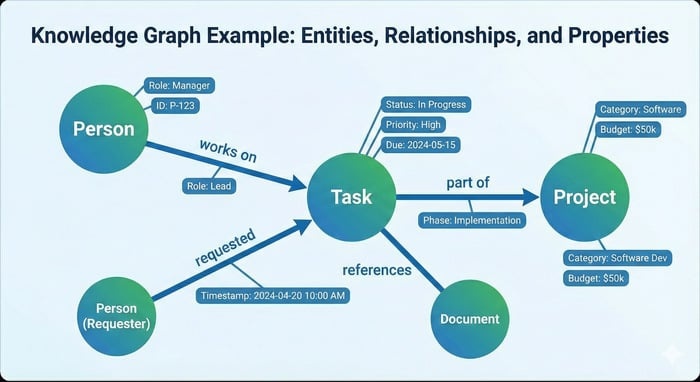
Many believe the Knowledge Graph is just a search tool. They see the panel with images and basic details. That’s only what’s shown.
The system actually arranges data about real-world items and their relationships. Rather than matching keywords, search engines attempt to identify the actual object being looked for. Why would anyone assume that’s all it does?
How the Knowledge Graph Works
Google introduced this system to structure information around entities. It focuses on three key elements:
- People, organisations, and places
- Events, ideas, and concepts
- The relationships between them
Entities and Meaning in Search
Search engines analyse context to understand meaning. They look for:
- Entities mentioned in the content
- Logical relationships between them
- Alignment with known information
This approach helps search engines interpret queries more accurately.
The Importance of Knowledge Graphs in Modern SEO
Why should you care? Because Knowledge Graphs shape how Google understands, ranks, and displays your content. Ignore them, and you’re optimising for a search engine that no longer exists.
Enhancing Search Precision through Entity Disambiguation
Ambiguity kills precision. Search “Jaguar.” The animal? The car? The NFL team? Old keyword matching couldn’t tell the difference.
Knowledge Graphs solve this through entity disambiguation. Google maintains separate profiles for Jaguar the animal, Jaguar the car brand, and the football team. Each has distinct attributes.
Write about “Jaguar speed.” Mention “mph” and “horsepower,” and Google connects you to the car entity. Write about “habitat” and “prey,” and you’re talking about the animal.
This entity’s salience matters. Google determines which entity matters most on your page. The Knowledge Graph helps answer that.
Building Topical Authority and E-E-A-T
E-E-A-T is a key part of modern SEO. Strong entity signals help search engines recognise it. Google looks for content that reflects real entity connections. A digital marketing page should naturally relate to SEO, social media, and content strategy.
Covering these connections signals expertise. It shows Google you understand the landscape, not just isolated keywords.
This is entity-based SEO in practice: owning a specific topic cluster. If Google connects your brand with the right entities, your authority becomes stronger than keyword rankings alone.
Powering Rich Results and Knowledge Panels
Ever seen that detailed box on the right? Name, logo, description, key facts. That’s a Knowledge Panel, the visual output of Knowledge Graph data.
Knowledge Panels don’t appear by magic. Google compiles them from trusted sources: Wikipedia, official websites, and authoritative mentions. A strong entity profile earns you prime SERP real estate.
Proper entity association helps Google confidently pull your information into these panels. Every structured data markup reinforces your entity profile.
Semantic Search and User Intent
Keywords carry limited meaning. Entities carry context.
Semantic search represents Google’s evolution from matching strings to understanding meaning. Knowledge Graphs make this possible by mapping relationships between words and concepts.
Search “Picasso.” Paintings? Biography? Museum hours?
The Knowledge Graph understands these different intents because it understands Picasso as an entity with multiple attributes. He created paintings. He has a birth date. His works are displayed in museums.
Your content should mirror this depth. Address the various entity relationships users might explore.
Knowledge Graph Entity SEO Guide: Practical Steps
Theory matters. But you came for action.
Aligning Content with Entity Relationships
Map the entity landscape for your niche. What connects to your core topic? Writing about digital marketing? Related entities include:
- PPC advertising
- Content marketing
- Social media strategy
- Marketing automation
- Email campaigns
Covering these connections signals depth. Google’s “People also ask” reveals entity relationships users expect. The Google NLP API identifies entities in your content.
Structured Data and Schema Markup
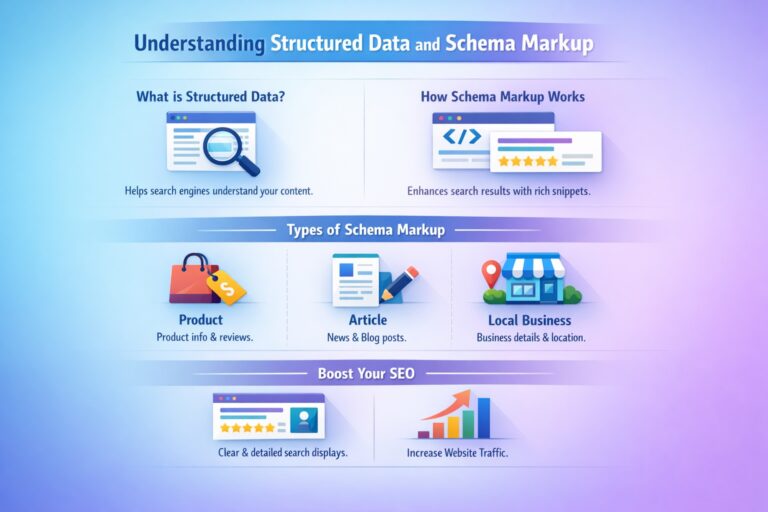
Schema markup speaks Google’s native language. Mark up your content, and you’re not guessing what Google understands. You’re explicitly saying: this is a Person, this is their name, this is their job title.
Key schema types:
- Person schema for individual authorities
- Organisation schema for companies
- Article schema for content
- LocalBusiness schema for physical locations
Each reinforces specific entity attributes. Complete profiles build Google’s confidence.
Building a Strong Entity Profile
On-page work only goes so far. Entity building needs off-site signals, too.
Wikipedia remains king for entity confirmation. A Wikipedia page provides Google with a trusted, structured entity profile. Wikidata entries serve a similar purpose.
Authoritative external mentions matter. When reputable publications reference your brand consistently, they reinforce your entity identity.
Consistency across platforms matters tremendously. Your name, address, logo, and everything should appear identically everywhere. Variations fragment your entity profile.
Why Entity-Based SEO Wins
The old way focused on ranking strings. The new way focuses on owning entities.
Future-Proofing Your Strategy
Algorithm updates target tactics, not fundamentals. Build around keywords, and you’re vulnerable to every algorithm tweak.
Entity-based strategies weather these storms better.
Why? Entities change slowly. The relationships between digital marketing and SEO won’t shift dramatically next month. Keywords might change, but underlying entities remain stable.
Building authority around entities means building assets that retain value regardless of how search evolves.
Conclusion
Knowledge Graphs power modern search. They’re the engine. Entity-based SEO provides the fuel.
Success requires shifting your mindset. Stop thinking about keywords. Start thinking about entities. Google wants to understand your expertise through real-world concepts and relationships.
This knowledge graph entity seo guide lays the foundation. Use these ideas often, and your online authority will grow over time. Search trends change. Keywords rise, then fade. But entities stay. They are real people, brands, places, and ideas. Google uses them to understand meaning and trust. When your brand connects to clear, verified entities, your presence in search becomes stronger and more stable.
Want to go further? Read our guide on Knowledge Panel Management to learn how to improve how your brand appears in search results.
Need more clarity or help with entity SEO? Feel free to reach out.
Frequently Asked Questions
1. What’s the difference between the Knowledge Graph and a Knowledge Panel?
The Knowledge Graph is the database that Google’s collection of entities and relationships. The Knowledge Panel is the visual display in search results.
2. How do I find entities for my SEO strategy?
Use Google’s NLP API demo. Explore related searches and “People also ask.” Analyse competitor Knowledge Panels.
3. Is schema markup necessary for entity-based SEO?
Yes. It explicitly confirms entity relationships. Without it, Google must infer meaning from context alone.
4. How long does it take to get a Knowledge Panel?
It varies. Entity notability matters most. A strong entity-based strategy accelerates things, but timelines range from months to years.
5. Can small businesses benefit from entity SEO?
Absolutely. Local businesses are entities too. Every Google Business Profile optimisation is entity optimisation.