

Introduction
You’ve read the theory. You know what signals matter. Source authority. Freshness. Structure. Consensus. Brand presence.
If not, make sure to read this article: What Signals Influence Content Selection in Generative Search Results?
Now you’re probably sitting there thinking the same thing every client eventually asks: “Great. But what do I actually do?”
Fair question.
This is where the rubber meets the road. Understanding generative search selection criteria is one thing. Knowing how to optimise content for AI-generated answers is another entirely. It’s the difference between reading a map and walking the path.
The good news? Much of it builds on work you’re already doing. Featured snippets taught us to answer directly. “People also ask” taught us to think in questions. Core Web Vitals taught us to care about experience. Generative search pulls these threads together and adds a few new ones.
Here’s what this guide covers. Practical techniques. Formatting that actually works. The right structure for machine readability without sacrificing human engagement. A schema that confirms your answers. And yes, how to stay visible when users get their answer without ever clicking through.
This isn’t theory. It’s the checklist you’ve been waiting for.
Let’s get into it.
Table of Contents
Start with Questions, Not Keywords
Here’s a truth that still catches people out.
Keywords aren’t dead. Far from it. But if you’re still building content around “best SEO tools 2026” without asking why someone searches that, you’re missing the point.
Generative AI doesn’t think in keywords. It thinks in questions.
When someone opens ChatGPT and types “what SEO tools actually work for enterprise,” they’re not fishing for a list. They want a conversation. They want reasoning. They want someone to say, “Here’s what we use and here’s why, but your situation might be different.”
This is where question-based content structure becomes your foundation.
To properly optimise content for AI-generated answers, you need to understand the queries beneath the queries. What are people actually asking? What problems are they solving? What doubts do they carry?
Start with question mining. Pull search console data for queries containing who, what, where, when, why, and how. Mine “people also ask” boxes. Check Reddit threads, Quora, and industry forums. Real humans asking real questions in real language.
Then structure your content around those questions. Not as an afterthought. As the architecture.
Each question becomes a clear section. H2 for the main question. H3s for follow-ups. Direct answers upfront. Context below. This is conversational content structure in practice. It serves the human who wants depth and the AI that wants extraction.
And here’s the bonus. This approach doesn’t just work for generative search. It’s classic content optimisation for featured snippets and people-also-ask optimisation. You’re building for position zero while preparing for AI answers.
Two birds. One very intentional structure.
Structure for Direct Answers
You’ve found the questions. Mapped what people actually ask. Now comes the part most people rush.
How you structure the answer.
Here’s the principle. Put the answer first. Then explain it. Then contextualise it. That’s it. That’s the whole secret.
This is an inverted pyramid content structure applied to every section. The AI doesn’t want to hunt for your conclusion. It wants the conclusion, then the supporting evidence, then the nuance. In that order.
Think about how you’d answer a colleague in conversation. They ask, “What’s the budget for Q3?” You don’t start with a story about last year’s overspend. You say “£150k, but we’ve got wiggle room if the campaign performs.” Then you explain. That’s paragraph-first answers in action.
For generative search, this matters enormously. Models performing extractive summarisation pull the first paragraph of a section as the primary answer. If you’ve buried the lede under warm-up sentences, the AI grabs something useless.
So structure each section like this:
- The Answer Layer: One clear paragraph with the direct response.
- The Evidence Layer: Supporting points, data, examples.
- The Context Layer: Edge cases, exceptions, deeper reading.
This creates answer layers that serve both audiences. Humans skim, find the answer, then dive deeper if needed. AI extracts the top layer confidently.
And yes, this is core direct answer formatting. It’s what Google featured snippets always reward. It’s what generative engines now expect. The difference? Generative search applies this logic to every answer, not just the first result on page one.
Structure first. Polish second.
Formatting Techniques That Work
Structure is the skeleton. Formatting is the skin.
You can have the perfect inverted pyramid. Answer first, evidence second, context third. But if that answer lives inside a dense, unbroken paragraph? The AI still struggles. Humans do too, honestly.
Here’s what works in 2026.
Lists everywhere: Not just bullet points. Numbered steps for processes. Feature lists for comparisons. Benefits lists for persuasive content. Generative models love lists because they’re predictable. Each item becomes a clean, extractable chunk. This is list-style answers at their most effective.
Tables for comparisons: When you’re weighing options, tools, pricing, and features, put them in a table. Tabular data for AI is remarkably easy to parse. The model sees rows and columns and instantly understands relationships. Plus, tables often get pulled directly into AI summaries.
Bold the money phrases: Not randomly. The sentence that actually answers the question? Bold it. The key statistic? Bold it. This is bolded key phrases as a signal. It tells the AI, “This part matters most.”
Short paragraphs. Relentlessly: Three sentences max. Often one. White space is a readability signal for both audiences. Short-paragraph structure forces you to be concise and supports semantic chunking, the AI’s ability to isolate and extract discrete ideas.
These aren’t cosmetic choices anymore. They’re AI answer formatting techniques that directly influence whether your content gets selected. The model scans for these patterns. Lists signal “structured information.” Tables signal “comparable data.” Bold signals “core assertion.”
When you’re trying to optimise content for AI-generated answers, every formatting decision carries weight. Make your content scannable by using content blocks first. Beautiful prose, second.
Schema & Structured Data Markup
Now we go beneath the surface.
Formatting helps the AI see your answers. Schema helps the AI understand your answers. There’s a difference.
Think of structured data for AI answers as a translation layer. You’re telling the machine explicitly what your content means, not leaving it to guess. “This is a question. This is the answer. This is a person. This is an organisation. This is how much something costs.”
For generative search, specific schema types punch above their weight.
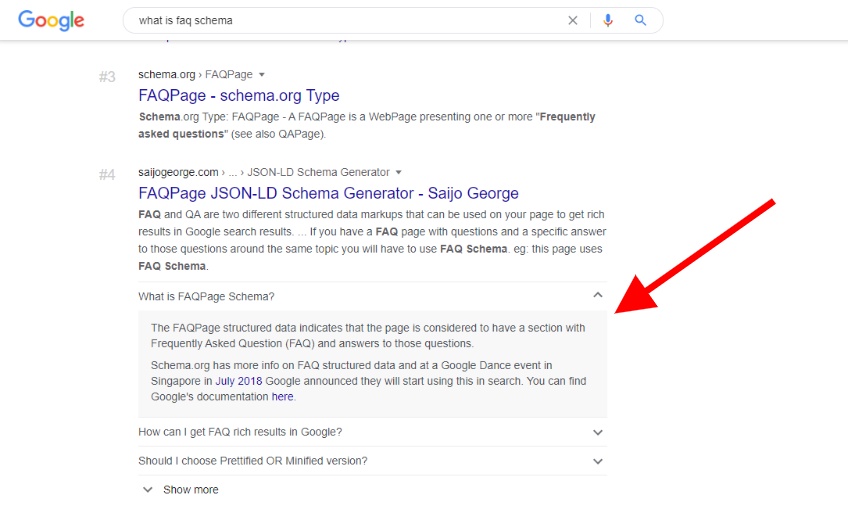
The FAQ schema remains essential. When someone asks a question the AI has seen before in a marked-up FAQ, confidence increases. The model thinks, “Ah, this publisher explicitly identified this as a frequently asked question with this answer.” That’s machine-readable context at its most useful.
HowTo schema for process content. Step-by-step guides that are properly marked up become prime extraction targets. The AI can confidently pull each step, knowing the structure is intentional, not accidental.
Article schema with clear author and organisation markup. This feeds directly into entity confirmation. Who wrote this? Are they credible? What organisation backs them? Schema answers these questions before the AI needs to ask.
Product schema for ecommerce. Reviews, pricing, availability. Generative models continuously pull this data for comparison against answers.
Here’s the catch. Schema must be valid. Broken markup is worse than no markup. Run everything through structured data validation tools before publishing. One missing comma can break the entire signal.
When you’re serious about schema markup for generative search, you’re not chasing a ranking factor. You’re offering clarity. And in a world where AI chooses sources based on confidence, clarity is currency.
Optimising for Zero-Click AI Results
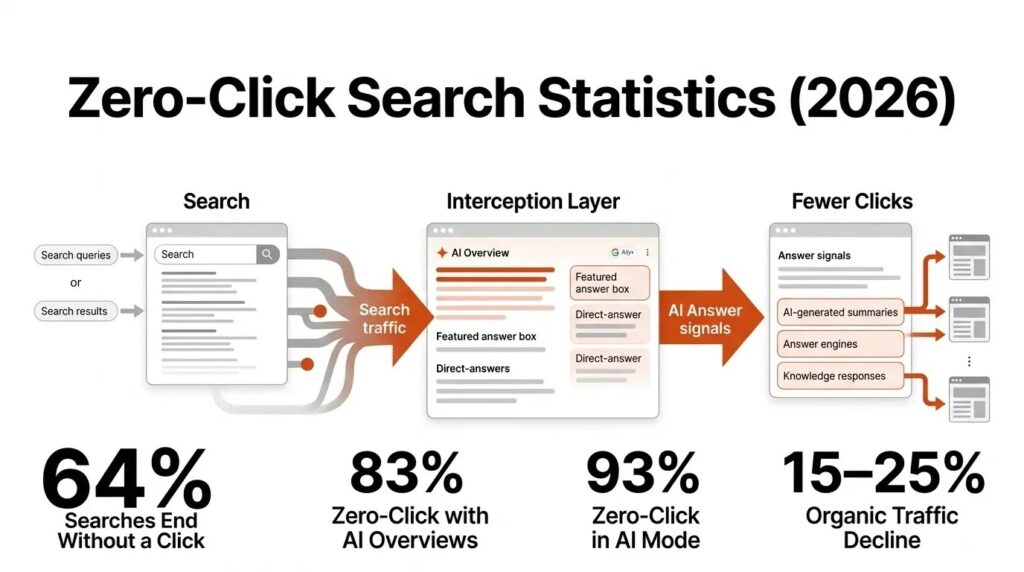
Let’s address the elephant in the room.
If the AI answers the question completely, why would anyone click your link?
It’s the question every SEO is quietly stressing about. And honestly? Fair question.
Here’s the uncomfortable truth. Some queries will never drive traffic again. The answer is too complete. The AI satisfies the need entirely. For those, you’re optimising for zero-click search visibility without the click. Sounds contradictory. But there’s a method here.
Brand mentions in zero-click results matter. When your brand appears as the cited source, even without a click, you win. Recognition compounds. Next time someone searches a deeper question, they remember you. Or they search directly for your brand. The zero-click result becomes a billboard, not a dead end.
So how do you win that citation?
Make your content the obvious source. Clear attribution. Named authors. Dated research. Original data. When the AI needs to say “according to…” your name should be the easiest to grab.
This is source citation tactics at work. You’re not just answering. You’re making yourself citeable.
Attribution strategies matter too. Use your brand name naturally in answers. “Research from Midland Marketing shows…” Not “we found…” The AI grabs proper nouns preferentially.
And a structure for partial answers. Even if the AI summarises, make sure your brand name travels with the summary. This is conversational preservation, ensuring your identity survives the summarisation process.
Yes, it’s frustrating when clicks don’t follow. But featured summary optimisation for zero-click results isn’t about vanity. It’s about owning the conversation even when you don’t get the visit. Visibility compounds. Trust compounds. The clicks come later, on your terms.
Conclusion
We’ve covered the ground. Start with a question-based content structure. Build each section around what people actually ask. Then apply the answer-first framework: conclusion upfront, evidence beneath, context last.
Format for the machine. Lists. Tables. Bolded phrases. Short paragraphs. These aren’t aesthetic choices. They’re AI answer formatting techniques that signal “this content is ready for extraction.”
Add the schema layer. FAQ. HowTo. Article. Product. Give the AI machine-readable context it doesn’t need to guess.
And finally, make peace with zero-click. Featured summary optimisation isn’t just about traffic. It’s about ownership. When your brand travels with the answer, you win the next query.
None of this requires a time machine. It requires intentionality. Write for humans first, yes. But structure for the systems that now sit between you and them.
That’s how you optimise content for AI-generated answers in 2026. No shortcuts. Just clarity.
Frequently Asked Questions
1. Is this just featured snippet optimisation with a new name?
Not really. Featured snippets reward one winner per query. Generative answers pull from multiple sources. You’re not fighting for position one anymore. You’re fighting to be one of the sources the AI trusts enough to cite. Different game.
2. Where do I even start finding questions people ask AI?
Start where humans ask things. Search console is obvious but limited. Forums work better. Reddit, Quora, and even Amazon reviews. Real questions sound messy. They include context, frustration, and specifics. Mine those. Keywords are tidy. Questions are human.
3. Schema feels technical. Do I really need it?
Need is a strong word. You can survive without it. But here’s the thing. Schema hands the AI answers on a silver platter. No guessing. No interpretation. When confidence matters, that platter looks pretty appealing. So no, you don’t need it. But why wouldn’t you?
4. What’s the point if nobody clicks anymore?
Fair question. Clicks matter less. Brand visibility matters more. When your name shows up in the answer, even without a click, people notice. Later, they search for you directly. The zero-click result becomes your billboard. Not ideal, but not worthless either.
5. How much of this is guesswork still?
Some. Anyone claiming certainty is selling something. Models change. Platforms update. But the fundamentals? Answer first. Structure clean. Prove you’re real. Those aren’t guesses. Those are just good publishing habits dressed in new clothes.