


Introduction
Marketing rarely changes in a sudden way. Many Businesses in 2026 would slow down and take a closer look at how they really work and grow. Tools would help, but they no longer lead the story, and that’s what matters more is how a brand treats data, how it earns trust, and how early it prepares for change. People notice these things. They feel when a message is helpful and when it is just trying to sell. That quiet change sits at the heart of marketing trends 2026.
As the year moves on, brands will face tighter rules, wider daily use of AI, and more places where people look before they buy. Search, choice, and trust no longer live in one space. Marketing starts to feel more like guidance than noise. This article looks at the changes shaping the future of marketing and explains what teams should prepare for now, using clear words and steady thinking, without hype or empty promises.
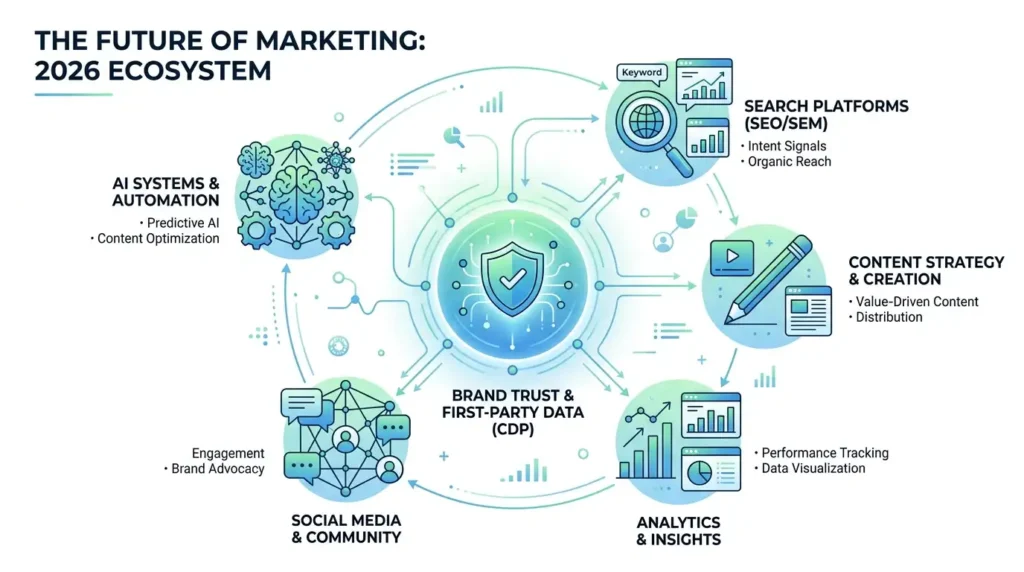
Table of Contents
AI Shifts From Testing to Daily Use
Artificial intelligence is no longer a side project. It is becoming part of daily marketing work, from planning to delivery, and this change defines many AI marketing trends.
AI as a Decision-Support System
In 2026, AI helps people think, not step aside. It looks at past results and highlights patterns that are easy to miss. It helps teams see what worked before and what may work next. Marketers still choose the direction. AI simply clears the fog. This support saves time and reduces guesswork, which is why it appears so often in digital marketing trends 2026.
The Rise of AI Governance in Marketing
As AI becomes normal, clear rules matter more. Brands need to explain how data is used and why choices are made. When systems feel hidden, trust fades. Simple policies help avoid bias and confusion. This care around control and clarity plays a quiet but important role in marketing innovation 2026 planning.
Trust Becomes a Primary Marketing Asset
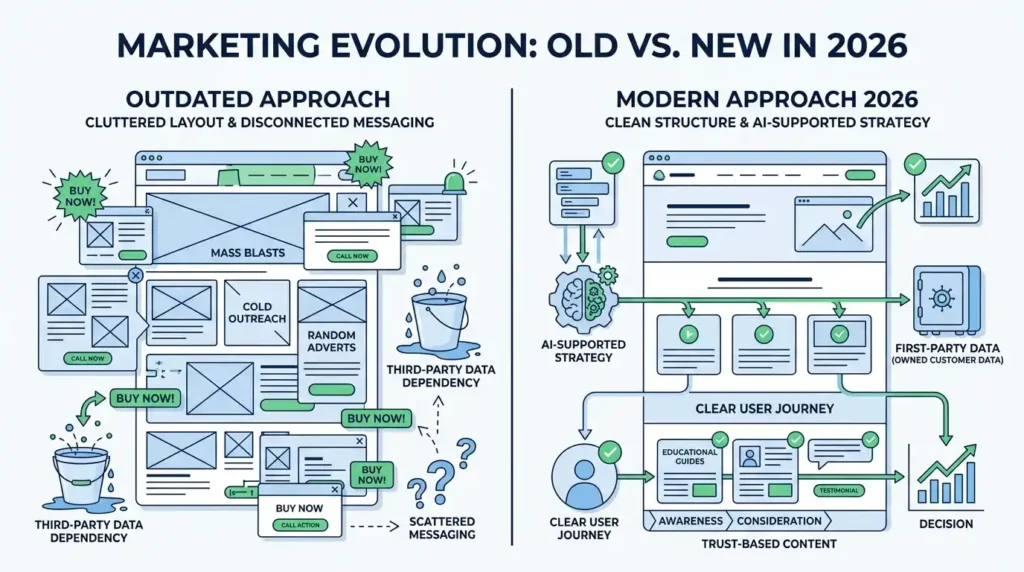
Trust now drives visibility and conversion. Without it, even strong campaigns struggle to perform, which makes trust a core part of emerging marketing strategies.
Provenance and Content Authenticity
Audiences want to know who created content and why it exists. Clear authorship, real expertise, and honest sourcing matter more than volume. Search systems also reward this clarity, linking trust directly to reach within the future of marketing.
Brand Authority Over Virality
Quick attention fades fast. Brands that publish steady, helpful content build stronger results over time. Authority grows when advice is consistent and useful. This approach supports long-term growth rather than short spikes.
Search Evolves Beyond Traditional Rankings
Search no longer lives in one place. People look for answers across many platforms, which reshapes visibility planning in marketing trends 2026.
AI Answer Engines and Zero-Click Results
AI would summarise, and it gives direct answers and reduces the clicks, but it increases exposure for trusted sources. Brands must structure content so it can be understood and reused by AI tools. This shift sits at the heart of digital marketing trends 2026.
Multi-Channel Search Behaviour
Search happens on social platforms, forums, marketplaces, and AI tools. A wider presence helps brands meet users where they already spend time. This requires flexible content planning and consistent messaging.
First-Party Data Becomes the Foundation of Marketing
Data ownership is now a major advantage. Brands that collect and manage their own data perform better and face fewer risks.
Decline of Third-Party Tracking
Third-party cookies continue to fade. This pushes marketers to build direct relationships with customers. Email, account systems, and loyalty programs become more valuable in B2B marketing trends 2026.
Data Quality Over Data Volume
Large datasets mean little if they are wrong. Clean, accurate data supports better personalisation and clearer reporting. This focus reduces waste and improves decision-making across campaigns.
Content Quality Outweighs Content Volume
More content does not mean better results. Quality now defines performance across search and engagement.
Depth, Relevance, and Usefulness
Strong content answers real questions in full. It explains options, risks, and outcomes in simple terms. Search systems reward this clarity, making it central to emerging marketing strategies.
Fewer Pages, Stronger Performance
Smaller content libraries often perform better when they are updated and accurate. Brands gain more from improving existing pages than from publishing endless new ones. This approach supports the marketing innovation 2026 goals.
B2B and B2C Strategies Continue to Converge
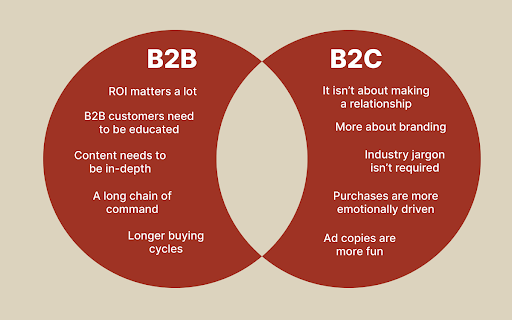
The gap between B2B and B2C marketing keeps shrinking. Buyers expect clear and human communication in every context.
Human-Centred Messaging in B2B
Business buyers still make emotional decisions. They value clarity, honesty, and guidance. Simple language builds confidence and shortens decision cycles within B2B marketing trends 2026.
Longer Decision Journeys Require Better Nurturing
Many purchases take months. Marketing must educate and support rather than push for fast conversion. Helpful content builds trust throughout the journey.
Personalisation Shifts From Targeting to Context
Personalisation now focuses on relevance rather than identity. Timing and need matter more than labels.
Behavioural and Situational Signals
Marketers look at actions and context. They consider what a user is trying to do right now. This approach improves relevance without overstepping boundaries, which supports the future of marketing.
Ethical Boundaries in Personalisation
Too much personalisation feels invasive. Brands must explain why content appears and allow choice. Respect builds loyalty and reduces risk in marketing trends 2026 planning.
Marketing Measurement Becomes More Strategic
Marketing measurement is changing as businesses look beyond surface numbers. Clicks and views still exist, but they no longer explain real performance. Teams now want to know what actions lead to growth. This shift supports better planning and clearer decisions across digital marketing trends 2026
Outcome-Based KPIs
Outcome-based KPIs focus on revenue, retention, and customer value over time. These measures show what truly works. They help teams spend money with purpose and avoid chasing empty results. This approach reflects marketing innovation 2026 and supports the future of marketing.
Cross-Channel Attribution Challenges
Customers move across many platforms before they decide. Tracking every step is difficult. Instead, marketers study patterns and direction. Smarter models offer guidance without chasing perfect accuracy. This helps teams understand influence within emerging marketing strategies.
Sustainability and Responsibility Influence Brand Choice
People do not choose brands only by price anymore. They watch how a brand acts and how it treats people, data, and the world. Small actions build trust, and that trust often matters more than offers or loud promises.
Responsible Marketing Practices
Responsible marketing is built on truth. Claims must be clear and easy to check. Simple language works better than polished slogans. When brands explain what they do without hiding limits, people listen. Honest communication reduces complaints and protects reputation. Over time, this steady approach becomes part of daily marketing work.
Long-Term Brand Impact
Responsible marketing creates slow but stable growth. Customers stay when they feel respected and informed. They return because the brand feels reliable. This kind of loyalty lasts longer than quick wins. Brands that work this way handle change better and stay strong as expectations shift in the future.
Conclusion
Marketing in the year ahead feels slower and more careful. Many marketing trends 2026 point in the same direction. Doing more is no longer the goal. Doing things well is. Growth now comes from clear choices, fair use of data, and trust built step by step. Tools still help with work, but they do not lead it. People lead it. This is where Midland marketing teams are focusing their effort, helping brands speak in plain words and act with care so change feels easier to handle.
Preparing for marketing trends 2026 is not about chasing every new idea. It is about building habits that last when things shift. Calm decisions matter. Honest work matters. Brands that want steady growth can start by getting the basics right and choosing the right support. If you want to take the next step, now is the time to contact a team that understands how to build trust-first marketing for the long term.
Frequently Asked Questions
What are the marketing trends for 2026?
They show how marketing is changing as people expect honesty, clear value, and better use of data.
Why do marketing trends 2026 matter to businesses?
Because habits shift. When brands do not adjust, results often slip without warning.
How will AI affect marketing in 2026?
AI helps in the background. It supports planning and review, while people stay in control.
Does trust really matter in marketing?
Yes. People stay with brands they believe and understand.
How is search changing in 2026?
People search in many places now, not just search engines. Social apps and AI tools matter too.
Why is first-party data important now?
It helps brands learn directly from customers without relying on fading tracking methods.
Are B2B and B2C marketing still separate?
Less than before. In both cases, people want clear words and real help.
What should businesses focus on right now?
Clean data, useful content, and careful use of new tools