


Introduction
SEO copywriting is one of those terms that sounds straightforward until you actually try to define it. Everyone agrees it matters, but fewer people agree on what “good” really looks like.
At a surface level, it is about writing content that shows up in search and keeps readers interested. In practice, it is a lot more uneven than that. Some pages rank without converting. Others convert well but never attract traffic. Most sit somewhere in between, quietly underperforming.
It exists to close that gap. Not perfectly. Just consistently enough to matter.

Table of Contents
What Is SEO Copywriting?
Definition of Search-Focused Content Writing
It is about writing content that search engines can read and that people actually want to spend time with. That sounds straightforward. In practice, it rarely is. What works for algorithms often fails readers, and what reads well can miss search intent if handled carelessly.
The work sits in the middle. Information needs a structure so relevance is clear, but explanations must stay plain and natural. Readers should never feel lost or spoken down to. Keywords still matter, but only as support. They help hold things up. They are not the point.
Good search-optimised writing reads smoothly, with clarity standing out before anything else.
Search-Optimised Writing vs Traditional Copywriting
Traditional copywriting prioritises persuasion and conversion. SEO copywriting balances persuasion with discoverability. It ensures content can be found in search results and then convinces users to take action. The difference lies in structure, keyword usage, and search intent alignment.
Why Writing for Search Visibility Matters
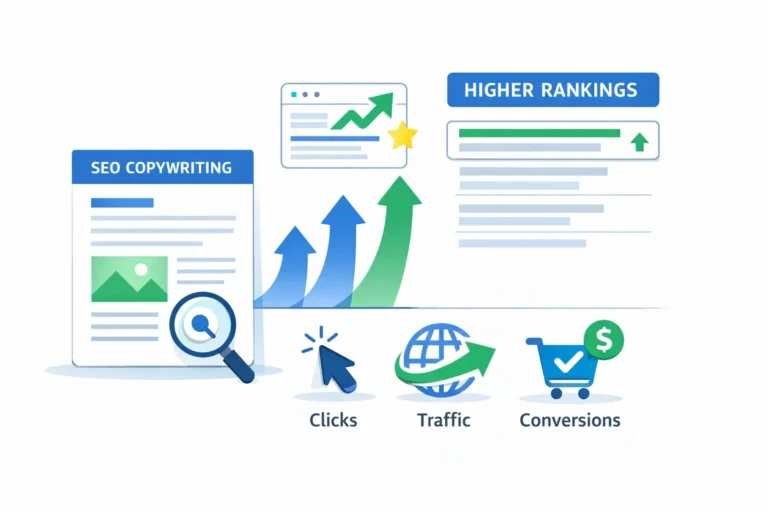
Improves Search Visibility and Rankings
Search engines reward content that is relevant, structured, and useful. SEO copywriting helps pages rank by clearly signalling topic relevance and satisfying user intent.
Enhances User Experience and Engagement
Well-written SEO content is easy to scan, informative, and readable. This improves dwell time, reduces bounce rates, and supports better performance signals.
How Search Intent Guides Content for Visibility
Understanding Different Types of Search Intent
Search intent generally falls into four categories:
- Informational
- Navigational
- Commercial
- Transactional
SEO copywriting adapts tone, structure, and depth based on the intent behind the query.
Matching Content Structure to Intent
Structure does a lot of quiet work in the background. Informational intent needs a clear explanation to land properly. Commercial and transactional intent responds best to context, comparison, and confidence.
Search-optimised content that mirrors intent feels intuitive. The reader does not have to work out where they are or what comes next. That ease is rarely accidental.
Keyword Research for Content Strategy
Primary and Secondary Keyword Selection
Primary keywords define the core topic. Secondary keywords provide context and semantic depth. Effective SEO copywriting integrates both naturally.
Avoiding Keyword Stuffing
Overusing keywords reduces readability and can harm rankings. Modern SEO copywriting prioritises natural language and topical relevance.
On-Page SEO Elements in Copywriting
Optimising Headings and Subheadings
Clear H1, H2, and H3 structures help search engines understand content hierarchy and improve scannability for readers.
Writing SEO-Friendly Meta Titles and Descriptions
Meta titles and descriptions shape expectations before the page even loads. They influence whether someone clicks or keeps scrolling.
Effective writing for search focuses on clarity over hype, as a clear promise wins more often than a clever line.
Content Structure and Readability
Writing for Scannability
Short paragraphs, bullet points, and clear headings make content easier to read and digest, especially on mobile devices.
Using Internal Links Effectively
Internal links guide users to related content and help distribute topical authority across the site.
Quality, Trust, and E-E-A-T in Search-Driven Content
Demonstrating Expertise and Authority
SEO copywriting should reflect subject knowledge and industry understanding. Accurate information builds credibility.
Keeping Content Accurate and Updated
Fresh, reliable content signals trustworthiness and maintains relevance over time.
Common Pitfalls in Search-Led Writing
Writing for Search Engines Only
Content written solely for algorithms often feels unnatural. SEO copywriting must always prioritise the reader first.
Ignoring Content Purpose
Every page should have a clear goal, inform, persuade, or convert. Lack of purpose weakens effectiveness.
Best Practices for Writing That Performs
Balance Optimisation With Natural Language
Search-optimised content should still sound human. Clarity and flow matter as much as keywords.
Measure and Refine Performance
Search-led writing develops through regular feedback. Rankings, engagement, and conversions all tell part of the story. Refinement is not failure; it is how effective content is built.
Final Thoughts: The Importance of Search-Driven Content
SEO copywriting connects visibility with usefulness. It helps the right people find the right information at the right moment.
When done well, it does not feel optimised. It feels clear. That clarity is what builds trust, supports growth, and keeps content relevant long after it is published.
Many SEO issues are not technical. They live in the copy itself. If your pages feel correct but underperform, it may be time to look at how the message is structured and delivered.
Get in touch for a clearer view of your options.