


Introduction
Search engines reward relevance at scale. That is easy to say, hard to execute. Many brands reach a point where manual SEO cannot keep up with thousands of searches, pages, and variations. This is where programmatic SEO changes the game.
Instead of chasing keywords one by one, this approach builds systems. Pages are created using data, logic, and templates, not guesswork. Each page targets a real search need. Each one exists for a reason. When done right, it allows websites to grow visibility without growing workload at the same speed.
This blog explores how this method works and why it has become a core growth lever for marketplaces, SaaS platforms, and content-heavy brands. You will learn the framework behind large-scale search visibility, not theory. Just clear structure, practical thinking, and a smarter way to scale organic traffic without losing quality.
Table of Contents
What Is Programmatic SEO?

Definition and Core Concept
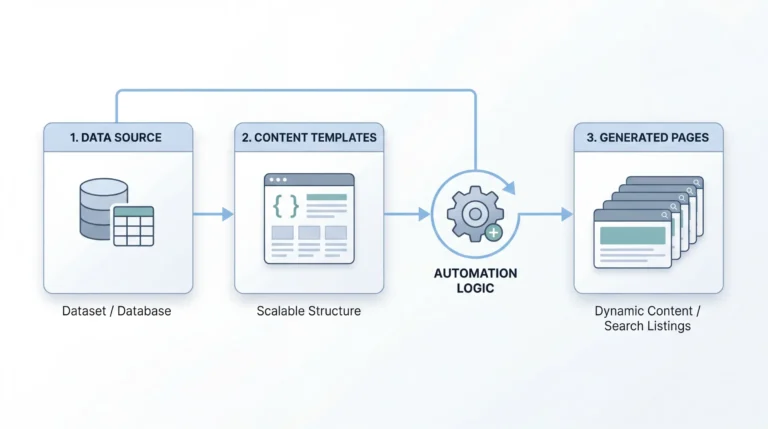
It is a method built for scale. It focuses on creating many useful pages without writing each one by hand. Instead of starting with a blank page every time, teams use data, page rules, and templates to build pages that answer real search questions.
Think of it as organised expansion. Searches often follow patterns. Prices vary, locations change, and features shift. This approach turns those moving parts into inputs. The page adapts, but the goal stays the same: answer a clear question fast.
What matters most is intent. Automation does not mean filler. Each page exists because someone is looking for that exact thing. When done right, pages feel specific, not generic. That is why this method works best for topics with depth, variety, and repeat demand.
How This Approach Differs from Traditional SEO
Traditional SEO grows page by page. Each URL is planned, written, edited, and published on its own. That works well for small sites or limited topics. It breaks down when demand stretches into hundreds or thousands of searches.
This approach works differently. It looks for demand patterns instead of single keywords. Once those patterns are clear, templates are designed to meet them. One structure can support many queries, without repeating content or lowering value.
This shift from pages to systems is the real difference. Traditional SEO asks, “What should we write next?” Programmatic SEO asks, “What framework lets us cover this entire search space properly?” That mindset is what enables large-scale visibility without losing control or quality.
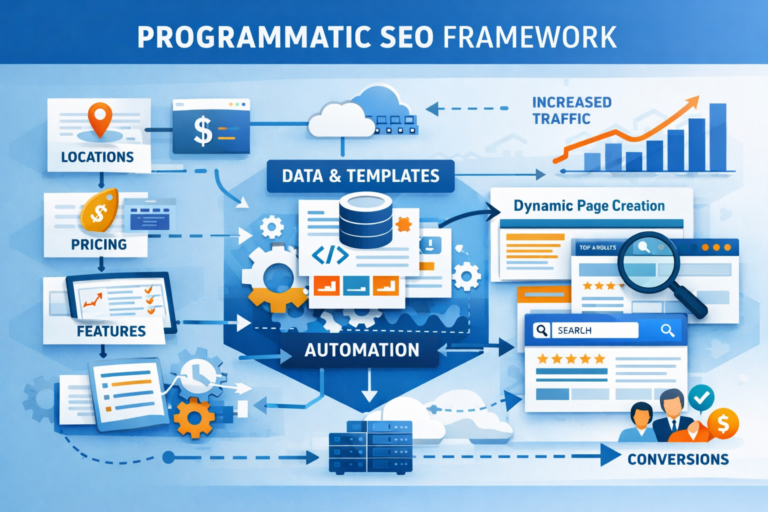
Why Programmatic SEO Exists
The Challenge of Long-Tail Search Demand
Most searches are not broad or popular. According to Ahrefs, over 90% of search queries receive very low individual search volumes, but together they make up the bulk of total search demand.
They are specific, small phrases, clear needs, and slight variations. This long tail accounts for a large share of real traffic, but it is hard to reach manually. Writing one page at a time cannot keep up.
This approach exists to solve that gap. It supports long-tail keyword coverage by using patterns in how people search. When intent follows a clear structure, pages can follow that same logic. This is how SEO at scale becomes possible without flooding a site with thin content.
Key reasons this matters:
- Long-tail searches convert better.
- Intent is often clearer.
- Competition is usually lower.
- Volume adds up fast.
When Manual SEO Becomes Operationally Unscalable
Manual SEO breaks when volume grows. Marketplaces, directories, and SaaS platforms face hundreds of page variations. Writing each page creates delays, errors, and inconsistency.
This is where a structured SEO strategy replaces repetition with systems. Instead of copying effort, teams build rules. Templates pull data. Pages stay aligned. This approach supports scalable SEO and large-scale SEO without losing structure.
Benefits of this shift include:
- Faster page creation
- Clear content logic
- Easier updates
- Better internal control
With template-driven SEO and an SEO automation framework, growth stops being manual work and starts becoming planned execution.
How Programmatic SEO Works in Practice
Identifying Scalable Keyword Patterns
This approach does not start with a keyword list. It starts with structure. Search demand often repeats in clear ways. People change places, features, or needs, but the sentence stays familiar. These repeating shapes are the real opportunity.
A strong scalable SEO strategy looks for these patterns first. Once patterns are clear, coverage becomes predictable. This is how scalable SEO supports growth without chasing single terms.
Common pattern signals include:
- Repeating modifiers
- Similar intent across queries
- Consistent SERP layouts
- Clear comparison or lookup needs
Using Structured Data as the Foundation
Data is the engine. Without it, automation fails. Pages only work when inputs are clean, complete, and current. That might include locations, prices, product specs, or service attributes.
For large-scale SEO, data accuracy matters more than volume. One broken data point can weaken hundreds of pages. Structured systems reduce risk and support SEO at scale by keeping content aligned with reality.
Page Templates and Dynamic Content Insertion
Templates provide order. They define what stays fixed and what changes. Headings, layout, and logic remain stable. Dynamic fields swap in relevant details for each query.
This balance enables template-driven SEO without duplication. Pages stay unique because the data is unique. Intent stays matched because the structure is planned.
Key benefits include:
- Faster publishing
- Easier updates
- Consistent internal links
This is how automated SEO pages stay useful, not generic.
Common Use Cases for Programmatic SEO
Marketplaces and Directories
Marketplaces deal with volume by default. The format rarely changes, but the details do. This makes them a natural fit for a scalable, system-driven approach. Each listing follows a set logic. Data fills the gaps. Pages scale without losing order.
This setup supports large-scale SEO while keepinmg search intent clear. Users want fast answers, not essays.
Location-Based and Multi-Service Businesses
Businesses that operate across many areas face the same issue again and again. Writing each page manually wastes time and creates risk.
A structured SEO strategy solves this with structure. Locations and services slot into planned layouts. Coverage grows without chaos. This is how SEO at scale stays clean and controlled.
Typical examples include:
- Service + city pages
- Category + region pages
- Multi-location brand sites
SaaS Feature, Integration, and Use-Case Pages
SaaS users search with purpose. They want solutions that fit their tools and workflows. That demand creates patterns.
With template-driven SEO, software teams can publish pages for features, integrations, and use cases using shared logic. Data handles variation. Structure handles consistency.
This approach supports scalable SEO and helps teams meet intent without manual overload. Each page exists for a reason. That is what keeps automation useful, not noisy.
Programmatic SEO vs. Thin or Low-Quality Pages
Why Scale Alone Is Not a Strategy
Publishing more pages does not guarantee growth. Search engines look for usefulness first. Pages that exist only to take up space rarely last. They fade because they solve nothing.
Real scale starts with purpose. Each page should answer a clear question. It should help someone decide, compare, or act. When pages lack direction, volume turns into noise. Systems make creation easier, but they do not replace judgment. Growth works when structure supports value, not when value is assumed.
Avoiding Duplicate and Near-Duplicate Content
Templates are not the problem. Careless reuse is. Pages fail when they repeat ideas without context. Small changes in titles or wording are not enough.
Strong systems plan for variation. They change what matters. Details, order, emphasis, and examples all shift based on intent. Even similar pages feel different because they serve different needs.
Helpful pages do three things well:
- Address one clear purpose
- Reflect real differences
- Stay accurate and specific
When content respects intent, shared structure becomes a strength. Without it, repetition shows fast.
SEO Risks and Governance
Crawl Budget and Indexation Control
Scale brings pressure. When too many pages go live at once, search engines may miss what matters. Important pages get delayed. Weak pages get crawled first. That imbalance slows growth.
Control solves this. Not every page deserves attention. Some should stay hidden. Others need clear signals. Rules around indexing, internal links, and updates keep crawlers focused on value. Order matters more than volume.
Quality Signals and E-E-A-T Considerations
Trust does not disappear at scale. It becomes harder to protect. Pages must stay accurate. Data must stay fresh. Claims must stay grounded.
Loose systems create cracks. Small errors spread fast. Over time, that hurts the whole site. Strong governance prevents drift. It enforces checks, limits automation, and protects clarity.
A healthy scale depends on discipline:
- Clear review rules
- Reliable data sources
- Ongoing quality checks
Without guardrails, growth weakens. With them, structure supports trust.
Measuring Success in Programmatic SEO
Metrics That Matter
More pages do not equal progress. What matters is how those pages perform. Are they indexed? Do they attract the right visitors? Do people stay, scroll, or act?
Strong signals come from behaviour, not volume. Traffic with intent shows value. Engagement shows clarity. Outcomes show usefulness. When these rise together, the system works.
Iteration and Performance Feedback Loops
Scale needs feedback. Some page types will win fast. Others will stall. That is normal. The smart move is adjustment:
- Expand what performs.
- Fix what underdelivers.
- Remove what adds noise.
- Small changes compound when applied across many pages.
This process never stops. It evolves. Systems improve through testing, not guessing. When feedback drives decisions, growth stays controlled, focused, and sustainable.
When This Approach Is Not the Right Fit
Low Data Availability or Inconsistent Intent
Some topics lack structure. Searches mean different things to different people. Data is thin or unreliable. In these cases, systems struggle. Pages drift off target. Small errors repeat fast.
When intent shifts often, manual work offers more control. It allows judgment and nuance. Without stable inputs, automation adds friction instead of clarity.
Brand-Led or Thought-Leadership Content
Not all content should scale. Ideas, opinions, and insight need a human voice. Stories need flow. Arguments need depth.
Automation flattens these elements. It removes tone. It limits originality. For brand trust and authority, crafted writing wins.
A strong strategy knows when to stop scaling. Some messages grow through care, not systems.
Building a Sustainable SEO Strategy
Aligning SEO, Product, and Engineering Teams
This work lives between teams. Search insight shapes demand. Product defines structure. Engineering builds the system. When one group moves alone, gaps appear.
Shared goals fix that. Clear rules, shared language, and early planning reduce friction. Decisions get faster. Changes scale cleanly. Alignment turns effort into momentum.
Balancing Scale with Editorial Oversight
Automation speeds creation. It does not judge quality. That role stays human.
Strong systems leave a gap for review. Pages are checked. Logic is refined. Weak outputs are paused or removed. This keeps standards high as volume grows.
A healthy scale depends on balance:
- Systems handle repetition
- People protect clarity
- Oversight prevents drift
When structure and judgment work together, growth stays stable and sustainable.
Conclusion: Programmatic SEO as a System, Not a Shortcut
Programmatic SEO rewards planning, not speed. It works when structure, data, and intent move together. Weak systems fail fast. Strong ones compound quietly. At Midland Marketing, the focus stays on control, clarity, and long-term value. Automation supports growth, but discipline decides outcomes. If you want a system built the right way, contact us and start with structure, not shortcuts.
Frequently Asked Questions
- Is this approach suitable for small websites?
Yes, but only when search demand follows clear patterns. If topics are limited or the intent varies a lot, focused manual pages often perform better.
- Does automation replace writers?
No. Writers still shape logic, tone, and accuracy. Automation removes repetitive tasks. Human judgment keeps pages useful and clear.
- How long does it take to see results?
Results depend on data quality and setup. Strong structure can speed indexing, but authority and trust still grow over time.
- What skills are needed to run this properly?
You need a mix of SEO thinking, data handling, and development support. Without all three, systems break or drift.
- Is ongoing maintenance required?
Yes. Data changes, intent shifts, and weak pages appear. Regular review keeps performance stable and protects site quality.