


Introduction
Most SaaS companies don’t fail because their product is weak. Their difficulty comes from buyers who hesitate more than once.
People pause before starting trials. They delay internal sign-off, bookmark pages and return weeks later with new questions. Content stays in the background, where it can either support progress or slow it down.
That’s why SaaS content marketing cannot be treated as a publishing task. It is a decision-support system. When it works, progress feels easier. When it doesn’t, deals stall quietly.
Table of Contents
What Is SaaS Content Marketing?
Defining the Approach
At its core, this approach helps people make sense of complexity, aligning closely with the broader principles of the content marketing definition.
It uses educational, problem-focused content to guide users from first awareness through evaluation, adoption, and continued use. That last part matters more than many teams expect.
SaaS content does not end at acquisition.
- It stays relevant long after someone signs up.
- It explains features.
- It supports onboarding.
- It reduces confusion when usage grows.
In practice, good content answers questions before users feel confident enough to ask them.
How it Differs From Traditional Content Marketing
Traditional content marketing often prioritises reach. SaaS content can’t afford to stop there.
SaaS buyers want reassurance. They want specifics and want to know how a tool fits into existing systems without breaking anything important. That means B2B SaaS content marketing must handle:
- Technical realities
- ROI justification
- Integration concerns
- Security and compliance questions
- Long-term value
This content needs depth, but it also needs restraint. Oversimplifying creates doubt, while overselling creates resistance.
Why It Matters for Long-Term Growth
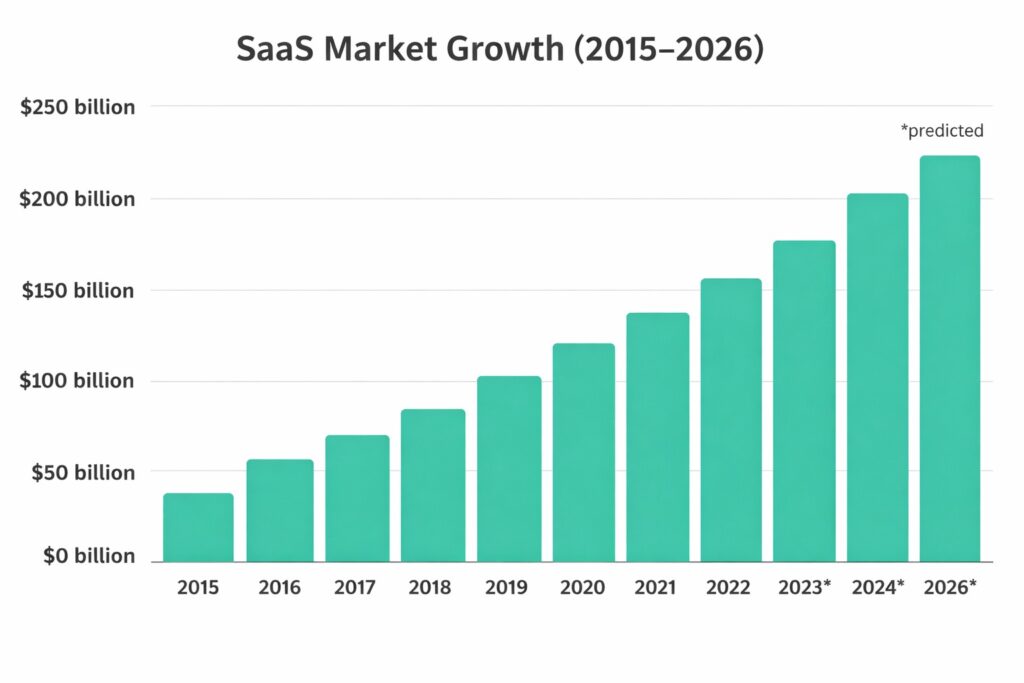
Supporting a Longer Decision-Making Cycle
SaaS decisions rarely belong to one person.
Someone discovers the product, while someone else evaluates it. Another person questions the cost. Once security intervenes, communication drops, and questions multiply.
Content fills the gaps between those moments.
A strong SaaS content marketing strategy lets prospects move forward without needing constant sales intervention. They can review the details, compare options, validate the choice, and explain it internally.
This reduces pressure on sales teams and improves decision confidence.
Reducing Customer Acquisition Costs Over Time
Paid growth scales quickly, but it fades just as fast. Content behaves differently. It accumulates value.
- Evergreen guides.
- Product explainers.
- SEO-driven problem pages.
These assets continue working long after publication.
Over time, this lowers acquisition costs and improves lead quality. It does not happen at once. It builds over time and proves more reliable than short campaigns.
Core Principles of an Effective SaaS Content Marketing Strategy
Audience and Use-Case Clarity
Effective SaaS content is grounded in context. It reflects real situations rather than abstract personas.
- What problem triggers the search?
- What is breaking inside the workflow?
- What happens if nothing changes?
A solid SaaS content strategy reflects lived experience. It mirrors how users describe their work, not how companies describe solutions. When readers recognise themselves, they keep reading.
Product-Aware, Not Product-Obsessed
This is where many teams slip.
Effective SaaS content acknowledges the product without centring it. The problem comes first. The product appears naturally, often later than marketing teams expect.
Over-promotion early in the funnel damages trust. Buyers want guidance, not persuasion, and subtlety performs better than enthusiasm.
Mapping Content to the SaaS Funnel
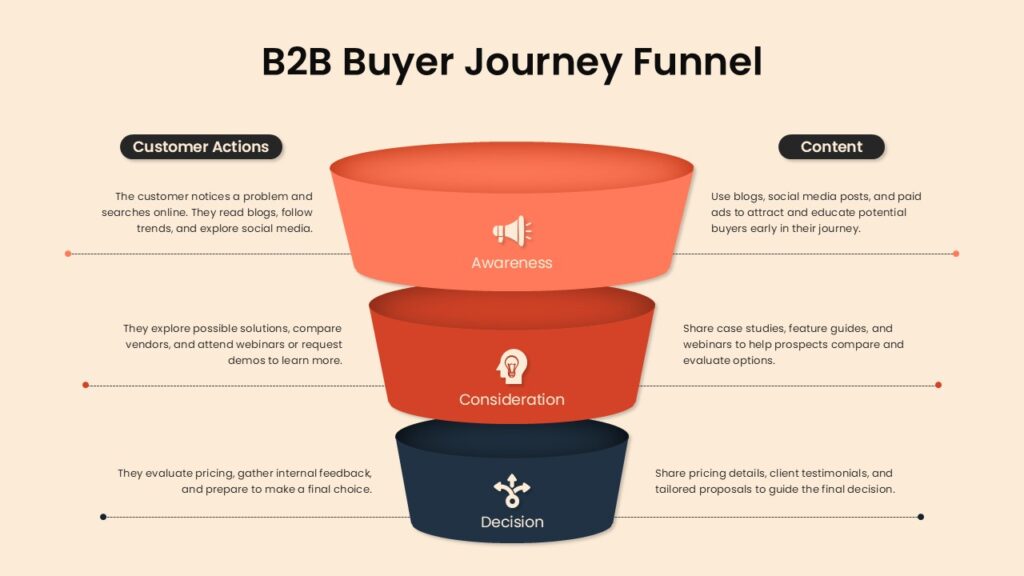
Top-of-Funnel Content (Awareness)
Awareness content exists to create clarity. It explains problems, surfaces inefficiencies, and puts language around frustrations people already feel. Guides, explainers, and trend analysis work well here. The goal is not conversion. It is recognition.
This is where SaaS inbound marketing earns attention by being useful without asking for anything back.
Middle-of-Funnel Content (Consideration)
Now the questions change.
- Which approach works best?
- What are the trade-offs?
- What will implementation actually involve?
This is where frameworks, comparisons, and use-case content matter. Buyers are narrowing options. They are seeking certainty. This layer holds the SaaS content funnel together.
Bottom-of-Funnel Content (Decision)
Decision-stage content removes risk.
Proof comes from case studies, and effort is clarified through implementation guides. Security documents reduce last-minute concerns, while ROI content supports internal approval.
This content rarely attracts traffic. It closes deals anyway.
Content Types That Work Best for SaaS Companies
Educational Blog Content
Blogs still matter when they are specific. Vague thought pieces fade fast, while problem-led articles last. For content marketing for SaaS companies, blogs work best when they answer real questions clearly and without padding.
Product-Led Content
Product-led content connects marketing with usage. Tutorials, walkthroughs, and feature explainers show how the product fits into real workflows. They reduce friction during onboarding and improve early activation. This content supports both growth and retention.
Thought Leadership and Opinion Content
Thought leadership works when it is grounded. Opinion content that explains why things work builds trust faster than generic advice. It also signals experience. Effective SaaS thought leadership avoids noise. It focuses on insight.
SaaS Content Marketing and SEO
Targeting Problem-Led Keywords
SaaS SEO works best when aligned with intent. Buyers search for problems before features. Tasks before tools. Problem-led keywords connect content with early-stage users naturally, without forcing conversion language.
Building Topic Authority Over Time
Authority is earned slowly. Clusters of related content signal depth to users and search engines. They keep people exploring instead of bouncing. This is where SaaS growth marketing compounds instead of resetting each quarter.
Measuring Performance Strategy
Metrics That Matter Beyond Traffic
Traffic alone can be misleading for SaaS teams. Engagement matters more, including reading depth, trial influence, and content-assisted activation. These signals show whether content is actually helping.
Linking Content to Revenue Impact
Perfect attribution is unrealistic, and it does not need to be the goal. Patterns still show up when results are viewed over time. This understanding helps teams see how content supports pipeline growth, adoption, and retention.
Common Errors You Should Avoid
Treating Content as a Campaign, Not a System
One-off content feels productive. It rarely delivers lasting results. SaaS content works best as infrastructure. Consistency, built through regular improvement and long-term care, outperforms burst-led activity.
Ignoring Existing Customers
Content should not stop at conversion. Educational resources help reduce churn, while advanced guides support expansion. Clear documentation improves satisfaction and removes barriers to growth.
Building a Sustainable SaaS Content Marketing Framework
Aligning Content With Product and Sales Teams
The best content answers real objections. Sales hears hesitation, support hears confusion, and product sees friction. When content reflects this reality, it becomes more effective without trying to persuade.
Iterating Based on User Feedback and Data
Strong SaaS content evolves over time. Language shifts, products mature, and expectations change. Revisiting and refining content keeps it relevant and credible.
When This Approach Delivers the Greatest Value
Competitive or Crowded Markets
In saturated categories, content explains differentiation calmly. It allows buyers time to think things through, compare options, and trust the decision. This is where content quietly influences outcomes.
Products With Ongoing Usage and Learning Curves
The more complicated the product is, the more the content is worth. Its worth extends beyond getting the customer to the initial sale as it aids the customer in adopting the product and helps with customer retention in the long run. If properly executed, SaaS content marketing turns into the product itself.
Contact us for more information.
Frequently Asked Questions
- What makes SaaS content marketing different from regular content marketing?
SaaS content is built for longer decisions. People need time to understand the problem, compare tools, and see how a product fits their work. The content does more than attract attention. It helps users feel ready to commit and use the product with confidence.
- How long does it take for SaaS content marketing to work?
Some content takes time to earn traction, especially search-led pages. Other pieces work faster. Product explainers, pricing context, and decision support can influence outcomes much earlier.
- Is SaaS content marketing only for early-stage companies?
No. It often matters more later on. As teams grow and decisions involve more people, clear content helps alignment and keeps customers engaged.
- How does SaaS content marketing support sales teams?
It reduces friction before a call happens. Common questions are already answered, so conversations start at a higher level.
- Does SaaS content marketing need to be SEO-focused?
Not always. Content that supports trials, onboarding, or everyday use can be just as valuable.