

Introduction
Most businesses do not fail because of low traffic. They fail because visitors do not move forward. That is where the conversion funnel matters.
People do not buy on the first click. They read, think, and compare. Some leave and come back days later. A good funnel supports this behaviour. It guides people without pressure.
ToFu, MoFu, and BoFu reflect how real decisions happen. First comes interest, then trust and action. Each stage needs a clear goal and the right message. When those pieces align, results follow.
In this guide, we break down how the funnel actually works in practice. No theory overload. No vague advice. Just a clear look at how awareness becomes trust, and how trust turns into results.
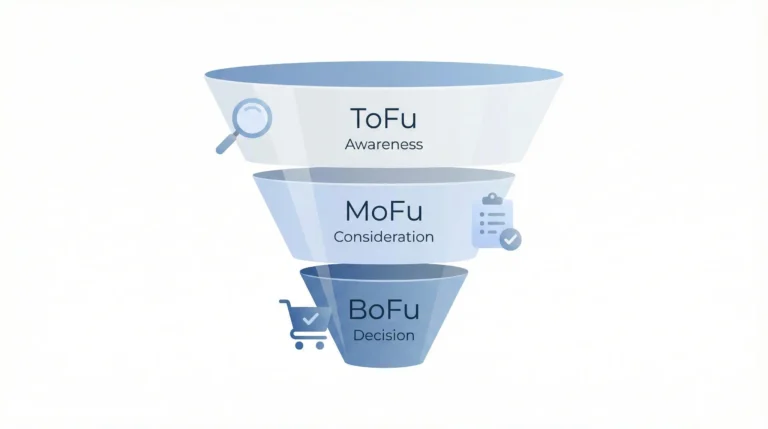
Table of Contents
What Is the Conversion Funnel?
The conversion funnel explains how interest turns into action. It tracks real behaviour, not perfect journeys. Most people arrive with a question, not a plan to buy. They move forward only when things make sense.
Early on, visitors want clarity. They look for insight, not offers. If they feel pushed, they leave because help comes first, and sales come later.
As intent grows, focus shifts. People compare choices. They weigh value. This stage needs calm guidance. Too much noise creates doubt. Clear direction builds confidence.
Closer to the end, small gaps like unclear pricing, weak proof, and missing answers can stop progress. At this point, details matter more than promises.
The funnel works because it follows timing. It treats users based on mindset, not volume. One message cannot fit all stages.
Most funnels follow three clear phases:
- Top of Funnel (ToFu): Awareness
- Middle of Funnel (MoFu): Consideration
- Bottom of Funnel (BoFu): Decision
When each phase has a purpose, progress feels natural. Conversions happen without pressure.
Top of Funnel (ToFu) – Building Awareness and Reach
What ToFu Represents in the Buyer Journey
Top of Funnel (ToFu) is the start of the buyer journey stages. People arrive with loose intent. Some feel a problem but cannot name it. Others are only browsing. They are not ready to choose. They are trying to understand.
This stage supports the wider marketing funnel stages by creating a first contact. In the ToFu MoFu BoFu model, this is where attention begins. The goal is reach, not sales. Pressure here breaks trust fast.
ToFu works best when brands teach, not pitch. Clear ideas matter more than bold claims.
Types of Content That Work Best at ToFu
Strong ToFu content answers simple questions well. It removes confusion and sparks interest. Common formats include:
- Blog posts that explain trends or problems
- Short guides that break down complex topics
- Social posts that start conversations
- SEO pages aimed at early searches
This funnel content strategy fits both the inbound marketing funnel and demand generation funnel goals. It attracts people without forcing intent.
How ToFu Supports Long-Term Conversions
ToFu feeds the lead generation funnel. It fills the top with users who trust the brand before they compare options. That trust matters later.
Good awareness content lowers friction in later stages. When users reach MoFu, they already know the voice, making decisions feels easier.
ToFu rarely drives instant action. Its real job is momentum. It prepares the ground so future conversions cost less and close faster.
Middle of Funnel (MoFu) – Nurturing Interest and Evaluation
How User Intent Changes at MoFu
The Middle of Funnel (MoFu) is where curiosity turns serious. Users now understand their problem. They are no longer guessing. They are looking at options. They compare tools, services, and outcomes. This shift defines the buyer journey stages at work.
The intent here is active but cautious. People want clarity without commitment. In the ToFu MoFu BoFu structure, MoFu sits at the centre of the customer journey funnel.
Content That Moves Users Forward at MoFu
MoFu content supports the lead nurturing funnel. It helps users test ideas before choosing a path. The goal is guidance, not persuasion.
Effective formats include:
- Side-by-side comparisons that show real differences
- Case studies that explain how results were achieved
- Downloadable guides that solve specific problems
- Email flows that answer common doubts over time
This stage benefits from a clear funnel marketing strategy. Each asset should move users one step closer, not rush them to the end.
The Role of Trust and Proof in MoFu
Trust is the currency of MoFu. Users want proof, not promises. They look for data, context, and honest detail. Vague claims slow progress.
Strong MoFu content supports the wider sales funnel stages. It removes friction before the decision phase. When done well, MoFu reduces drop-off and improves bottom-of-funnel conversions later.
Here, confidence grows, choice becomes easier, and the path forward feels safe.
Bottom of Funnel (BoFu) – Converting Intent into Action
What Defines BoFu Readiness
Bottom of Funnel (BoFu) is where decisions happen. Users are no longer exploring. They are choosing. They have compared options and narrowed the list. What remains is confidence.
At this point in the customer journey funnel, small barriers cause big delays. Slow pages, vague promises, or hidden costs can stop progress. Clear value matters more than clever wording. This stage is critical to bottom-of-funnel conversions.
BoFu supports the final sales funnel stages by removing doubt rather than adding pressure.
High-Converting BoFu Content Types
BoFu content answers one question: “Is this the right choice?” It must be simple and direct.
Common high-impact formats include:
- Focused service or product pages
- Clear pricing with no surprises
- Testimonials that show real outcomes
- Demos or consultations that lower risk
- Strong calls-to-action with clear next steps
This is where a solid conversion optimisation strategy makes a difference. Every element should support action, not distract from it.
Aligning Sales and Marketing at BoFu
BoFu works best when teams move together. Messaging should match across pages, emails, and calls. Gaps create confusion.
In B2B conversion funnel models, this alignment is vital. Smooth handovers improve trust and shorten decision time. When sales and marketing share goals, the final step feels natural, not forced.
BoFu turns intent into results. When done right, action feels easy.
MoFu content supports the lead nurturing funnel. It helps users test ideas before choosing a path. The goal is guidance, not persuasion.
Effective formats include:
- Side-by-side comparisons that show real differences
- Case studies that explain how results were achieved
- Downloadable guides that solve specific problems
- Email flows that answer common doubts over time
This stage benefits from a clear funnel marketing strategy. Each asset should move users one step closer, not rush them to the end.
How ToFu, MoFu, and BoFu Work Together
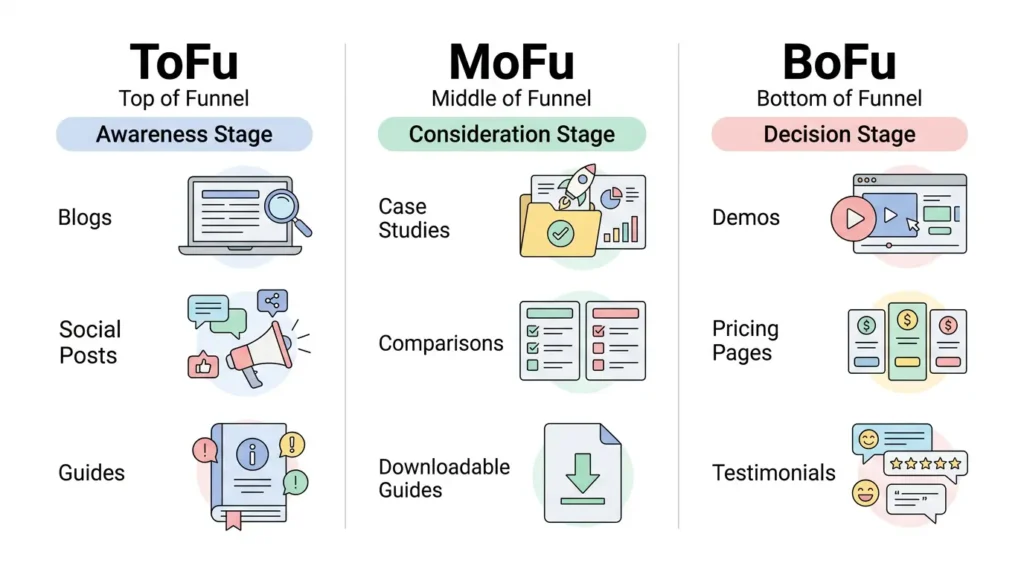
A funnel only works when every stage connects. Treating stages as separate campaigns breaks flow and weakens results. The conversion funnel is a system, not a checklist.
Each stage plays a clear role in the buyer journey:
- ToFu brings attention to the demand generation funnel.
- MoFu shapes intent through the lead nurturing funnel.
- BoFu drives action at the final sales funnel stages.
When one stage fails, pressure shifts elsewhere. Weak ToFu forces heavy ad spend. Thin MoFu slows trust. Poor BoFu hurts close rates.
A strong funnel marketing strategy aligns all three. Messages stay consistent. Expectations stay clear. Users feel guided, not pushed.
This balance improves the inbound marketing funnel by reducing friction across the customer journey funnel. It also sharpens funnel performance metrics. Teams can see where users stall and why.
Alignment creates momentum. Content supports content for each funnel stage. Data informs timing. Conversions rise without force.
The real value comes from flow. When ToFu, MoFu, and BoFu work together, growth becomes stable. Results scale with control, not guesswork.
Measuring Funnel Performance Effectively
Key Metrics by Funnel Stage
A funnel improves only when it is measured well. Looking at totals hides problems. Stage-level tracking shows what needs fixing.
Each part of the conversion funnel has its own signals.
Top of Funnel (ToFu) focuses on reach and interest:
- Traffic growth from organic sources
- Engagement rate on content
- Time spent on key pages
These metrics show if awareness content attracts the right audience.
Middle of Funnel (MoFu) reveals intent and progress:
- Lead quality, not just volume
- Resource downloads and form fills
- Email open and click rates
This stage reflects how well the lead generation funnel and buyer journey stages align.
Bottom of Funnel (BoFu) shows real business impact:
- Conversion rate on key pages
- Cost per acquisition
- Sales velocity across deals
These numbers guide conversion optimisation strategy and highlight gaps between marketing and sales.
Strong funnel performance metrics link actions to outcomes. They reduce guesswork. They help teams focus effort where it matters most.
When measured this way, the customer journey funnel becomes clear. Optimisation becomes practical, not reactive.
When Funnel Strategy Needs to Change
A funnel is not fixed. It should shift as the business grows. What worked before may slow results later. Smart teams adjust early.
Several factors affect balance in the conversion funnel:
- Sales cycle length: Longer cycles need stronger MoFu support
- Deal value: Higher value demands more proof and detail
- Market maturity: New markets need education before action
- Audience awareness: Informed buyers skip early steps
In B2B conversion funnel models, depth often matters more than reach. Decision makers move more slowly. They ask harder questions. Thin content fails here.
Change is also needed when funnel performance metrics stall. Rising traffic with flat leads signals a MoFu gap. Strong leads with weak close points to BoFu friction.
A flexible funnel marketing strategy responds to data, not habit. The goal is fit, not volume. When strategy matches reality, growth becomes easier to sustain.
Conclusion: Using ToFu, MoFu, and BoFu as a Strategic Framework
ToFu, MoFu, and BoFu are not labels. They reflect how people think and decide. When used well, the conversion funnel brings structure to that behaviour.
Each stage serves a purpose:
- ToFu attracts the right attention.
- MoFu builds clarity and trust.
- BoFu removes doubt and drives action.
Together, they create flow. Content matches intent, and decisions feel easier. The strongest funnels stay flexible. They change with audience needs, market shifts, and performance data.
At Midland Marketing, we use this framework to build funnels that support growth without shortcuts. Strategy stays practical. Results stay measurable.
Frequently Asked Questions
What is a conversion funnel?
It shows how users move from awareness to action through structured stages.
Is ToFu, MoFu, BoFu only for B2B?
No. It works for both B2B and B2C when adapted to the buying cycle.
Which funnel stage matters most?
It depends on your business model, deal size, and audience intent.
Can one piece of content serve multiple stages?
Yes, but it should have a clear primary goal.
How often should the funnel strategy be reviewed?
Review quarterly or when funnel performance metrics start to stall.