


Introduction To hospitality SEO
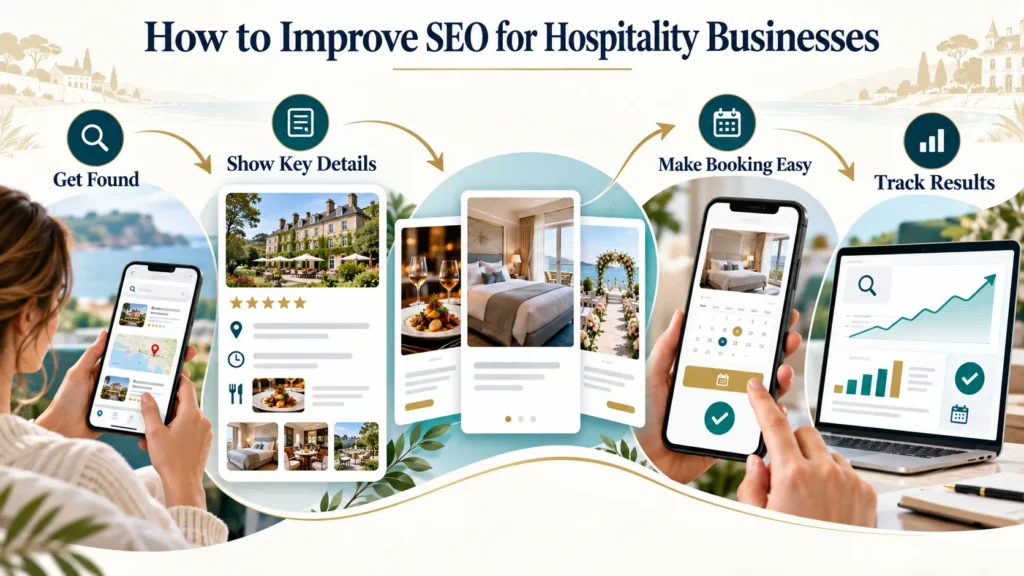
To learn how to improve SEO for hospitality businesses, make it easy for people to find the right page and key details. Hotels, restaurants, pubs and event venues in the UK can use SEO to appear in relevant unpaid search results.
This guide covers search intent, local listings, website pages, useful content and ways to track results. It shows how to help guests check room details, view a menu or ask about an event, with clear information they can trust.
Table of Contents
What Does SEO for Hospitality Businesses Involve?
SEO for hospitality businesses helps people find hotels, restaurants, pubs and event venues through online searches. It covers useful website pages, local search results and how well search engines can access a site.
Organic results are unpaid listings, unlike paid ads. Each business has different needs. A hotel may focus on room details, while a restaurant needs clear menus and an event venue needs facts about its space and services.
How Hospitality SEO Supports Customer Decisions
Clear, correct details help people compare their options and decide what to do next, from viewing a menu to checking a room or asking about an event.
How to Match Search Intent to the Right Hospitality Page
People search for different reasons. Some want ideas, while others are ready to book a room, find a meal or choose an event venue. Your website should guide them to the page that best fits their needs.
Do not send every visitor to your homepage. A hotel page should show room details, while a dining page should give clear menu and booking information. This is a key step in learning how to improve SEO for hospitality businesses.
Example Search | Suitable Page | Useful Next Step |
Boutique hotel in York | Hotel or location page | Check availability |
Sunday lunch in Wolverhampton | Restaurant or dining page | View the menu |
Wedding venue near Birmingham | Wedding and events page | Request venue information |
Use Google Search Console to see which searches bring people to your site. Customer questions can also show what details are missing. For more guidance, read our keyword research checklist.
How to Improve Local SEO With Google Business Profile
Local SEO for hospitality businesses helps people find the right place when they search online. Your Google Business Profile should give them clear, correct details before they visit or book.
Check Your Business Information
Add the right business name, address, phone number and opening hours. Choose a category that fits your business. Use clear photos of your rooms, dining area or event space. Check these details when your hours or services change.
Provide Useful Booking, Menu and Accommodation Information
Make it easy for people to take the next step. Restaurants should keep menu details and booking links up to date. Hotels should check their listed facilities, such as Wi-Fi and parking, and correct any errors. Google offers different profile features for each type of business.
Manage Customer Reviews Properly
Ask guests for honest reviews after their visit. Reply to feedback in a polite and helpful way, including when a guest raises a concern. This shows that you value their experience and helps future customers make informed choices.
Hospitality SEO Best Practices for Key Website Pages
Good hospitality SEO best practices start with giving people the facts they need before they book. Each page should answer a clear need and make the next step easy.
Hotel Website Pages
List room types, facilities, parking, access needs and nearby places to visit. Add clear booking details so guests can compare rooms and decide which suits them. Keep all details up to date.
Restaurant and Pub Website Pages
Show current menus, prices, opening hours and dietary options. Add details about Sunday lunch, private dining or group bookings where offered. Check menus and times when they change, so guests do not find old information.
Event and Wedding Venue Pages
State your venue’s capacity, facilities, event types and hire options. Add package details where available. Answer common questions to help people decide whether to ask about a date or arrange a viewing.
Build Useful Website Content Around Guest Questions
Useful content answers the questions guests ask before they book. Hotels can write about local sights, transport, parking and room features. Restaurants and pubs can share seasonal menu updates, dining ideas and group booking details. Event venues can cover wedding plans, room layouts and common hire questions.
Use clear headings based on real guest questions, then answer each one in plain English. Add facts from your own services and local knowledge to make each page useful and trustworthy.
Link each article to a related page. A guide to local sights could link to hotel rooms, while a wedding planning guide could link to venue hire details. Every article should offer new value, not repeat content already on your site.
Check Technical SEO and the Mobile Booking Journey
Your website should work well for both people and search engines. Check that key pages can be found and indexed by Google. Test the site on a phone. Text should be easy to read, links should work, and pages should load without long delays. Google’s Core Web Vitals help you check loading speed, response time and layout shifts.
For example, a hotel page may list its rooms, but guests cannot book if the availability link fails or is hard to use on a phone. Keep key details accurate and easy to find. Follow Google Search Essentials for more guidance.
Earn Relevant Links and Demonstrate Trust
Build ties with local tourism groups, visitor guides and trusted local news sites. Share useful guides, local research or details of events to earn genuine mentions. Keep your business details the same across key listings. Use reliable sources to support facts, and share real client results only when you can prove them.
If an example is made up to explain a point, say so clearly. Avoid buying links or swapping links just to affect search rankings. For more advice, read our guide to backlink building.
Measuring SEO Results for Hospitality Businesses
How should a hospitality business measure SEO success? Check whether people find your website and take useful steps, such as booking a room, making a reservation or asking about an event. More visits alone do not prove that SEO is working.
Track Search Visibility
Google Search Console shows the search terms people use to find your site. It also tracks clicks, impressions, click-through rate and results by country. Use these figures to see which pages appear in searches and which terms bring people to your site. Read Google’s Search Console guide to learn more.
Measure Useful Website Actions
When measuring SEO results for hospitality businesses, look at what visitors do after they arrive. Google Analytics 4 (GA4) can track booking clicks, enquiry forms and completed bookings when tracking is set up. More impressions mean more chances to be seen, but not always more bookings. Compare results over time and allow for busy seasons, quiet months and changes in visitor demand.
How To Improve SEO For Hospitality Businesses Checklist
Use this hospitality website SEO checklist to review your site and spot areas that need work.
- Match each page to what people search for.
- Check business details and booking links.
- Keep menus, room details and venue facts up to date.
- Review page titles, headings and internal links.
- Test mobile use and check that key pages can be indexed.
- Track enquiries and bookings where data is available.
Conclusion
Good hospitality SEO starts with clear pages, correct business details and useful content. Make sure guests can find the facts they need and take the next step. Use the checklist to spot gaps, then fix the most important ones first. Now you understand how to improve SEO for hospitality businesses. For more support, explore our hospitality marketing services.
Frequently Asked Questions
- What Is the First SEO Task a Hospitality Business Should Complete?
Start by checking your main pages. Make sure each page meets a clear search need and gives correct details about rooms, menus, services or venue hire.
- Do Hotels and Restaurants Need Different SEO Strategies?
Yes. Both need clear pages and sound technical SEO. Hotels should explain rooms and facilities, while restaurants need menus, opening times and booking details.
- How Long Does Hospitality SEO Take to Show Results?
There is no fixed time. Results depend on your site’s current state, local competition, the changes made and how often Google crawls and reviews pages.
- Is Local SEO Important for Hospitality Businesses?
It can help nearby customers find your business. Keep your profile, opening hours, contact details and relevant links up to date.
- How Can Hospitality Businesses Measure SEO Results?
Use Google Search Console to track search impressions and clicks. With GA4 tracking set up, review booking clicks, enquiries and completed bookings.
Want some more?
Latest Insights & News
Why Conflicting Brand Information Can Stop AI Search from Trusting Your Business
Introduction You ask ChatGPT about your business. It gives the wrong address, the wrong services, or a rival’s name. It is a nasty surprise, and
Google Search Console AI Reports: How to Measure AI Overviews & AI Mode Visibility
Introduction Google Search Console AI Reports help website owners monitor how often links to their pages appear in Google’s AI search experiences. The Generative AI
Local SEO for AI Search: How To Make AI Find and Trust Your Local Service Pages
Introduction Local service pages need clear service information, genuine local relevance, credible evidence and accessible content. Those elements give search systems the best chance of