



What Is a Brand Tone of Voice?
Blogs | Branding
Written By: Yasmin Qureshi
Blogs | Branding
Written By: Yasmin Qureshi
Introduction
Your logo isn’t the only thing that sets you apart from competitors—your brand’s tone of voice is just as crucial. It shapes how you communicate, giving your business a distinct personality that resonates with your audience. A well-defined tone of voice builds trust, sets expectations, and fosters lasting relationships.
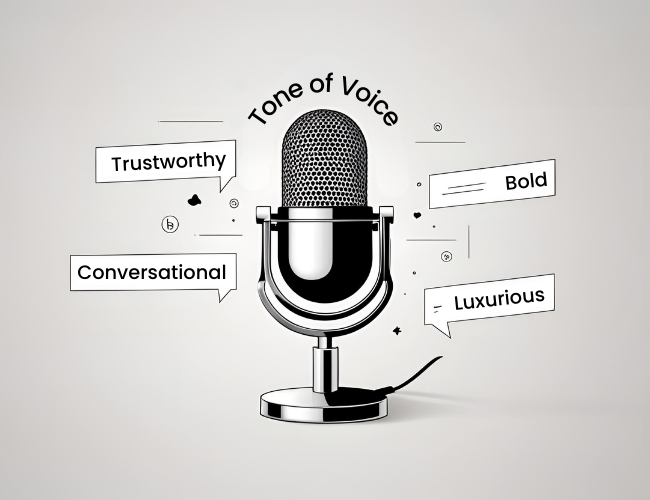
Your tone of voice can be friendly and conversational, professional and authoritative, or bold and edgy—it all depends on how you want your brand to be perceived.
In today’s article, we’ll explore what a brand tone of voice is, why it matters, and how you can define yours to create a powerful, lasting connection with your audience.
What is a Brand Tone of Voice?
A brand tone of voice is the distinctive way a business communicates with its audience. It reflects the brand’s personality, values, and mission, shaping how messages are delivered across various channels, such as websites, social media, advertisements, and customer services interactions.
Why is Brand Tone of Voice Important?
A strong brand tone of voice creates a recognisable and consistent identity across all platforms. It establishes a clear personality, making it easier for customers to connect with and remember your brand.
A well-defined tone strengthens emotional connections by resonating with your audience’s values and expectations. It also sets your brand apart from competitors, giving it a unique voice.
Most importantly, consistency in tone enhances trust and credibility, leaving customers feeling confident in your brand’s authenticity and reliability.
Key Elements of a Brand Tone of Voice
The key elements of a brand tone of voice define how your brand communicates and ensures consistency across all messaging. These include:
1. Personality: Is the brand friendly, professional, playful, authoritative, or empathetic?
2. Language & Vocabulary: The choice of words and phrases that align with your brand’s identity. Does it use simple and approachable language, or technical and formal?
3. Consistency: A strong tone of voice is applied consistently across all communications to build brand recognition.
4. Emotional Impact: The way a brand speaks influences how people feel about it. A warm and engaging tone fosters connection, while a formal and professional tone builds credibility.
5. Audience Alignment: The tone should resonate with your target audience’s preferences, values, and expectations. For example, a youthful, energetic brand will sound different from a luxury, high-end brand.
How to Define Your Brand Tone of Voice
Defining your brand tone of voice starts with understanding your audience—identifying their demographics, preferences, and expectations to ensure your messaging resonates with them.
Next, aligning your tone with your core brand values helps maintain authenticity and consistency, reinforcing your mission and vision.
Analysing existing content can provide valuable insights by revealing patterns in past messaging, helping you refine you approach.
Developing a tone of voice guide is essential for consistency, offering clear guidelines on language, style, and tone across all communications.
Finally, testing and refining your tone based on feedback and performance ensures it remains effective, adaptable, and relevant to your audience over time.
Examples of Brand Tone of Voice
Defining your brand’s tone of voice can feel like a daunting task, but one effective way to start is by analysing the brands around you—particularly your competitors. This can give you insight into how different tones resonate with audiences and help you pinpoint the tone that best represents your business. To get a clearer picture, let’s explore a few well-known brands and their distinct tones of voice:
- Innocent Drinks
- Playful and friendly tone.
- Uses casual, humorous, and quirky language.
- Apple
- Minimalist and inspirational tone.
- Communicates in a simple, clear, and aspirational manner.
- Nike
- Motivational and bold tone.
- Uses strong, empowering, and action-driven language.
Common Mistakes to Avoid
When developing a brand tone of voice, there are several common mistakes to avoid:
Inconsistency across platforms can confuse audiences and weaken brand recognition. It’s important to use a consistent tone across all communications and platforms.
Failing to align with the target audience can result in messaging that feels irrelevant or unrelatable, reducing engagement and trust.
Overcomplicated language creates a barrier. Avoid using overly technical or complex wording, which may alienate potential customers instead of drawing them in.
Lastly, lacking authenticity can make a brand seem insincere or untrustworthy, diminishing its credibility and connection with its audience.
By addressing these pitfalls, brands can create a tone of voice that is clear, compelling and effective.
Conclusion
A strong and consistent tone of voice builds brand recognition, credibility, trust, and creates emotional connections with your audience. By defining and continually refining your tone of voice, your messaging will remain authentic, engaging and aligned with your brand values.
Take a moment to analyse your current brand tone of voice—does it truly reflect your brand’s personality? If not, now is the perfect time to develop a brand tone guide that helps you communicate more effectively and consistently.
Want some more?
Latest Insights & News

Entity SEO Explained: Why It’s the Beating Heart of Your Digital Marketing Strategy
An entity SEO strategy for business growth focuses on helping search engines clearly identify and connect your brand, products, and services with relevant concepts. Unlike traditional keyword-based SEO, entity SEO builds a semantic web of meaning, allowing Google to recognize your business as an authoritative source. By structuring data, using consistent brand mentions, and optimizing Knowledge Graph signals, you enhance brand trust, topical authority, and organic growth. In 2025, mastering entity SEO is essential for sustainable visibility and staying competitive in evolving search landscapes.

Google’s Visual Image Search Upgrade: What Marketers & SEOs Must Know
The Google Visual Image Search Update signals a major shift in how Google interprets and ranks visual content. It’s no longer just about alt text and filenames — Google now uses AI-driven visual recognition to understand image context, quality, and relevance to user intent. Marketers should focus on high-quality, context-rich images, proper structured data, and visual SEO practices like descriptive file names, captions, and surrounding text relevance. Optimizing for this update means thinking beyond text — and ensuring your

Mastering AI Writing Tools: How to Create Smarter, Human-Centric AIO Content
AI writing tools have transformed the content creation landscape by combining automation with creativity. The real mastery lies in using these tools to enhance human input, not replace it. By guiding AI with clear prompts, refining tone and style, and adding personal insights, writers can produce authentic, high-performing AIO (AI-optimized) content. Focus on originality, readability, and emotional connection — because even in an AI-driven era, human perspective remains the ultimate differentiator.