


Understanding the Relationship Between SEO and Content Marketing
SEO and content marketing look like two jobs. In practice, they are one plan. SEO helps people find pages. Content keeps them there and makes them act. Think of SEO as a map. Think of content as the place people want to visit. Alone, each can fail. Together, they build steady growth.
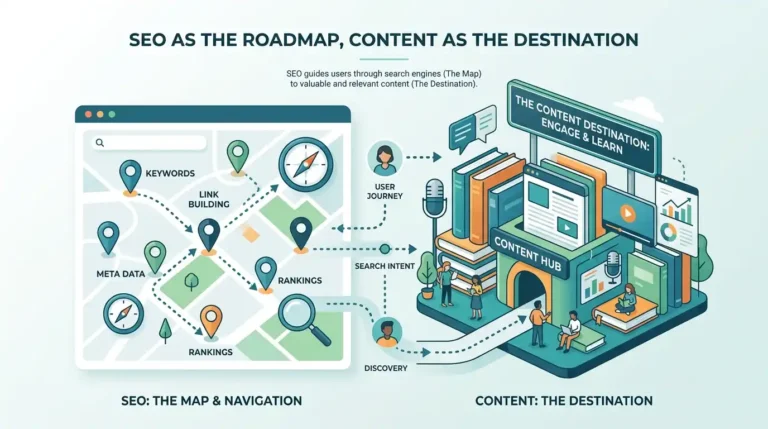
Table of Contents
What SEO Focuses On
SEO content strategy makes pages easier to find and to trust. It covers technical parts, like site speed and clean code. It covers how pages tell search engines what they are about. It covers signals that show a site is real and useful. The main job of SEO is to help search engines place the right page in front of the right person.
What Content Marketing Focuses On
Content marketing for SEO aims to help people. It uses blog posts, videos, guides, case studies, and tools. It seeks to teach, solve, or inspire. The goal is to build trust over time. Content is not words. It is a relationship. Good content gives reasons for people to come back.
Why These Two Strategies Work Best Together
If a page cannot be found, no one reads it. If a page is found but fails to help, visitors leave. When you match findability with usefulness, you turn visitors into leads. It also helps to repeat to readers. That union also pays off over time. Over months, small wins add up to big growth.
How SEO Shapes an Effective Content Strategy
SEO and content marketing is not a list of tricks. It is a guide that answers: what should we write, and how should we lay it out? SEO data points to real needs. It helps avoid guesses and wasted effort.
Using Keyword Research to Guide Content Topics
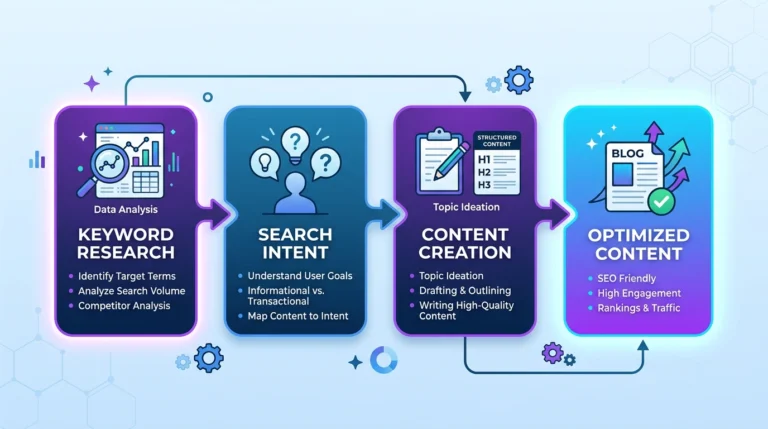
The keyword research process finds real questions people ask. It shows the words they use. Use that to shape topic ideas and titles. Think of it as fieldwork. Search volumes, related phrases, and question forms tell you what audiences really want. Instead of guessing, follow the demand.
Matching Content to Search Intent
People search for different things. Some want a fast answer. Some want to compare choices. Some are ready to buy. Search intent optimisation matters more than using a high-volume word. An article loaded with facts will not work if the user wants a shopping page. Make content that fits the aim behind the search.
Structuring Content for Search Visibility
How you lay out content matters. Clear headings, short paragraphs, and a logical flow help readers and search engines. Use labels that match how people search. Add a simple schema where it helps. Make it easy for bots to see what each page is about.
How Content Marketing Strengthens SEO Performance
Good content boosts ranking signals over time. It gives users reasons to stay, link, and explore. A content-led approach helps search engines see your site as a place of value.
Creating In-Depth Content That Builds Authority
Depth beats thinness. A page that fully answers a set of related questions tends to rank better. It ranks better than many short posts that barely touch the topic. Create cornerstone pieces that cover a subject from several angles. Use examples and mini-case studies. That builds the kind of trust both readers and SERP visibility reward.
Increasing Engagement Signals
Simple things raise engagement. A clear intro, headings that guide, and concrete takeaways keep people reading. When visitors stay longer, click on related pages, or return, these are signs that the site matters. Those signals help you over time.
Earning Backlinks Through Valuable Resources
Linking sites often reference material that offers genuine value. Useful research, interactive tools, and original case studies attract more links than sales pages. Think of links as votes. The more useful your content, the more likely it is to earn endorsements.
Aligning SEO and Content Across the Marketing Funnel
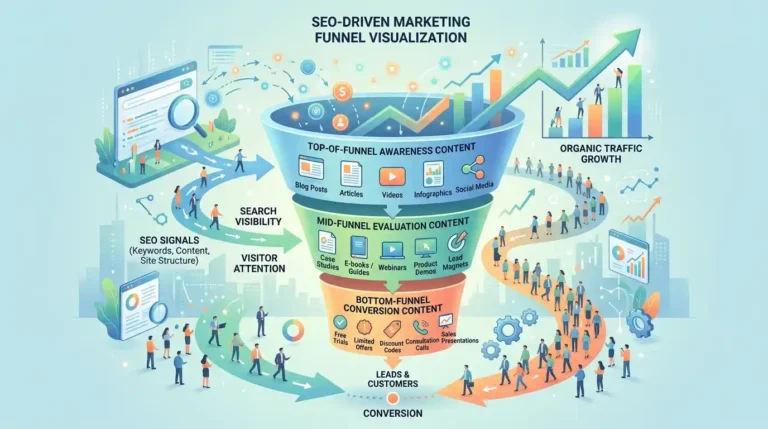
Different people need different content. A single blog should not try to be everything. Map content types to stages: awareness, evaluation, and conversion. Content funnel strategy makes your work practical and purposeful.
Top-of-Funnel Content for Awareness
At the top, write to inform and spark curiosity. Think how-to posts, short explainers, or broad trends. These pieces invite new people in. They should be easy to scan and share. The aim is visibility and trust, not a hard sell.
Mid-Funnel Content for Evaluation
In the middle, readers compare options and weigh pros and cons. Offer comparison articles, deeper guides, user stories, and demos. These assets help readers decide if your solution fits. They should be honest and clear.
Bottom-of-Funnel Content for Conversion
At the bottom, the content should help someone finish an action. Use clear product pages, case studies with results, and crisp FAQs. Match words on the page to the kinds of queries that signal buying intent. This fuels direct leads and conversions.
The Role of Content Structure in SEO Success
Good structure helps people and search engines move through your site. It keeps topics connected and makes it easier to grow authority on a subject.
Building Topic Clusters and Content Hubs
Instead of lone posts, group content around a central theme. A hub page links to narrower articles and ties them together. This shows depth. It also creates a neat path for readers to follow. A cluster makes your site look like a resource centre, not a collection of random pages.
Using Internal Links to Connect Related Content
Internal links guide readers and pass value between pages. Link from a hub to supporting articles and back again. Keep link text simple and clear. Do not overdo it. Internal linking structure lowers the chance that a visitor leaves too soon.
Updating and Expanding Existing Content
Content ages. You should refresh what works. Update facts, add new examples, and fix broken links. An older page that is kept current often performs better than a new one that is neglected. Treat content as an asset, not a one-time post.
Measuring the Impact of SEO and Content Marketing Together
Track measures that matter to business. Look beyond single metrics. The whole system is revealed in combined signals.
Tracking Organic Traffic Growth
Rising organic traffic strategy over time shows that your combined strategy is working. But don’t celebrate short spikes alone. Look for steady, sustained growth. That is the sign of long-term success.
Monitoring Keyword Rankings and Coverage
Watch how many terms your site ranks for, not top spots for a few keywords. Broader coverage shows you are building authority across topics. Use this data to spot content gaps and new opportunities.
Measuring Engagement and Conversion Metrics
Time on page, pages per visit, and lead actions tell you if content is creating value. Pair these with business metrics: newsletter sign-ups, demo requests, and purchases. Tie content performance back to real results.
Common Mistakes When Separating SEO from Content Marketing
When teams work apart, value leaks out. These common errors slow growth and waste budgets.
Creating Content Without Search Demand
Writing without checking demand often means low readership. Even strong ideas can fail if no one is looking. Use simple research before you write. Let demand guide the topic choice.
Over-Optimising Content for Keywords
Force-fitting keywords makes text awkward and hard to read. Readers notice. When the text feels mechanical, trust drops. Focus on natural phrasing. Use keywords as direction, not a script.
Ignoring Content After Publication
Publishing is not the last step. Promotion, linking, and updates matter. A page left alone will fade. Make a plan to revisit and refine your content over time.
The Key Takeaway
Treat SEO and content marketing as one system. SEO content strategy tells you where the audience is and how they search. Content provides the answers they need and the reasons to act. When you write to serve demand, match the user’s intent, and keep pages tidy and helpful, you build lasting growth. Over time, small improvements stack. A steady plan wins over quick hacks. Focus on real usefulness. Keep a little patience. The payoff grows month by month.
Frequently Asked Questions
1. How are SEO and content marketing connected?
SEO helps people discover your pages in search engines. Content marketing gives them a reason to stay and trust you. Together, they support visibility, engagement, and growth.
2. Can content marketing work without SEO?
It can, but growth is usually slower and less predictable. Without SEO, good content may never be discovered. SEO gives content a clear path to the right audience.
3. How does keyword research improve content marketing?
It shows what people are actually searching for. This removes guesswork when choosing topics and titles. Content becomes more useful and easier to find.
4. What type of content helps SEO the most?
In-depth content that fully answers user questions performs best. Pages that earn engagement and links build authority over time. Helpful resources tend to rank better than thin articles.
5. How do I measure SEO and content marketing success together?
Track organic traffic growth over several months. Review engagement metrics like time on page and conversions. Focus on steady improvement, not short-term spikes.