


Introduction
Search engines have changed a lot over the last decade. In the past, they relied mostly on keywords. If a page contained the right phrases, it had a good chance of ranking.
That approach no longer works on its own.
Modern search systems try to understand real things on the web, companies, people, places, and organisations. These are called entities. Search engines no longer look at matching words alone. They also check if a brand is a real and recognised entity online.
When a brand is clearly understood, search engines can connect it with services, expertise, and topics. That clarity improves search visibility. It also increases trust in the information connected to the brand.
This is where Brand Entity Signals become important. These signals help search engines verify that a business exists and understand how it relates to other information across the internet.
The good news is that businesses can influence these signals. Search engines no longer look at matching words alone. They also check if a brand is a real and recognised entity online.
Table of Contents
Understanding How Search Engines Identify Brands
Search engines today work more like large knowledge systems. Their goal is not just to find matching words. They try to map relationships between real-world entities.
An entity is something clearly identifiable. It could be a company, a person, a product, or a location. Each entity has attributes that help search engines understand it.
A keyword is just a phrase someone types into a search engine. An entity is different. It represents a real subject connected to information across the web.
To recognise brands, search engines collect signals from many sources, such as:
- Official websites
- Business directories
- Social media profiles
- Online publications
- Structured data on webpages
When these sources show the same details, search engines see they refer to the same organisation.
Several signals help confirm brand identity:
- Consistent business information
- Structured data explaining the organisation
- Mentions from credible websites
- Contextual references in relevant content
When these signals align, search engines can understand the brand more clearly. That understanding becomes the foundation for stronger visibility in search.
Steps to Build Strong Brand Entity Signals
Create Consistent Brand Information Across the Web
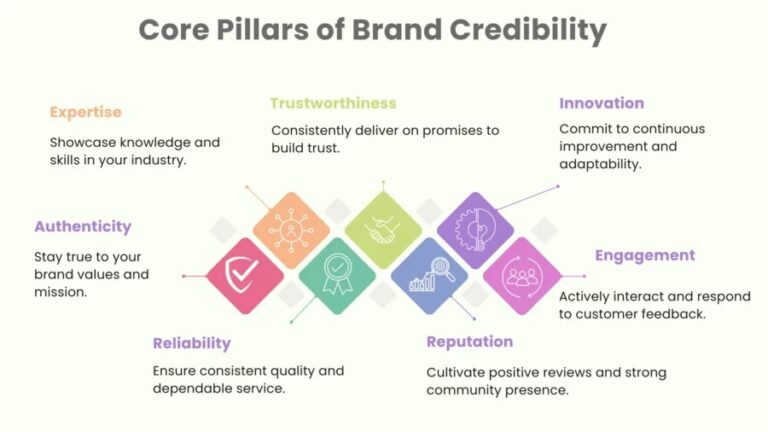
Consistency may sound simple, but it has a strong impact on how search engines recognise brands.
Search engines compare information from different sources. If details vary across platforms, search engines may become unsure. They may struggle to confirm if the references belong to the same organisation.
Even small differences can cause confusion. If a company name is written slightly differently, search systems may treat it as two separate entities. Businesses should ensure that core information remains identical across the web.
Important details include:
- Business name
- Address and location information
- Contact numbers
- Website URL
- Company description
These details should match on directories, social media platforms, and business listings.
Consistency removes uncertainty. If trusted sources show the same details, search engines can connect the references more easily. Over time, this strengthens Brand Entity Signals because the brand becomes easier to verify.
Use Structured Data to Clarify Brand Information
Structured data gives search engines clearer explanations about the information on a webpage.
Normally, search engines must interpret text and guess its meaning. Structured data removes much of that guesswork. It labels information in a format that machines can easily understand.
Schema markup is commonly used for this purpose. Organisation schema allows businesses to define key details about their brand.
Structured data can include information such as:
- Company name
- Logo
- Official website
- Contact details
- Social media profiles
- Leadership or founder information
This data helps search engines build a clearer profile of the organisation. Think of it as a direct explanation of your brand. Instead of relying only on written content, search engines receive clearly defined attributes.
As structured information spreads across the web, it strengthens Brand Entity Signals. Search engines can identify the brand more easily and link it to related information.
Strengthen Authoritative Brand Mentions
Search engines do not rely only on a brand’s website. They also observe how that brand appears across the wider internet.
Mentions from credible websites act as validation signals. They show that other sources recognise the brand.
These mentions may appear in several places:
- Industry publications
- Professional directories
- News articles
- Expert blogs
The surrounding context is important. Brands mentioned naturally in relevant articles carry more value than links placed on unrelated websites. Quality always matters more than quantity.
A few mentions on trusted websites can make a strong impact. They strengthen brand recognition more than many low-quality references.
As these references grow, they reinforce Brand Entity Signals. Search engines begin to see the brand as a recognised participant within its industry.
Build Strong Connections Between Owned Digital Assets
Most businesses operate across multiple platforms today. A brand may have a website, several social profiles, and listings on professional networks. Search engines need to understand that these platforms belong to the same organisation. Without clear connections, algorithms may treat them as separate entities.
Businesses can create stronger connections by:
- Linking social profiles from the official website
- Adding social account references in structured data
- Maintaining consistent branding across platforms
- Connecting business listings with the main website
These actions help search engines map relationships between platforms.
When the same brand identity appears across connected channels, recognition becomes much stronger. Each platform reinforces the presence of the organisation.
Over time, these connections contribute to stronger Brand Entity Signals.
Develop Topical Authority Around Core Services
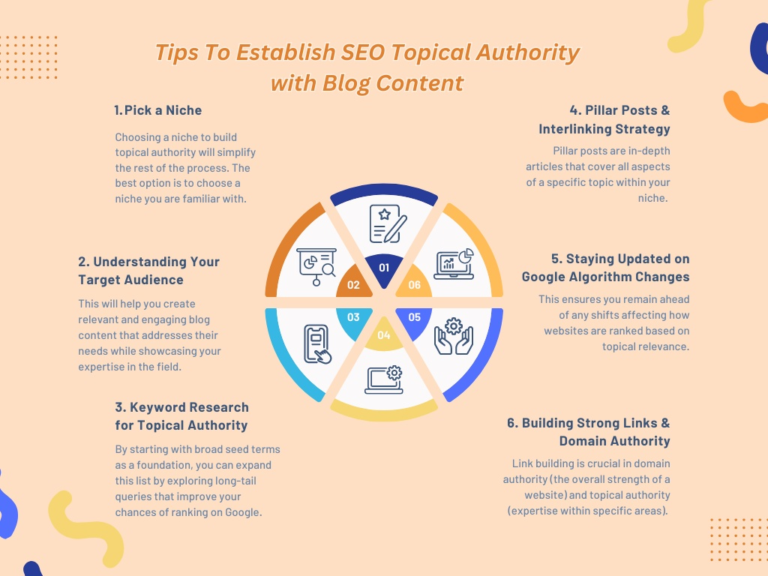
Search engines also learn about brands through context. The topics a company discusses help algorithms understand what that organisation actually does. Publishing useful content around core services helps build these associations.
Strong topical coverage often includes:
- Educational articles about industry challenges
- Guides explaining services or solutions
- Insights related to current trends
- Supporting content connected to central topics
Topic clusters work especially well. A main page supported by related articles creates a strong thematic structure. Search engines notice when a brand publishes content on the same topic. Over time, they associate the brand with that expertise. Over time, the brand becomes recognised as a knowledgeable entity within that field.
Strengthen Brand Presence Through Knowledge Sources
Search engines often rely on trusted knowledge platforms to verify information about organisations. These platforms act as reference points for entity recognition.
Examples include:
- Industry directories
- Professional databases
- Established business platforms
- Recognised publications
When a brand appears in these places, search engines can confirm it more easily. However, the credibility of the source matters. Well-known platforms carry much stronger influence than low-quality listings.
A presence on respected platforms helps build trust. It also helps search engines confirm the brand’s identity.
Maintain Consistent Branding Signals Across Content
Brand identity should remain consistent across every piece of content published online.
Different naming styles or unclear references can weaken recognition. Search engines may struggle to connect those references to the same entity.
To maintain clarity, businesses should focus on:
- Using the same brand name consistently
- Keeping company descriptions aligned
- Avoiding unnecessary variations in naming
- Reinforcing the same expertise across content topics
Repeated and consistent references help search engines connect information more easily. As these references accumulate, the overall recognition of the brand becomes stronger.
Why Strong Entity Signals Matter for Search Visibility
Search engines aim to present reliable information about real-world subjects. When they clearly understand a brand as an entity, they can display that brand with greater confidence.
Strong entity recognition supports several outcomes:
- Search engines connect the brand with relevant topics
- Trust signals increase through verified references
- Brands may appear in enhanced search features such as knowledge panels
- Algorithms gain a clearer understanding of the organisation’s expertise
In this environment, Brand Entity Signals play a key role in long-term SEO performance. Instead of relying only on individual keywords, businesses build a recognised digital identity. That identity can influence visibility across many types of search results.
Conclusion
Search engines now focus on understanding real-world entities. Brands that want long-term visibility must help search systems recognise their identity clearly.
Several actions contribute to this process. Consistent business information removes confusion. Structured data provides clarity. Mentions from credible sources strengthen trust. Connections between digital platforms reinforce identity.
Together, these elements create a network of signals that search engines can verify.
Strong Brand Entity Signals do not appear overnight. They develop gradually through consistent information, credible references, and clear digital connections.
Businesses that invest in these signals build a stronger presence in search. Over time, that recognition becomes one of the most valuable assets in modern SEO.
Contact us for more information.
Frequently Asked Questions
1. What are entity signals in SEO?
Entity signals are signs that show a brand is real on the web. Search engines spot these signs in places like sites, listings, and media mentions.
2. Why do search engines rely on entity recognition?
Search engines want to link a name to a real company, not just a string of words. Entity recognition helps them connect that name to a clear identity.
3. How does structured data help search engines understand brands?
Structured data adds simple labels to key facts about a brand. These labels show search engines what the name, logo, and site stand for.
4. Can brand mentions influence entity recognition?
Yes, they can. When trusted sources mention a brand, it signals that the business exists and is recognised.
5. How long does it take for search engines to recognise a brand entity?
It usually takes time for signals to build up across the web. As clear data and trusted mentions grow, search engines gain more confidence in the brand.