

What Is Content Decay and Why Does It Matter for SEO
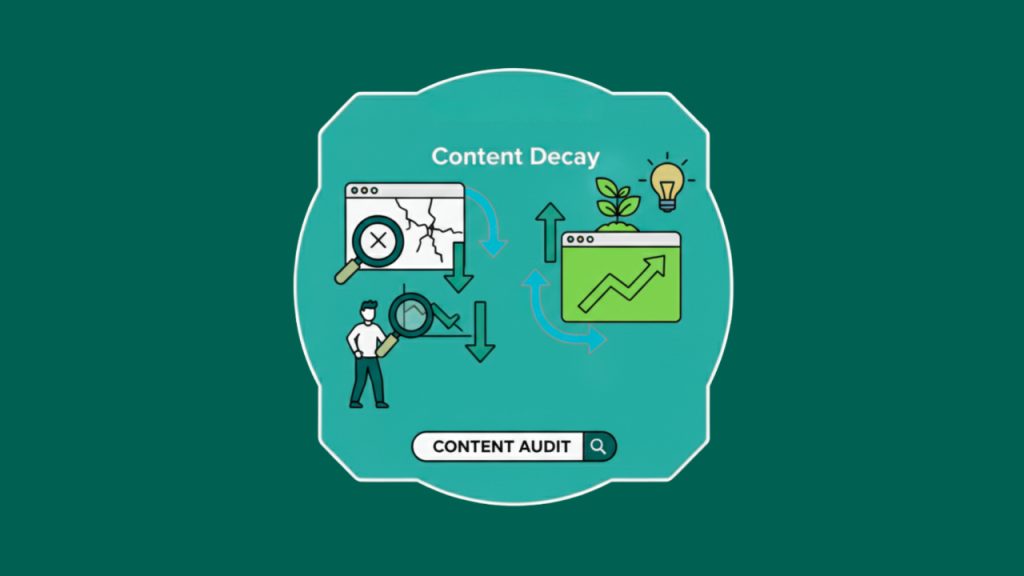
Content decay is the gradual decline in organic traffic and rankings. This happens to once-successful pages over time. Even the best-performing content eventually slows down. It happens as trends shift, algorithms evolve, and competitors catch up.
This drop isn’t a Google penalty; it’s a natural process. As search intent changes, older content stops matching what users now look for. Fresh competitors publish updated articles to their content, while your page stays still. Without regular attention, it starts slipping quietly down the search results.
Recognising and fixing content decay is crucial to your business. They can maintain your site’s visibility and authority without losing to competitors. Ignoring it means losing potential visitors, leads, and revenue. You may even lose the loyal audience that your content once easily attracted.
Table of Contents
Signs Your Content Is Decaying
It’s easy to miss the early signs of content decay as they affect you gradually. Here’s how to spot when your once-strong pages are beginning to lose their edge.
Drop in Organic Traffic and Impressions
One of the clearest signals is a steady decline in organic traffic. You can confirm this by checking Google Search Console or GA4 data. Compare the recent months with earlier performance. If your traffic or impressions keep falling, then your content might be losing relevance. Then, without wasting time, you have to understand the needs and update your content.
For example, a blog that once ranked top for “email automation tools” might now sit on page two. This happens because newer and more comprehensive articles took their place.
Lower Keyword Rankings and Click-Through Rates
If your main keywords start dropping in position, it’s another warning sign to update your content. Search intent may have shifted, and you have to update along with it. Also, your competitors might have improved their versions of the same topic. So update your content to reach the top again.
You may also notice fewer clicks even if impressions stay steady. This means your content no longer appeals to users in the search results. It may happen due to outdated titles or meta descriptions.
Decreased Engagement Metrics
Look beyond rankings. If people spend less time on the page, bounce faster, or share your content less, it signals a drop in value. Outdated design, irrelevant examples, or stale data can make readers lose interest. Updating them in a certain period helps you stay on the right track.
Common Reasons Behind Content Decay
Several factors contribute to the slow decline of once-strong content. Understanding them helps shape a clear content refresh strategy.
Outdated Information and Statistics
Content ages fast. Prices change, tools evolve, and facts become obsolete. When readers or search engines spot outdated information, they prefer newer, more accurate pages.
Keeping your stats, links, and references current helps maintain trust and authority.
Evolving Search Intent
What people search for and how they phrase it changes constantly. For instance, two years ago, users searched for “AI writing tools.” Today, they ask for “AI content best practices” or “ethical AI writing.”
If your content doesn’t align with these evolving queries, it falls behind even if it once ranked high
Stronger Competitor Content
Some competitors frequently refresh their content. Whether with their visuals, FAQs, or interactive elements, this often gains the upper hand. These improved layouts and newer data tell Google that their content better serves users’ needs.
Weak Internal Linking or Technical Issues
Sometimes the cause will not be just content-related. Weak internal linking, slow page load times, or even broken links can reduce your page’s visibility and lead you down. Google prioritises well-connected, technically sound pages.
How to Identify Content Decay
Knowing why content decays is one thing. Knowing which pages are suffering is another. Use the following methods to uncover hidden declines.
Use Google Search Console for Trend Analysis
Start by comparing data from the past three to six months with an earlier period. Look at metrics like total clicks, impressions, and average position. Any consistent downward trend signals content decay.
Identifying which queries lost clicks helps you best. You can find your first targets for improvement.
Leverage Content Audit Tools
Tools such as Ahrefs, Semrush, SurferSEO, and ContentKing simplify the process. They help you find URLs that are losing traffic. Also, they can help through keywords dropping in rank and backlinks disappearing.
A thorough traffic drop analysis reveals which content needs an immediate refresh.
Map Declining Keywords to Search Intent
List the keywords losing rank, then review what now appears in the top 10 results. You’ll often find that search intent has evolved, maybe the format changed (from blog to listicle or video), or the audience expects fresher data.
Adjust your keyword targeting to match today’s user behaviour.
How to Fix and Refresh Decaying Content
Fixing content decay involves more than adding a few sentences. It’s about re-optimising your page as today’s trend. This method helps your content to meet modern standards and current intent.
Update Information and Statistics
Start by reviewing every section of your content. Replace old data, swap outdated examples, and remove broken links. Old data and broken links can affect your content ranking. Add new insights, research, or trends relevant to the topic.
Optimise for Current Search Intent
Revise the content tone and structure. Then use the targeted keywords to reflect what users now search for. Add FAQs, new subtopics, or step-by-step explanations to make the page more helpful.
Improve On-Page Elements
Add the primary keyword naturally to your content. Then revamp your title tags, meta descriptions, and structure. Update schema markup and ensure your images have descriptive alt text.
Strengthen Internal Linking
Link refreshed articles to newer, high-performing pages. This strengthens topical authority and helps search engines rediscover your updated content faster.
Add Multimedia and Visual Elements
Visuals increase dwell time and engagement. Add infographics, short videos, or comparison charts. A quick visual refresh can often double user retention.
Reindex and Resubmit Updated Pages
Once your page is refreshed with your changed content, head to Google Search Console. Then use the “Request Indexing” feature. This signals Google to crawl your page again and update its ranking signals.
Preventing Future Content Decay
While you can’t stop all decline, you can slow it down significantly. It can be done with the right SEO content maintenance practices.
Schedule Regular Content Audits
Set a quarterly review to check traffic and rankings. This helps you act early before decay becomes severe.
Create Evergreen and Updatable Content
Build content that stays relevant for years but can easily be updated. For instance, instead of publishing “Best Tools for 2023,” you can create “Best Tools to Improve Workflow.” This little change in your content can impact better.
Track Competitor Updates and SERP Features
Keep an eye on what’s ranking above you. Are competitors adding videos, FAQs, or AI summaries? Matching or improving upon their format helps maintain organic visibility.
Refreshing Content = Sustaining Growth
Fighting content decay isn’t about rewriting everything. It’s about keeping valuable pages fresh and relevant. This helps your content to be aligned with user needs.
Regular updates protect your hard-earned rankings, sustain organic traffic, and strengthen brand trust. In short, content refreshes aren’t a one-time fix to your ranking. They are a habit that powers long-term SEO success.
Make content refresh strategy a core part of your digital routine. And your site will continue to grow instead of fade.