

Introduction
AI didn’t arrive in marketing all at once; it crept in. First, with tools that sort data. Then, the systems that suggested content. Now it runs ads, emails, and forecasts before most teams finish their first coffee.
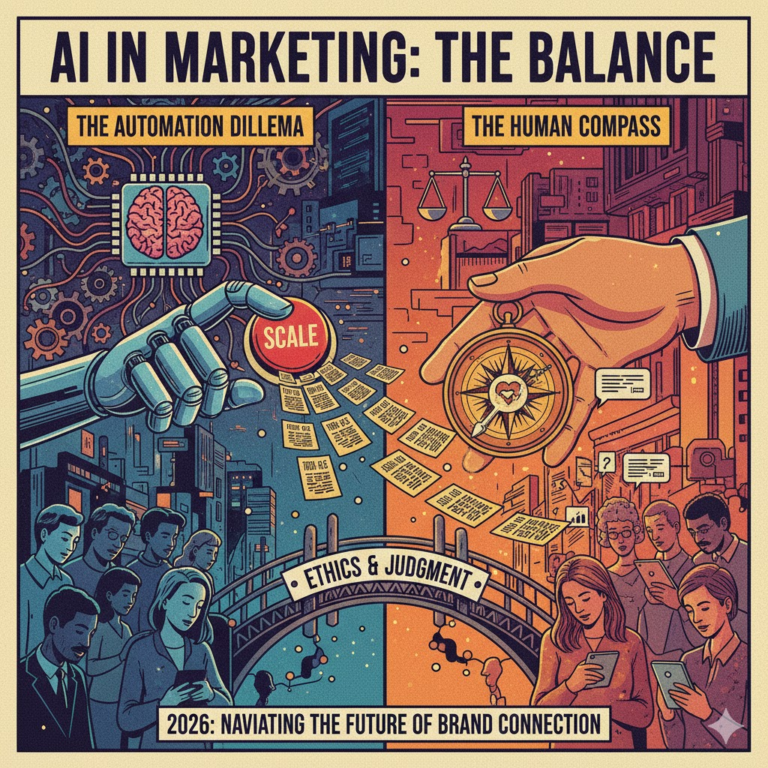
But speed has a downside. AI works from patterns, not judgment. It reflects the data it’s fed, not the values a brand claims to hold. That’s where the unease starts.
Teams are now asking how to mitigate AI marketing challenges and solutions. Especially it does when decisions affect real people. AI brings efficiency, but it also creates ethical, strategic, and operational pressure.
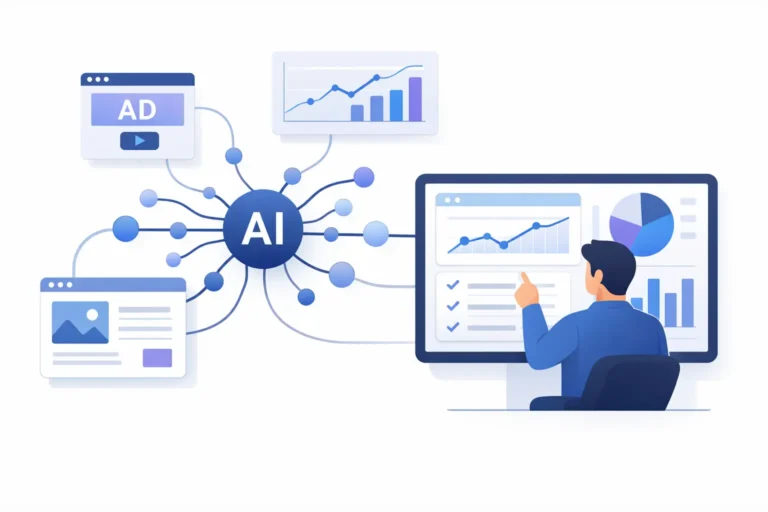
Table of Contents
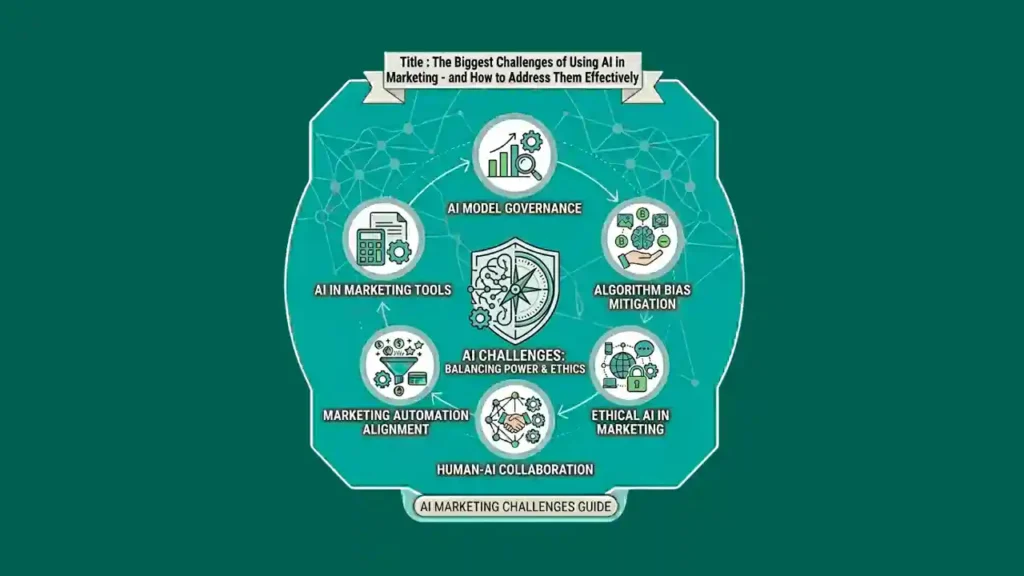
Ethical Risks and Algorithm Bias in AI Marketing
AI systems learn from data, and it may sound harmless as a base. But the problem is that data reflects human choices, habits, and gaps.
When AI is used for targeting, personalisation, or automated decisions, those flaws travel with it. The result can be unfair outcomes that brands never intended.
How Algorithm Bias Enters AI Marketing Systems
Bias often starts quietly. Historical data may favour certain groups because they were targeted more in the past. Audience datasets can be incomplete or skewed toward higher-value users. Over time, AI reinforces what already “worked,” even if it excludes others.
This shows up in ad delivery that ignores whole demographics, pricing models that vary without a clear reason, or content that keeps pushing the same messages to the same people.
Why Ethical AI in Marketing Is a Business Risk
These issues are not just technical and affect trust. Customers notice when messaging feels unfair or intrusive. Regulators notice too. Discrimination claims, privacy concerns, and public backlash can follow. Once confidence is lost, it is hard to rebuild.
How to Mitigate AI Marketing Challenges and Solutions
To do so, teams need active control. Run bias checks often. Use broader training data and set clear ethical rules. Make the AI decisions mostly explainable.
AI in Marketing Limitations That Brands Often Ignore
AI has moved fast, but it hasn’t grown instincts. It reads signals, not situations. That difference shows up quickly in marketing, where timing and feeling matter as much as numbers.
Lack of Context, Empathy, and Cultural Awareness
AI can follow words and patterns thoroughly. But it misses the space around them. Tone shifts, Cultural references are needed to be understood. The moment a message lands, a joke that works in one place can fall flat somewhere else.
Sensitive topics are even harder to deal with. Without real awareness, campaigns can feel awkward. Even when the data says they should work, it is tough.
Over-Reliance on Historical Patterns
Most AI looks backwards. It learns from what already happened. That’s fine until the ground moves. Markets change overnight, public mood turns and new behaviour appears with no warning. AI doesn’t sense that shift. It waits for proof. By the time it reacts, the window may already be closed.
How to Work Around AI in Marketing Limitations
The answer isn’t to pull the plug. It’s to stay involved and use AI to spot options, not make choices. Let people guide tone, timing, and meaning. Keep humans responsible for the final call. That’s how AI stays useful without running ahead of sense.
Marketing Automation Challenges in AI-Driven Campaigns
Automation feels like progress is done with. And to mitigate AI marketing challenges and solutions, changes needed to be made. Tasks disappear, campaigns run on time, and dashboards stay busy.
But when automation runs without checks, small issues grow fast. Messages keep going out even when they stop making sense. Customers notice long before systems do.
Loss of Personalisation at Scale
Too much automation flattens everything. Emails start to sound the same, ads repeat, and content loses edge. What was meant to feel personal turns into background noise. People stop opening, clicking, or caring. This is how audience fatigue builds. Not through one bad message, but through many forgettable ones sent too often.
Data Dependency and Quality Issues
Automation is only as good as the data behind it. When data is old, messy, or split across systems, results drift. Targeting slips. Timing feels off. There’s also a risk around privacy. Consent can be missed. Preferences get ignored. Once trust breaks, it’s hard to fix with another workflow.
Solving Marketing Automation Challenges
The fix starts with discipline. Keep data clean and joined up. Add manual checks where it matters. Review results often, not just at launch. Most importantly, let people guide optimisation. Automation should support decisions, not quietly replace them.
Risks of AI Marketing Tools for Brand Reputation
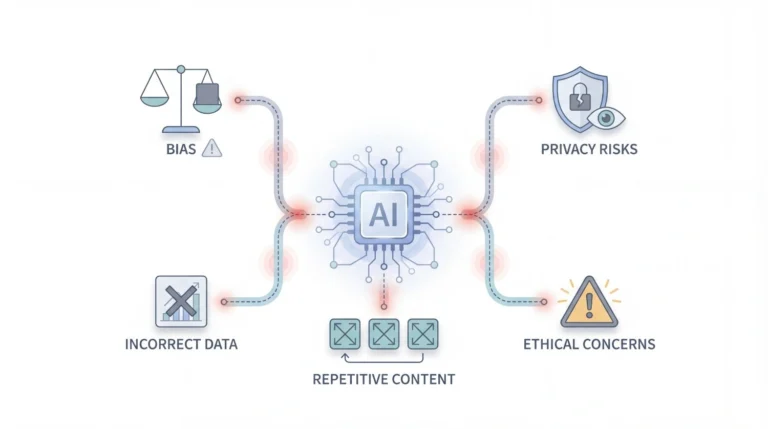
AI tools move fast. That’s the appeal. The problem is that speed leaves little room to pause. When something goes wrong, it can spread before anyone notices.
Inaccurate or Hallucinated Content
AI can sound confident while being wrong. It may invent facts, repeat outdated details, or make claims that were never approved. In marketing, that’s risky; customers lose trust quickly when a brand appears careless or misleading.
Compliance, Privacy, and Data Security Risks
There’s also the issue of control. AI tools often touch customer data, sometimes more than teams realise. If consent is unclear or data flows are poorly mapped. This could end up making mistakes. That can mean data security risks like privacy breaches, legal exposure, or fines. This could end public scrutiny, which alone can hurt a brand’s image.
Reducing the Risks of AI Marketing Tools
Risk drops when rules are clear. Set limits on how tools are used. Keep human approval in place for public content. Ask vendors to explain how systems work. Don’t ask just what they promise. Align AI use with legal and compliance teams early. Reputation protection starts long before a campaign goes live.
The Importance of Human Oversight in AI Marketing
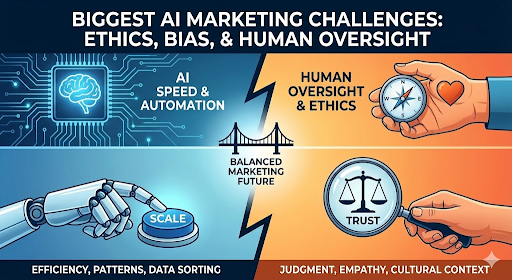
AI works best with direction. On its own, it follows rules and patterns. It does not weigh consequences or feel pressure when things go wrong. That responsibility still sits with people.
Where Human Oversight Is Essential
Strategy is one place where AI falls short. It can spot trends, but it cannot set intent. Positioning, tone, and long-term goals need judgment. Ethics matter too, as AI marketing challenges and solutions make some impact. AI cannot decide what feels fair or appropriate in real situations.
When problems hit, speed matters, but so does care. During a crisis, automated responses can make things worse. Customer experience is similar. Frustration, trust, and loyalty are human signals. They need human responses.
Building a Human-in-the-Loop AI Marketing Model
Strong teams treat AI as a guide, not a boss. Clear approval layers slow down risky actions without killing the pace. AI should suggest options, not push them live. People stay responsible for final choices.
Training helps as well. Teams should learn to question outputs, not accept them by default. When AI is challenged and reviewed, it becomes safer and sharper.
Conclusion
AI has changed how marketing works. It helps teams move faster, see patterns sooner, and handle work that once took days. But it is not a shortcut to better decisions. Used without care, it creates new problems around trust, fairness, and control.
Ethical use, clear rules, and human judgment keep AI useful instead of risky. To mitigate AI marketing challenges and solutions. The future belongs to teams that balance speed with sense, and technology with accountability.
.
Frequently Asked Questions
What are the biggest ethical risks of AI in marketing?
AI has the ability to ignore some and send invasive messages. Customers’ trust will be damaged if they feel watched, judged, or misled. Poor data and uncritical tool trust are the main causes of issues.
How can businesses mitigate algorithm bias in AI marketing?
We check data often, question patterns that look too neat, and avoid letting AI run without review. Diverse data helps, but human checks matter more. That’s how teams mitigate algorithm bias in AI marketing in real life.
What are the main AI-driven marketing problems companies face today?
Messages become generic, errors spread fast, and teams trust outputs without asking why. AI saves time, but only when someone stays in charge.
Why is human oversight in AI marketing still necessary?
Because AI doesn’t understand impact. We have seen tools make choices that look fine on paper but feel wrong to people. Humans catch tone issues, ethical gaps, and timing mistakes before they turn public.
Are AI marketing tools safe to use for customer data?
They can be, but only with limits. We only trust tools that are clear about data use and consent. Without strong controls, the risk is not the tech. It’s how easily people assume it’s safe.