

Introduction
Most firms do not lose because they work less. They lose because they guess. Markets move fast, and prices shift in the competitive world.
New rivals show up with a sharp edge and a loud story. If you are not watching them, you are blind to work in here. That is where using AI competitive intelligence for smarter business strategic decisions changes the game. It turns noise into signals you can act on.
With the right mix of competitive intelligence tools and clear thinking, leaders stop chasing trends and start seeing what really drives wins. It is not about spying. It is about knowing your field before you step into it.

Table of Contents
What Is Competitive Intelligence
Competitive intelligence is how a business stays awake. It means tracking what rivals do, then turning that flow of signals into choices you can act on.
This is not gossip or guesswork. It is a structured competitive intelligence analysis built from prices, product changes, hiring moves, ad shifts, and customer noise.
Data on its own is just clutter. A spreadsheet does not explain why a brand is suddenly pushing discounts or why a new feature keeps showing up in ads.
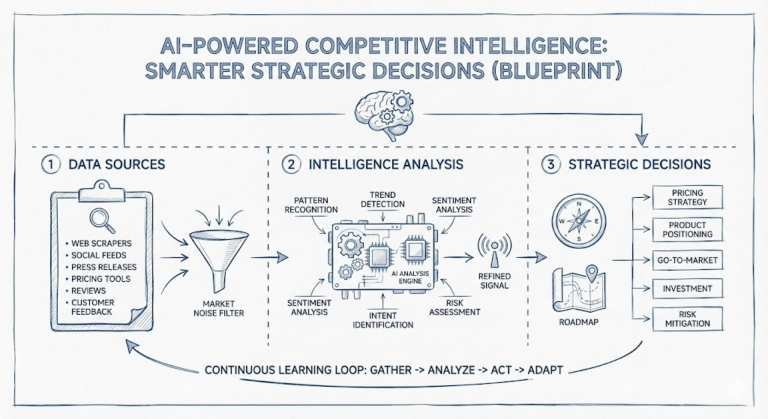
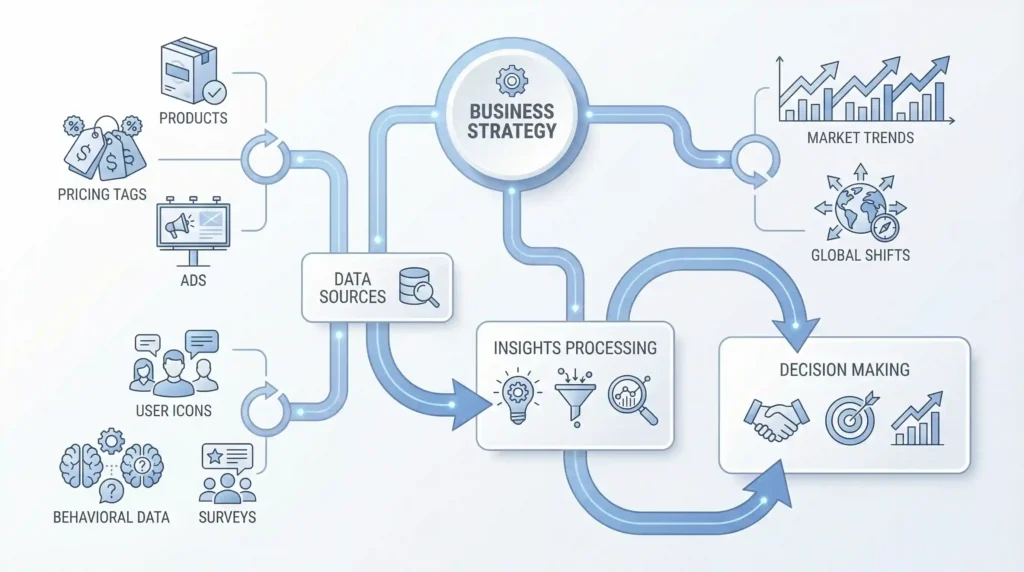
Competitor intelligence connects those dots and shows intent. It also never pauses. Markets do not freeze. So to gather competitive intelligence is an ongoing loop, not a single report left to rot in a folder.
Competitive Intelligence vs Competitive Analysis
A competitive analysis gives you a snapshot. It shows how firms compare right now. Competitive intelligence watches motion; additionally, it also reads trends, pressure, and future plays. One explains today, while the other helps you prepare for tomorrow.
Why Competitive Intelligence Matters for Businesses
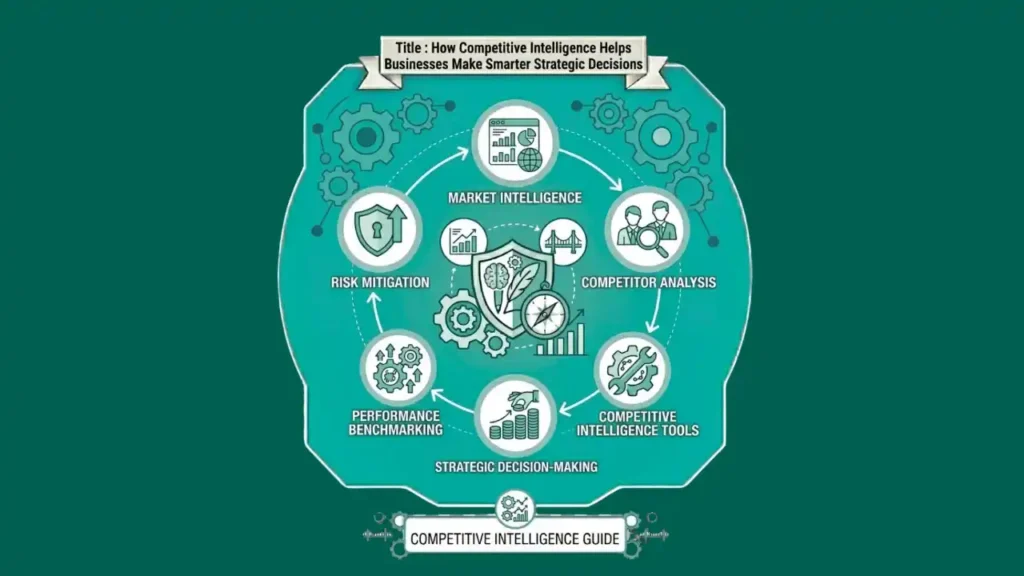
Without clear competitor intelligence, strategy becomes a guessing game for everyone. Competitive intelligence shows where rivals are spending, what they are testing, and where customers are drifting. That shapes real strategic planning, and it also tightens market positioning. You could stop copying and start choosing the space others have left open.
In the current economic landscape, the UK government has identified effective competition as a cornerstone for growth. According to the CMA Strategy 2026 to 2029, businesses that operate in competitive, well-understood markets are the primary drivers of innovation and productivity.
And risks are dropped within it. New tech, new funding, or new rules always leave footprints. Using AI competitive intelligence for smarter business strategic decisions helps you see them while others are still guessing.
How Competitive Intelligence Supports Better Decision-Making
CI feeds the choices that actually move money:
- Pricing: You see who is discounting and who is not
- Product positioning: Gaps show up in plain sight
- Go-to-market plans: Timing and channels become clearer
- Investment: Fewer bets, better odds
This is where competitive intelligence tools earn their keep.
Risks of Operating Without Competitive Intelligence
When CI is missing, problems stack up for you. Market shifts go unseen, Reactions come too late, and Brands lose what makes them different. In the end, the market moves. The only question is whether you move with it.
Types of Competitive Intelligence
Not all intelligence answers the same question. Some data tells you where the market is. Some show what rivals are doing. Some hints at where everything is heading. Good teams use all three, often at the same time, to avoid making narrow choices based on one view.
Market Intelligence
This is the wide lens. It looks at the space you sell into, not just who you sell against. Market size shows how much room there is to grow, and trends reveal what buyers are moving toward. Adding to it, Customer behaviour explains how and why people spend.
This is where market intelligence vs competitive intelligence often gets mixed up. Market data shows demand. It does not show pressure from rivals.
Competitor Intelligence
This is the close-up view. It tracks what other firms put into the field.
- Products and services that shape buyer choice
- Pricing models that shift deals
- Messaging and positioning that frame value
Strong competitor intelligence keeps you from being blindsided by a sudden change in tone or offer.
Strategic Intelligence
Long-term moves such as tech bets or cost cuts are one of the strategic plans. Following it, Partnerships that expand reach and Expansion patterns into new regions or markets.
When teams use competitive intelligence tools to read these signals, they stop reacting and start planning. That is how using AI competitive intelligence for smarter business strategic decisions becomes a real edge instead of a buzzword.
How to Gather Competitive Intelligence
You do not need spies or secret leaks. Most of what matters is already in the open. The skill is knowing where to look and how to read it.
Publicly Available Sources
A huge share of how to gather competitive intelligence comes from places everyone can access:
- Competitor websites show product focus and shifts
- Press releases reveal where money and effort go
- Job postings hint at future plans
- Financial reports expose pressure and growth
- Reviews and forums tell you what customers really feel
None of this is hidden, as it just needs attention.
Customer and Sales Insights
Your own people hear things which no tool can. Win and loss feedback shows why deals move, and Sales objections expose rival strengths. In addition to it, Customer switching tells you who is pulling them away. This is the raw competitor intelligence at ground level.
Digital Intelligence Channels
Online signals move fast, but they speak loudly.
- SEO and content show what rivals want to be known for
- Paid ads expose where they spend
- Social feeds reveal tone and timing
- Emails hint at offers and urgency
When these streams come together, competitive intelligence analysis stops being guesswork and starts guiding real strategy.
Competitive Intelligence Tools and Methods
Tools do not replace thinking; they stretch it. In crowded markets, there is simply too much noise for one team to track by hand.
This is where competitive intelligence tools earn their place. They pull in prices, ads, content shifts, and hiring moves so patterns start to show. Still, no dashboard understands context on its own as people do.
Manual vs Automated Competitive Intelligence
Manual tracking gives accuracy and depth. You can read between the lines. You catch tone, timing, and small signals that software might miss. The downside is scale. A few rivals, maybe. A whole market, no chance.
Automation flips that.
- Scale beats human reach
- Speed beats slow reviews
- Cost drops as coverage grows
But tools still need a brain behind them. That is why using AI competitive intelligence for smarter business strategic decisions works best when humans guide the questions.
When to Use Competitive Intelligence Tools
Tools matter most when the field is hard to see:
- Large markets with many players
- Fast-moving industries where things change weekly
- Multi-competitor spaces where no single rival tells the full story
In those cases, software turns chaos into something you can act on.
Turning Competitive Intelligence Into Action

Tools do not replace thinking; they stretch it. In crowded markets, there is simply too much noise for one team to track by hand.
This is where competitive intelligence tools earn their place. They pull in prices, ads, content shifts, and hiring moves so patterns start to show. Still, no dashboard understands context on its own as people do.
From Insights to Strategy
Good CI flows straight into work, people touch every day:
- Marketing shifts its message when the buyer’s mood changes
- Product teams adjust features based on what rivals miss
- Pricing moves before deals slow
- Sales walks in ready for real objections
This is how competitor intelligence stops being background noise and starts driving results.
Common Mistakes in Competitive Intelligence
Even strong teams slip as Data overload hides what matters, and Confirmation bias makes people see only what they want. It’s not just that, but also that the One-time analysis goes stale fast. Following it, ignoring context leads to bad calls in decision-making. CI only works when it stays sharp, simple, and alive.
Ethical and Legal Considerations in Competitive Intelligence
Good intelligence does not mean shady tactics. Everything used in competitive intelligence analysis should come from public, legal sources or from your own customer data. That means no hacking, no fake accounts, no stolen files. If it is not open or given, it is off limits.
Staying ethical also protects your name. Brands that cross lines lose trust fast, and trust is harder to rebuild than revenue. When teams follow clear rules, competitor intelligence becomes a strength, not a risk.
Laws on data, privacy, and fair competition exist for a reason. Working inside them keeps your strategy strong and your business safe.
Conclusion
Competitive intelligence is not a side task; it is a way of thinking. When teams treat it as a steady flow of signals, not a one-off report, choices become calmer and sharper. Strategy stops being a guess.
The best results come from work that stays continuous, structured, and ethical. You watch the market, test what you see, then adjust before trouble grows. That rhythm builds real edge.
Done well, using AI competitive intelligence for smarter business strategic decisions does not chase rivals. It lets you move with purpose while others react late.
Frequently Asked Questions
- What is competitive intelligence in simple terms?
It is how we track what rivals do and turn that into choices we can use. We look for patterns, not just numbers.
- How is market intelligence different from competitor intelligence?
Market data tells us how buyers behave. Competitor intelligence shows us how other firms try to win those buyers.
- Do I need expensive competitive intelligence tools to start?
No. We can begin with websites, ads, reviews, and sales notes. Tools only help us see more at once.
- How often should I run competitive intelligence analysis?
We do it all the time as markets shift every week. So our collected old insight would fade faster. And we have to analyse the new data to create new strategies.
- Is it legal to gather competitive intelligence?
Yes, when we use public sources and customer data we already own. If it is hidden or stolen, we leave it alone.