


Introduction
The prevalent problem of modern businesses is that, despite having a ton of data, they are clueless about their strategic direction.
Spreadsheets expand, dashboards are lit, and reports are shared every Monday morning. However, when a major decision is made, the leaders still argue over which figure is right.
That is where a strong data strategy for business earns its place. Not as a technical exercise. Not as an IT roadmap. But as a business growth tool.
When done properly, it connects information to action, which turns into outcomes.
Table of Contents
What a Data Strategy Actually Means
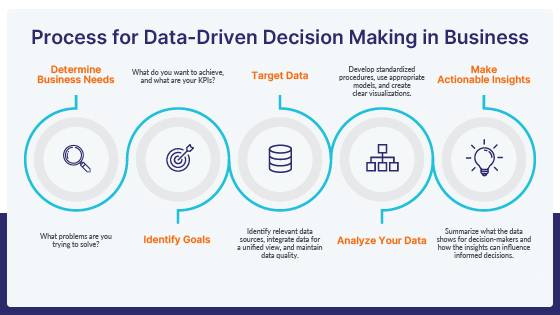
Strip away the jargon, and a business data strategy is simple. It answers five uncomfortable questions:
- What data do we really need?
- Where does it come from?
- Who owns it?
- Can we trust it?
- How does it influence decisions?
Anything that does not support a business objective is noise. Many organisations collect everything “just in case.” Storage may be cheap, but confusion is expensive.
A clear strategy forces prioritisation. It links data to revenue, cost control, risk management, or customer growth. If the link is weak, the data probably is too.
Defining a Data-Driven Growth Plan
Strip away the jargon, and a business data strategy is simple. It answers five uncomfortable questions:
- What data do we really need?
- Where does it come from?
- Who owns it?
- Can we trust it?
- How does it influence decisions?
Anything that does not support a business objective is noise. Many organisations collect everything “just in case.” Storage may be cheap, but confusion is expensive.
A clear strategy forces prioritisation. It links data to revenue, cost control, risk management, or customer growth. If the link is weak, the data probably is too.
The Hidden Cost of No Structure
Operating without structure may feel manageable at first. Teams create their own reports, metrics evolve informally, and definitions begin to shift between departments.
Then the scale happens. Suddenly:
- Marketing’s revenue number differs from Finance’s.
- Operations cannot access sales forecasts.
- Compliance teams worry about exposure.
- Executives wait days for consolidated reports.
This is where an enterprise data strategy framework becomes essential. Not to add complexity but to remove it. Fragmented data slows momentum, while structured data creates alignment.
Begin With Business Priorities, Not Platforms
Technology is tempting, dashboards are visually stunning, and analytics tools offer clarity, but if there is no guidance, they just make a digital mess. Before constructing anything, take a step back.
Aligning Data With Business Goals
Ask leadership:
- Where are we losing margin?
- What customer behaviour do we not understand?
- Which decisions feel reactive instead of deliberate?
A practical data strategy for business begins here.
If growth is the goal, then acquisition and retention metrics matter most. If efficiency is the focus, then process and performance data take priority. If risk reduction is urgent, governance and compliance data move forward.
When strategy defines the filter, technology can follow with purpose.
Define the Numbers That Matter
Once objectives are clear, agree on the metrics that define success. This step is often underestimated.
Building Trust Through Consistent Reporting
- What exactly counts as revenue?
- When is a customer considered “active”?
- How do we measure churn?
Without shared definitions, reporting becomes theatre. A solid data governance strategy establishes clarity. It documents definitions, assigns accountability, and reduces debate.
It builds trust, but trust in data is fragile, and once it is lost, adoption falls quickly.
Look Closely at What You Already Have
Before investing in new systems, conduct a full data audit. List every data source, reporting tool, and manual spreadsheet.
Identifying Gaps and Overlaps
Map who owns what. Identify overlaps.
You will likely find:
- Duplicate datasets.
- Manual reporting chains.
- Metrics are defined differently across teams.
- Legacy systems that no one questions anymore.
This review informs your data management plan. It shows where consolidation is needed, where automation can replace manual effort, and where integration will deliver clarity. It can feel messy. That is normal.
Clarify Ownership Early
When data is shared by all but owned by none, mistakes grow fast, reports clash, numbers shift, and no one feels responsible.
Clarifying Roles and Responsibilities
- Data owners check accuracy.
- Stewards look after quality.
- IT secures the systems.
- Leaders use the insight to guide action.
Clear lines stop blame games.
Strict rules help protect data by deciding access, marking sensitive information, limiting storage, and meeting privacy laws.
In regulated sectors, this is not optional. It protects the business. It keeps risk in check.
Build Infrastructure That Can Adapt
Growth changes data demands as volume increases and complexity expands, so your architecture must support scale.
Connecting Systems Across Departments
This may include:
- Centralised storage through a warehouse or lake.
- Integrated systems connecting CRM, ERP, marketing, and finance.
- Secure role-based access controls.
- Automated data pipelines.
An effective enterprise data strategy framework ensures systems communicate cleanly. No more exporting files between departments. No more version-control chaos.
Integration reduces manual work. It improves reporting speed and enhances confidence. And confidence changes behaviour.
Protect Data Quality Relentlessly
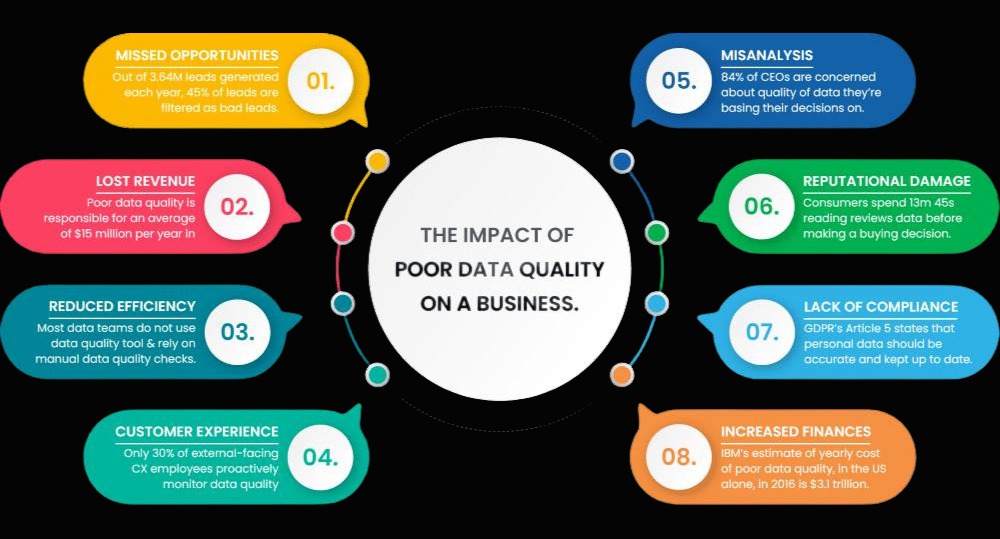
Poor data quality quietly damages performance.
Why Data Quality Cannot Be Ignored
Small inconsistencies multiply, such as a missing field here or a duplicated customer record there. Over time, reports lose reliability.
Standardise naming conventions.
- Enforce required fields.
- Introduce validation rules.
- Run regular duplicate checks.
Data quality management should be routine, not reactive. A strong data analytics strategy depends on clean input. Predictive models built on flawed data produce misleading outputs.
Garbage in, polished garbage out.
Move Toward Advanced Insight
Many companies stop at descriptive analytics. They know what happened last quarter and last month’s revenue. That is useful, but limited.
Using Analytics to Predict Future Trends
A mature data analytics strategy progresses:
- Descriptive – What happened?
- Diagnostic – Why did it happen?
- Predictive – What is likely to happen?
- Prescriptive – What should we do next?
Predictive models are capable of identifying churn risk even before customers leave. Prescriptive tools, on the other hand, can offer suggestions for changing prices or making different operations more efficient. Data has always been a reflector of the past only, but now it is a shaper of the future as well.
Build a Culture of Data-Driven Decision Making
Technology does not create discipline. People do.
True data-driven decision making means leaders consistently ask for evidence. It means meetings reference shared dashboards. It means strategic plans rely on measurable indicators, not instinct alone.
Building a Data-Focused Company Culture
Culture shifts slowly, and executives must model the right behaviour. When leaders use data visibly and consistently, teams follow.
Training supports adoption. When employees understand metrics, trust rises and confidence strengthens across teams.
Support Broader Digital Transformation
Many organisations pursue a digital transformation strategy, automation, AI tools, and smarter workflows. But digital transformation rests on data foundations.
Creating Stability Before Scaling
Suppose the underlying data is inconsistent or inaccessible; transformation initiatives stall. Automation amplifies errors instead of efficiency.
Building a structured data strategy first creates stability. It gives digital initiatives something solid to stand on. Without it, transformation becomes expensive experimentation.
Safeguard Security and Compliance
As data becomes centralised, responsibility increases. This requires encryption, multi-factor authentication, role-based access controls, and regular security reviews. These are not optional extras.
A mature business data strategy embeds protection from the start. It also aligns with regulatory requirements. Data protection laws and reporting standards demand structured oversight. Security protects reputation. Reputation sustains trust.
Measuring the Impact of Your Data Strategy
A data strategy must produce visible outcomes.
- Reduced reporting time.
- Improved forecast accuracy.
- Lower operational waste.
- Stronger customer retention.
- Higher marketing return.
If dashboards multiply but decisions do not improve, something is misaligned, because the goal is not more data but better decisions.
Mistakes That Slow Progress
Buying advanced tools without defined objectives. Treating strategy as an IT-only responsibility. Ignoring training and change management. Overcomplicating frameworks beyond usability. Simplicity enables scale, while complexity slows progress.
Why Data Strategy Should Keep Evolving
Markets do not stand still. Tools improve, and customer needs change, often without warning.
Your data management plan must keep pace. Check your KPI by removing reports no one reads. Tighten controls if new risks appear, and small reviews prevent bigger problems later.
A data strategy is not a one-time exercise but a continuous, practical element of daily business operations. When managed well, data gives you leverage. It clears the doubt, guides choices, and supports steady growth.
Ignoring it leads to confusion, conflicting numbers, and slower decisions, since structure and intent matter.
If you would like to explore this further, contact us for more information.
Frequently Asked Questions
What is a data strategy for business?
It is a clear game plan for handling company data. It shows what to gather, where it lives, who is in charge, and how it supports daily decisions.
Why does it matter?
Because guesswork is costly. When figures clash or reports feel unclear, leaders slow down. A strong plan keeps numbers steady and easier to trust.
How do you begin?
Look at the choices your team struggles with. Find the gaps. Check your current systems. Then shape a simple plan that links data to those decisions.
What sits inside data governance?
Rules and roles. Access limits. Storage terms. Privacy checks. It keeps order and lowers risk.
How can analytics help a business grow?
It spots patterns you might miss. It flags risks early. It shows what is working and what is not. That insight helps teams move faster.
When should you review your data approach?
When the business shifts. When tools change. When goals evolve, a short yearly review is wise. Big changes may call for more.