


Introduction
Creating strong content takes time. Real-time. Research, drafts, edits, rewrites. Then you hit publish and wait.
For many brands, that’s where momentum fades. A blog post might get a short spike of traffic. A whitepaper may attract a handful of downloads. After that, things go quiet. It’s frustrating. You start to wonder whether all that effort was worth it.
This is often a visibility issue, not a quality issue. Content syndication offers another route. Instead of expecting people to find you, your content appears where your audience already spends time, industry sites, partner platforms, and trusted publications. The goal isn’t noise. Its presence.
When handled carefully, content syndication increases reach, supports brand visibility, and strengthens lead generation without forcing your team to constantly create something new.
In this guide, we’ll look at how content syndication strategies work in practice and how to use it without harming SEO or control.
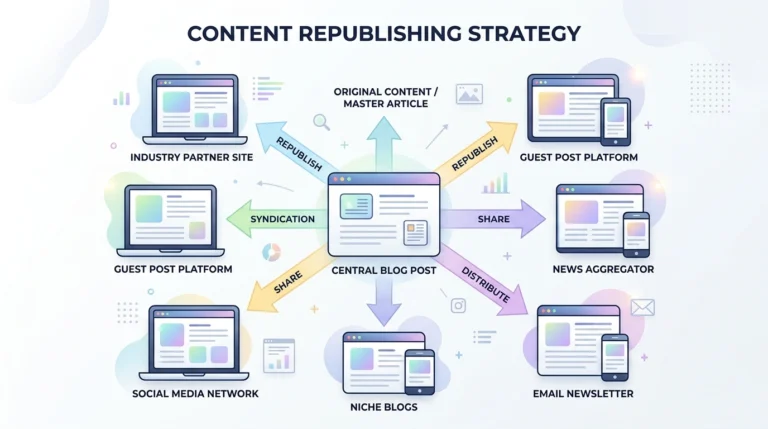
Table of Contents
Understanding Content Syndication
Most brands don’t struggle with ideas. They struggle with reach. Content syndication is simply a smarter way to distribute what you’ve already created. Instead of producing fresh material for every platform, you republish strong pieces on third-party sites where your audience is already active.
It’s a practical content distribution strategy, not a shortcut. And it’s different from advertising. The goal isn’t shouting louder. It’s showing up in the right places.
Done well, syndicated content marketing increases brand visibility, supports audience expansion, and stretches the value of content you’ve already paid for.
What Content Syndication Means in Digital Marketing
In digital marketing, content syndication means giving permission for your blog, report, or guide to appear on another website. You still own it. The partner platform shares it with its readers.
This helps you:
- Extend the life of existing content
- Reach people outside your own channels
- Improve multi-platform content reach
- Support lead generation channels in B2B content syndication campaigns
It’s common in SaaS, consulting, and professional services. Not because it’s trendy, but because it works.
How Syndicated Content Differs from Duplicate Content
Here’s where people get nervous. Duplicate content can hurt rankings. Content republishing without structure creates confusion for search engines.
But structured third-party content publishing is different. It includes:
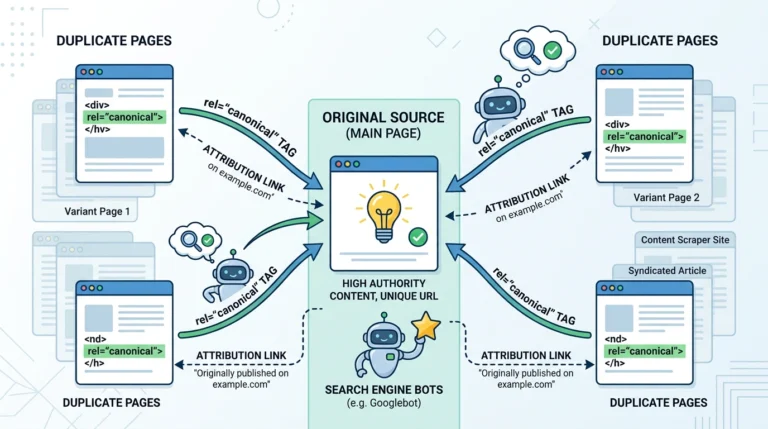
- Clear attribution to the original source
- Links pointing back to your website
- Canonical tags when possible
This signals intent. It tells search engines which version matters most. When handled correctly, content syndication strengthens visibility instead of harming SEO.
Why Businesses Use Content Syndication
Most companies don’t have a content problem. They have a distribution gap. Even strong thought leadership won’t perform if it stays hidden. A focused content distribution strategy solves that by placing content where decision-makers already spend time.
Businesses use content syndication to:
- Increase brand exposure in crowded markets
- Enter new industries or regions
- Strengthen authority through digital PR distribution
- Support scalable online content amplification
When organic traffic plateaus, syndication often becomes the bridge between visibility and growth.
How Content Syndication Strategies Work
Strong content syndication strategies don’t happen by chance. It answers three simple questions: where will the content appear, who will see it, and what outcome do we expect?
A real content distribution strategy balances exposure with control. You want a wider reach, yes. But you also want to protect SEO value and brand voice. That means no random reposting.
Each placement should match your audience, industry focus, and growth goals. Sometimes that means saying no to high-traffic platforms that don’t fit. Relevance beats volume every time.
Republishing Content on Third-Party Platforms
This is the practical side of content syndication. You take a proven asset and place it where the right people already gather. That might include:
- Industry news websites
- Professional communities
- Business publishing platforms
- Partner company blogs
- Curated content networks
The aim isn’t vanity traffic. It’s audience expansion. Strategic third-party content publishing puts your message in front of readers who are already engaged, not just scrolling.
The Role of Attribution and Canonical Links
Without structure, content republishing can create SEO confusion. With structure, it works. Proper syndicated content marketing includes:
- Clear credit to the original publisher
- A direct link back to the source
- Canonical tags where possible
These signals protect rankings. They tell search engines which version leads. That clarity matters.
Paid vs Organic Content Syndication
Organic syndication grows through relationships and editorial trust. It builds authority slowly.
Paid B2B content syndication moves faster. Sponsored placements and distribution networks push gated assets to targeted audiences, supporting lead generation channels at scale. Both have a place. One builds credibility. The other builds predictable reach.
Benefits of Content Syndication for Businesses
Good content shouldn’t live in one corner of the internet. Yet many brands publish once and hope for the best. Content syndication changes that pattern. It supports brand visibility, audience expansion, and stronger positioning without demanding constant new production. The value goes well beyond page views.
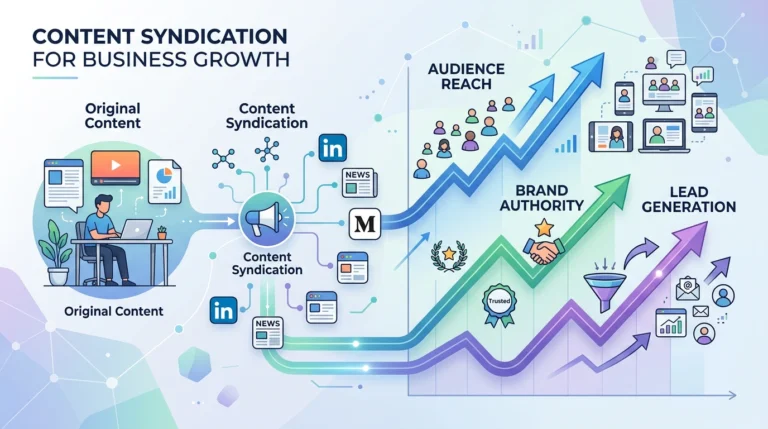
Expanding Audience Reach Beyond Your Website
Your website attracts people who already know you, or at least know what they’re searching for. That’s limiting.
A smart content distribution strategy places your work on platforms your buyers already trust. Through third-party content publishing, your message reaches professionals who may never type your brand name into Google but regularly read industry hubs.
This creates:
- Wider audience expansion
- Greater top-of-funnel awareness
- Multi-platform content reach
It’s quiet growth, but steady.
Building Brand Authority Through External Publications
When syndicated content marketing places your article on a respected platform, perception shifts. Readers associate your brand with expertise because you’re featured alongside other credible voices.
Over time, repeated placements build thought leadership. Not overnight. Gradually. That consistency strengthens brand visibility and supports digital PR distribution efforts without aggressive promotion.
Generating Leads Through Syndicated Content
In B2B content syndication, gated assets often drive results. A whitepaper or guide is shared through distribution networks. Interested readers exchange details to access it.
This approach supports:
- Targeted lead generation channels
- Qualified contact acquisition
- Scalable online content amplification
It doesn’t replace in-house marketing. It feeds it.
Supporting Long-Term SEO Through Content Distribution
Content syndication won’t magically improve rankings. But it helps indirectly.
More exposure can lead to:
- Increased branded searches
- Referral traffic from trusted domains
- Natural backlinks from new audiences
Over time, these signals support stronger SEO foundations.
Content Syndication vs Guest Posting
People mix these two up all the time. On the surface, they look similar. Your content appears on another website. Simple, right? Not quite. The intent behind each tactic is different, and that difference matters when shaping a real content distribution strategy.
Key Differences in Purpose and Approach
Guest posting usually means writing something new for someone else’s platform. It’s tailored. Exclusive. Often created to earn backlinks and build relationships within a niche.
Content syndication, on the other hand, republishes content you’ve already produced. The aim is scale. Through structured content republishing and third-party content publishing, you expand reach without starting from scratch.
In short:
- Guest posting builds links and partnerships
- Content syndication drives multi-platform content reach
- One prioritises relationship depth
- The other prioritises distribution efficiency
Both have value. They just solve different problems.
When to Use Syndication Instead of Guest Posting
Choose content syndication when you already have strong evergreen assets that deserve more visibility. It works well when:
- You want audience expansion quickly
- Resources for new writing are limited
- The goal is online content amplification at scale
Guest posting makes more sense for targeted authority building in a tight industry circle.
How Both Strategies Can Work Together
The smartest brands combine both. Guest posts open doors to new communities. B2B content syndication then amplifies proven pieces across broader platforms. Together, they strengthen brand visibility and thought leadership without overloading your content team.
Conclusion
Content syndication isn’t about pushing content everywhere and hoping something sticks. It’s about being deliberate. You take what already works and place it where the right people are already paying attention. That shift alone can change the way your marketing performs.
When done properly, content syndication expands reach, strengthens brand visibility, and supports real lead generation. It gives strong assets a longer shelf life. It also protects your SEO when attribution and structure are handled carefully.
Not every piece needs syndicating. Not every platform deserves your content. The key is judgement.
At Midland Marketing, we help brands turn scattered distribution into focused content syndication strategies. If you’re ready to extend your authority without doubling production, now is the time to build a smarter content syndication plan.
Frequently Asked Questions
What is content syndication?
It’s republishing your content on another site so new readers see it. You keep the original. It’s about reach, not duplication.
Will content syndication hurt SEO?
Not usually. Use canonical tags or clear attribution. Publish on your site first; that sets the record straight. Yes, do this.
How is syndication different from guest posting?
Guest posts are fresh, written for another site. Syndication reuses an existing asset to scale. One builds links; the other boosts multi-platform reach.
How do I measure success?
Track referral traffic, time on page, leads from gated assets, and backlinks. UTMs are your friend.
How can Midland Marketing help?
We map publishers, protect SEO with canonical and attribution, and measure ROI so syndication actually pays off.